
Could a few minutes of checking your outboard before and after a trip help you spot a problem before it interrupts your time on the water? Saltwater, heat and coastal humidity can take a toll on engine components, so a consistent routine matters. Good four stroke outboard maintenance combines simple owner checks with the requirements in your engine’s manual.
This checklist covers pre-use and post-use checks, signs of salt buildup, corrosion, fuel leaks and cooling concerns, and symptoms that need professional attention. Service intervals and specifications vary by engine, so use the manual for oil requirements, filters and scheduled work. Compass Marine provides outboard servicing and mechanical repairs, with certified Yamaha and Suzuki mechanics to help diagnose issues that need more than a visual inspection.
Key Takeaways
- Use a repeatable pre-launch and post-use routine to spot visible leaks, damage or corrosion early.
- Follow your engine manual for service intervals, oil grade and model-specific checks. Specifications vary between engines.
- Keep owner checks to safe inspections and manual-directed tasks. Leave technical work requiring specialist knowledge to a marine technician.
- Stop using the engine if warning indications persist, you find a fuel or oil leak, or its noise or performance changes unexpectedly.
- A consistent approach to four stroke outboard maintenance helps you notice concerns sooner and decide when to arrange professional servicing.
Four-stroke outboard maintenance: what routine care protects
Four stroke outboard maintenance means inspecting the engine regularly, following the correct after-use care and keeping up with scheduled servicing in the engine manual. It is more than a quick look at the cowling before launch. A repeatable routine helps you notice changes, keep track of service requirements and address concerns before they disrupt a trip.
A four-stroke outboard uses engine oil to lubricate its internal components. The required oil grade, checking procedure and service schedule depend on the engine. Use the manual for those details, including how to check the oil and what work is due. Don’t assume a specification for one model applies to another.
Routine care has three related aims:
- Reliability: Inspections and scheduled work help keep the engine in serviceable condition.
- Corrosion prevention: Following the manufacturer’s after-use instructions helps manage salt residue and moisture.
- Early fault detection: A new leak, unusual sound or visible change is a reason to investigate before the next trip.
This checklist supports your owner’s manual, but it does not replace the manual or professional servicing. Use it to build a consistent routine, then follow the model-specific instructions. Leave work that requires technical knowledge or specialist tools to a qualified marine technician.
How four-stroke outboard care differs from a quick visual check
A visual inspection can reveal obvious damage, loose-looking fittings or signs of a leak. It cannot confirm that scheduled maintenance is complete. Some tasks are due at specified service intervals, and some involve components that are not readily visible or accessible to an owner. The engine design, access and how you use the boat all affect what is appropriate. For background on outboard layouts and four-stroke operation, see Outboard Motor Wikipedia.
Why saltwater and storage conditions matter
Salt residue and moisture can remain on or around the engine after a trip. Follow the manufacturer’s instructions for rinsing, flushing and drying your particular model. Don’t improvise a flushing method, as connection points and procedures differ. If the boat will be stored for an extended period, use the manual’s storage preparation guidance rather than assuming the usual after-use routine is enough.
Consistent care gives you a baseline, making changes easier to spot. Keep a simple record of checks, operating hours if your engine tracks them, and any symptoms. This history can help you plan maintenance and give a technician useful context if a problem needs diagnosis.
A four-stroke outboard maintenance checklist for routine inspections
A consistent inspection helps you notice changes between scheduled services without taking the engine apart. Use this four stroke outboard maintenance checklist as a visual guide, and follow your owner’s manual for fluid checks, operating procedures and model-specific instructions. Carry out checks with the boat secure and the engine switched off, and only in conditions the manual identifies as safe.
Checks before launching or starting the engine
Start with a walk-around in good light. Look for fresh oil or fuel beneath the engine, damaged or corroded surfaces, loose external fittings and anything that differs from your last inspection. A stain or damp patch needs attention even if you cannot identify its source.
- Engine and fittings: Check visible covers, fasteners, brackets and connections for obvious damage or looseness. Don’t tighten or remove parts unless the manual describes the task as an owner check.
- Oil: Check the level and condition only as directed for your model. The engine’s position, temperature and standing time can affect the procedure, so don’t rely on a generic method.
- Fuel system: Look over accessible fuel lines and connections for visible deterioration, dampness or leakage. Don’t dismantle the system or run the engine to investigate a suspected leak.
- Propeller and cables: With the engine fully stopped and secured against starting, inspect the visible propeller area for damage or caught material. Look over accessible steering and control cables for obvious wear, kinks or damage. Don’t reach near a moving propeller or dismantle components to inspect them.
If you find a leak, unexpected damage or a fitting that appears loose, don’t treat it as a routine adjustment. Record what you saw and arrange a professional assessment before the next trip if the issue could affect safe operation.
What to observe during and after use
Notice how the engine starts and runs. A new or persistent warning indication, unusual noise or vibration, or a change in performance is worth investigating, even if the engine still runs. Note when it happens and whether it changes with operating conditions. Don’t attempt repairs that require technical knowledge.
After use, follow the manual’s instructions for flushing and other post-trip care, particularly after saltwater boating. Check the visible exterior for fresh leaks or damage, and make a brief note of any changes. This record helps a technician understand when a symptom began and how it has developed.
For unexplained concerns or work beyond safe owner checks, arrange professional marine engine servicing. A proper assessment helps identify what needs attention without relying on guesswork.
DIY checks or professional servicing: where to draw the line
Owner checks and professional servicing serve different purposes. An inspection can help you spot a change, while scheduled maintenance may involve procedures, tools and technical knowledge that aren’t suitable for every owner. A sound four stroke outboard maintenance routine includes both: monitor the engine between services and follow the manufacturer’s schedule for work that needs to be completed.
A checklist can help you spot concerns, but it cannot replace scheduled servicing in line with the manufacturer’s requirements. Your engine manual is the authority for service intervals, oil grade, checking procedures and model-specific tasks. Requirements vary between engines, and operating conditions and use can affect the maintenance needed. Don’t assume a schedule or procedure for one outboard applies to another.
Which maintenance checks can an owner reasonably perform?
Keep owner tasks to observation, routine cleaning and procedures the manual clearly authorises. Checking for visible damage or a leak is different from opening a fuel system or investigating an internal fault. If a task requires dismantling, electrical diagnosis or internal engine work, leave it to a marine technician rather than attempting a repair by trial and error.
Good records make your checks more useful. Note the date, engine hours if available, work completed and anything unusual. Record when a symptom occurs, such as a change in starting or running behaviour. This gives the technician a clearer history and helps distinguish a new concern from a known one.
When a marine technician should inspect the outboard
Arrange professional attention for a persistent warning indication, a fuel or oil leak, abnormal noise or vibration, or an unexplained change in performance. Stop using the engine if continued operation could be unsafe or risk further damage. Avoid changing parts or adjusting systems without a clear diagnosis. Trial-and-error work can hide the original cause or create another problem.
A technician can assess symptoms that a visual check cannot explain and carry out work requiring technical knowledge or specialist tools. The right response depends on the engine model and the concern, so share your observations and service history rather than guessing at the fault. Compass Marine provides outboard servicing and mechanical repairs. Its marine technical services support owners when an issue needs more than routine checks.
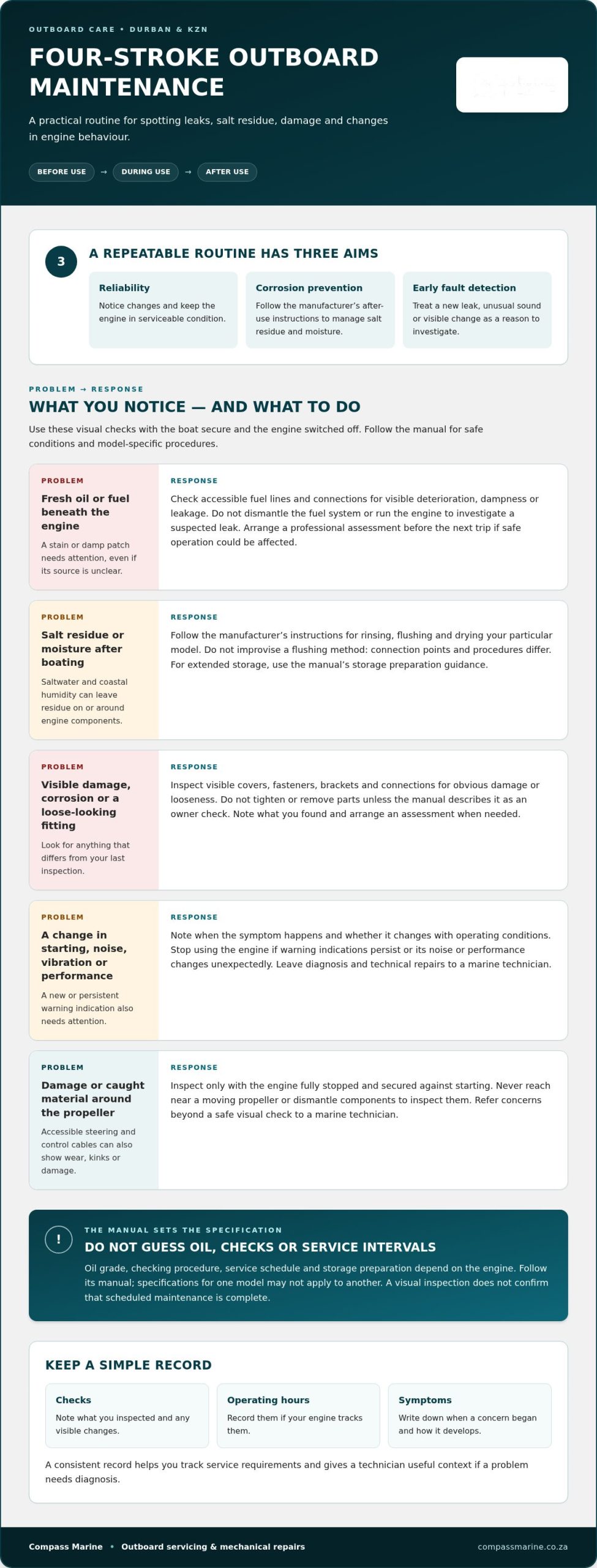
A practical four-stroke outboard checklist before and after boating
A short routine at the start and end of each outing makes four stroke outboard maintenance easier to keep consistent. Use this sequence as a prompt, not a substitute for your engine manual. The correct checks, flushing method and storage preparation depend on the engine model and setup.
Before the next launch
With the engine switched off and the boat secure, look for anything that has changed since the last trip. Check that the engine exterior appears intact, then look over accessible fuel connections for visible damage, dampness or leakage. Inspect the propeller area only when the engine is safely stopped. Don’t remove parts or reach into an unsafe area to check it.
- Inspect the engine and fittings. Look for new damage, signs of corrosion, loose-looking external parts or fluid beneath the engine. Don’t start or use it if a significant leak or damage is apparent.
- Check manual-directed items. Follow the instructions for your specific engine when checking oil or any other fluid. Position, temperature and procedure can affect the reading, so avoid applying a generic method.
- Confirm readiness. Complete the owner checks required by the manual and make sure nothing you found needs assessment before starting.
- Pay attention as you operate. Notice changes in starting, sound, vibration or performance, along with any warning indication. Note when a change occurs so you can describe it accurately later.
The sequence is simple: inspect, check what the manual specifies, monitor operation and record anything unusual. If you find a serious leak or damage, don’t use the engine until it has been assessed.
After saltwater use and before storage
At the end of a trip, follow the manufacturer’s instructions for flushing and cleaning. The method depends on the engine and its flushing arrangement, so don’t assume a procedure used on another outboard is suitable. Use only cleaning products and methods permitted by the manufacturer. Unapproved chemicals may damage surfaces or components.
After caring for the engine as directed, check accessible areas for salt residue, trapped moisture or new corrosion. Note fresh marks, leaks or damage rather than trying to conceal or remove a suspected fault. If the boat will be out of use for an extended period, follow the model-specific storage preparation instructions. No single seasonal schedule applies to every four-stroke outboard.
Record the date, checks completed and any symptoms that appeared during or after the outing. If an unusual change persists, arrange an inspection instead of hoping it clears before the next launch. For professional outboard engine servicing, contact Compass Marine about servicing your outboard.
Warning signs that call for professional outboard servicing
Routine checks can show that something has changed, but they can’t confirm the cause. Persistent warning indications, leaks and altered running behaviour are reasons to pause and arrange an assessment rather than guess at a repair. If continued use could be unsafe or risk further damage, stop the engine. Don’t restart it simply to see whether the symptom clears.
Take particular note of:
- Repeated or persistent warning indications: Follow the manual’s guidance, and don’t dismiss an alert because the engine appears to run normally.
- Fuel or oil leaks: Treat visible fluid as a concern, not a spill to wipe away and forget.
- Unusual noises or vibration: A new or recurring change deserves attention, even if it happens only under certain operating conditions.
- Changed performance: Difficulty starting or an unexpected change in response can warrant investigation.
These signs don’t identify a fault on their own. Avoid replacing parts or making adjustments based only on a symptom. The right response depends on the engine and the cause.
Symptoms owners should not ignore
Record what you observe, when it began and what the engine was doing at the time. Note, for example, whether an alert appeared at start-up or during operation, or whether a noise occurred alongside a change in performance. Share relevant conditions and recent observations with the technician. Clear notes provide useful context without relying on a guessed diagnosis.
A leak, recurring alert or abnormal operation merits qualified attention because a visual check cannot confirm the underlying issue. If there’s a significant leak, persistent warning or behaviour that makes continued operation unsafe, stop using the engine and arrange an inspection before the next trip.
Arrange professional servicing with Compass Marine
Professional outboard servicing is the right next step when symptoms persist, an inspection reveals damage or the work goes beyond owner-level checks. Compass Marine provides outboard servicing and mechanical repairs, with certified Yamaha and Suzuki mechanics. The engine model, service history and your observations can help inform the assessment.
You don’t need to identify the fault before seeking help. Explain what changed and when, and leave diagnosis to a marine technician rather than relying on trial-and-error repairs. An assessment can clarify what needs attention and whether the outboard is suitable to use.
Contact Compass Marine about outboard servicing to discuss a service or mechanical concern.
Plan ahead for dependable days on the water
Make maintenance part of your boating plans instead of waiting until a problem arises. Before a busy season, or when your boating habits change, check whether servicing is due under the schedule for your specific model. Saltwater use and extended storage can affect the care an outboard needs, so base your plan on the manufacturer’s guidance and how you use the boat, not a universal date.
A reminder tied to your engine’s service requirements makes it easier to plan the next step. If an inspection reveals a concern or a symptom needs attention, arrange professional advice before it disrupts your time on the water. Consistent four stroke outboard maintenance helps you make informed decisions about your engine’s care.
Contact Compass Marine about outboard servicing to discuss servicing or mechanical repairs. Plan ahead, keep a record of your checks and be ready to address changes before your next launch.
Frequently Asked Questions
How often should a four-stroke outboard be serviced?
Service it at the interval specified for its exact model. Use the engine’s hour meter, if fitted, and keep a dated service log to track use since its last service. Low annual use doesn’t automatically mean maintenance can be ignored, as time and operating conditions may also affect what’s due. If the service history is incomplete, a technician can help establish a suitable starting point.
Can I change the oil in my four-stroke outboard myself?
Do it yourself only if the manufacturer describes the task as suitable for an owner and you can follow the procedure safely. Before starting, make sure you understand how the engine must be positioned and how to collect the used oil. Work carefully to avoid spills in the boat or water. Record the date and engine hours after the work.
What oil should I use in a four-stroke outboard?
Choose oil that matches the requirements stated for your engine, rather than selecting a product based only on its label or intended use. If topping up, avoid mixing an unknown oil with the one already in the engine. Keep the container or note the product details with your service records. If the oil looks unusual, mention it during a professional inspection rather than trying to diagnose it yourself.
Should I flush a four-stroke outboard after saltwater use?
Flush it if the manufacturer’s instructions call for flushing after saltwater operation. Identify the flushing arrangement fitted to your engine first, as it may use a dedicated connection or another approved setup. Follow the stated sequence and any conditions for running the engine. Don’t assume the same approach applies to every outboard. If you’re unsure which arrangement you have, check the manual before connecting equipment or starting the engine.
What are the signs that a four-stroke outboard needs servicing?
Watch for a warning light or sound, a change in starting, a new noise or vibration, fluid beneath the engine, or a noticeable difference in response. Compare what you observe with the engine’s usual behaviour, not with another boat’s outboard. Note any display message exactly as shown and when it appeared. These details help a technician assess the concern without you having to guess at its cause.
Can I use my outboard if I notice an oil or fuel leak?
If a leak could create a safety risk or damage the engine, don’t continue using the outboard. If you’re already under way, prioritise getting the boat and people aboard to a safe situation, then switch off the engine when it’s safe to do so. Don’t touch hot parts or investigate by running the motor. Note where and when you saw the fluid, and arrange a qualified assessment before using the engine again.
Does a four-stroke outboard need maintenance before storage?
It may need preparation before storage, depending on the engine, how long it will be out of use and the conditions where it’s kept. Check the storage section of the manual and gather any specified supplies before beginning, rather than improvising with products or procedures. Record the storage date and any outstanding service items. This helps you plan the return to use and avoid overlooking work already due.