
What if the first job on your refurbishment list isn’t the one your boat needs most? A tired finish is easy to spot, but concerns with the hull, electrical wiring, engine or trailer may need attention first. Saltwater and humidity can also contribute to corrosion, making it harder to decide where to start. Well-planned boat refurbishment services begin with the boat’s condition and intended use, not appearance alone.
If you’re concerned about defects, project scope or coordinating boat and trailer repairs, a clear plan makes the work easier to manage. This guide explains what refurbishment can cover, how to prioritise repairs and what to prepare before work begins. Compass Marine carries out boat and trailer refurbishment in-house, including fibreglass and gelcoat restoration, electrical and wiring repairs, gearbox and transmission work, and trailer axle, brake and wheel-bearing work. All work is guaranteed for quality and reliability. You’ll also learn why structural changes may affect buoyancy certification and what to consider when defining the scope.
Key Takeaways
- Boat refurbishment services can address cosmetic wear, functional faults and structural concerns, but visible symptoms alone don’t confirm the underlying problem.
- Prioritise safety and reliability concerns before appearance improvements, taking the boat’s condition and intended use into account.
- Compass Marine’s in-house boat and trailer refurbishment covers fibreglass and gelcoat restoration, electrical and wiring repairs, gearbox and transmission work, and trailer axle, brake and wheel-bearing work. All work is guaranteed for quality and reliability.
- Photographs, notes and relevant vessel information help you explain concerns and define a clear project scope.
- Discuss connected boat and trailer work together to plan around the issues that matter most.
What Do Boat Refurbishment Services Cover, and When Might You Need Them?
Boat refurbishment is planned repair and improvement work based on a vessel’s condition, intended use and areas needing attention. Boat refurbishment services may cover one part of a boat or bring together work across several areas. Rather than follow a fixed package, the scope should identify what needs attention, distinguish urgent concerns from appearance goals and set out the work to be done.
The term can describe anything from restoring a worn surface to addressing faults or renewing components. The right scope depends on the boat, its history and how it’s used. The overview of Refitting (marine vessel) also illustrates how refitting can range from specific repairs to broader renewal. For an owner, the practical starting point is the vessel’s current condition, not an assumption that every area needs work.
Exposure and use help determine what to inspect. Saltwater can contribute to corrosion on metal fittings and electrical connections, while coastal humidity and storage conditions can affect surfaces and components. Frequent launching, long periods afloat and regular trailering each place different demands on a vessel. These conditions can guide inspection priorities, but they don’t confirm the cause or extent of a fault.
Signs that a boat may need refurbishment
Clues can include chipped or cracked gelcoat, worn finishes, loose or deteriorated fittings, and visible corrosion. Record what you notice, including where it appears and whether it changes. A surface mark alone can’t confirm whether the issue is limited to the finish or points to a deeper concern.
Intermittent electrical faults, unusual mechanical behaviour and visible damage to trailer components also deserve attention. Symptoms don’t necessarily reveal the full repair scope, especially with electrical and mechanical concerns. A professional assessment can help establish what needs further investigation and what work is appropriate.
Refurbishment, repair and routine maintenance: how they differ
A repair addresses a particular fault or damaged area, such as gelcoat damage or a concern with a trailer wheel bearing. Refurbishment brings relevant repairs and improvements together under a planned scope, sometimes covering both the boat and its trailer. It may suit a vessel with several areas needing attention or an owner preparing the boat for a particular use.
Routine maintenance is recurring care intended to keep equipment in suitable working condition. Engine servicing, for example, should follow the requirements for the specific engine and its use. Consult the manufacturer’s manual for the correct schedule. Maintenance can form part of an ownership plan alongside refurbishment, but it doesn’t replace repairs to identified faults.
Keeping these terms distinct makes planning clearer. Describe a specific fault as a repair, scheduled engine care as routine servicing, and coordinated work across several areas as refurbishment. That shared understanding helps define what needs assessment and what belongs in the project scope.
Which Boat and Trailer Refurbishment Work Can Be Included?
Refurbishment can involve the hull and finish, electrical systems, mechanical components or trailer, but a project doesn’t automatically include every category. The appropriate work depends on the boat’s condition and how you use it. A fishing boat that’s regularly trailered, for example, may need attention to both its finish and trailer components. Another vessel may need electrical or transmission repairs instead.
These areas are connected in practical ways. A boat ready for use still depends on reliable systems and a trailer that can transport it safely. Compass Marine completes boat and trailer refurbishment and repair work in-house. All work is guaranteed for quality and reliability.
- Hull and finish: Fibreglass and gelcoat restoration for affected surfaces.
- Electrical systems: Electrical and wiring repairs. Electronic installations are handled by qualified marine electricians.
- Mechanical areas: Gearbox and transmission work where assessment identifies a concern.
- Trailer: Work involving trailer axles, brakes and wheel bearings.
Hull, fibreglass and gelcoat restoration
Fibreglass and gelcoat restoration can address visible deterioration, but the appearance of a mark or damaged area doesn’t show the full extent of the work required. The surface needs to be assessed so the proposed scope suits its condition. If you’re looking into material-specific signs or repair considerations, a dedicated fibreglass repair guide can provide more background.
Planning also means distinguishing finish restoration from other concerns. A damaged surface may be primarily cosmetic, or it may need closer assessment before the repair approach is agreed. Inspection findings, rather than appearance alone, should guide what’s included.
Electrical, mechanical and trailer repairs
Electrical and wiring repairs may be relevant when a system behaves inconsistently or a connection appears damaged. Qualified marine electricians handle electronic installations. For general background on recreational-boat safety standards, the American Boat & Yacht Council (ABYC) Standards can be a useful reference, but they aren’t a substitute for South African requirements or equipment-specific instructions.
Gearbox and transmission concerns can affect reliable operation, so describe the symptoms rather than trying to diagnose the cause. Trailer refurbishment may involve axles, brakes or wheel bearings, depending on their condition. These components matter when launching and transporting a boat. Include the trailer in the project discussion and note any changes you’ve observed.
Not every boat needs work in every category. If the hull finish is sound but electrical faults are present, the scope may focus on wiring and installation needs. If trailer components also show wear, those can be considered as part of the wider plan. Compass Marine completes its refurbishment and repair work in-house, and To discuss connected boat and trailer repairs, explore Compass Marine refurbishment services.
How to Decide What Your Boat Refurbishment Project Should Prioritise
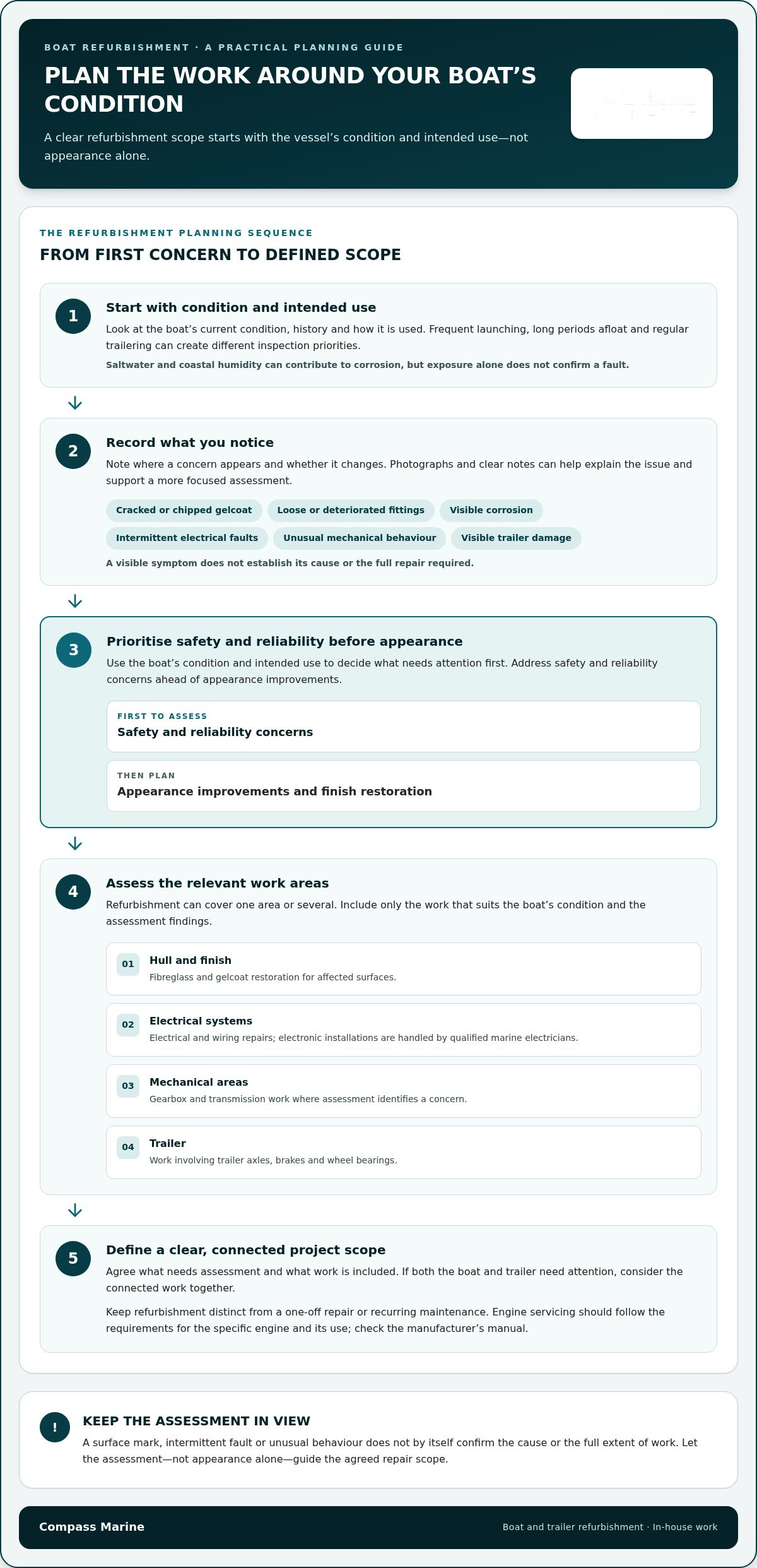
A useful refurbishment plan separates concerns that affect safe or reliable operation from deterioration and appearance goals. Cosmetic work still has a place, but the order should reflect the boat’s condition and intended use, rather than simply starting with the most visible issue.
Safety or function concerns: Suspected faults with electrical systems, mechanical components, trailer brakes or structural areas. Record the symptoms and seek professional assessment before treating them as finishing work.
Deterioration: Worn or damaged surfaces, fittings showing corrosion, or other changes that may need attention. Note where the issue appears and whether it seems to be changing.
Appearance goals: Finish improvements, such as restoring tired gelcoat, once higher-priority functional or structural concerns have been assessed. Set these goals clearly so they don’t obscure repairs that need attention first.
Prioritise condition and function before appearance
Start with observations, not a diagnosis. Write down what you can see, when it occurs and whether it changes after use, launching or storage. Clear notes are especially useful for intermittent faults, which can be difficult to describe later.
Don’t treat a suspected electrical, mechanical or structural issue as cosmetic simply because it affects one visible area. These concerns need professional assessment to establish the appropriate work. For equipment-specific requirements, consult the relevant boat, engine, trailer or component manual. Specifications and maintenance instructions can differ.
Match refurbishment scope to how you use the boat
Your intended use helps determine which issues to raise first. A fishing boat used regularly for launching may call for particular attention to reliable systems and trailer condition. For recreational boating, comfort and finish may matter more once functional concerns are understood. Commercial use can involve different operating patterns and demands, so one owner’s priorities won’t necessarily suit another.
Describe your plans alongside the boat’s condition: how often you use it, where it operates, whether it’s trailered or kept afloat, and what you want the refurbishment to address. This gives the assessment practical context and helps separate essential repairs from optional improvements. If fittings need alteration or replacement, stainless steel fabrication may be relevant. Otherwise, keep the scope focused on the concerns identified.
Use a simple order: raise suspected safety or functional faults first, discuss deterioration next, then agree where appearance improvements fit. This gives boat refurbishment services a clear basis for assessment without assuming the same work suits every vessel. Keep proposed work tied to observed condition and stated goals, and adjust the priorities if professional findings reveal a more urgent concern.
How to Prepare for Boat Refurbishment: A Practical Owner’s Checklist
A refurbishment discussion is more productive when you can describe what you’ve noticed and what you want the boat to do next. You don’t need to diagnose faults or remember technical specifications. Clear observations, relevant documents and a few priorities help turn concerns into a practical scope for boat refurbishment services.
Work through these steps before discussing the project:
- Record your concerns. Note each issue and where it appears, such as a worn patch of gelcoat, a deteriorated fitting, an intermittent electrical fault or a trailer concern. Describe what you observe rather than guessing at the cause.
- Document visible issues. Take clear photographs from more than one angle where useful, and add brief notes. Record when an issue appears, such as after launching or following storage. Photographs provide context but don’t replace an assessment.
- Gather vessel information. Have relevant boat, engine and trailer details to hand, along with manuals, previous repair records and information about the equipment involved. Use the manuals for specific requirements rather than guessing at technical specifications.
- Set your priorities. Separate suspected safety or functional concerns from deterioration and appearance goals. Explain how you use the boat and what you want to address, so the proposed scope can be considered against your needs.
- Discuss and clarify the scope. Go through your observations, ask what needs assessment and establish which areas are included in the agreed work. If the trailer also needs attention, raise it in the same conversation.
Information to gather before discussing the work
Include known issues, previous repairs and intended use. A specific note such as “electrical fault occurs after launching” gives more context than “electrics are unreliable”. Identify the location and describe what happens without assuming why. Equipment details can help identify the relevant manual, but leave unknown model or specification information blank rather than estimating it.
Keep records together, even if they’re brief. A photograph of a damaged finish, paired with a note about when you first noticed it, can help explain the concern. Make clear which observations are ongoing and which have changed since a previous repair.
Questions that help clarify project scope
Ask which observations need further assessment and why, what areas are included in the proposed work, and how related boat and trailer concerns will be considered together. If a finding changes the proposed scope, clarify what has changed before agreeing to additional work. Clear boundaries help everyone understand the project.
Project timing depends on the vessel, assessment findings and agreed work. Bring your notes and manuals to the discussion, then set priorities and scope based on the boat’s condition. Contact Compass Marine to discuss your refurbishment project.
Compass Marine Boat Refurbishment Services: In-House Work and Clear Next Steps
A refurbishment project is easier to plan when the boat, its systems and the trailer can be considered together. Compass Marine provides in-house boat and trailer refurbishment and repair, with decades of combined experience among its technicians and divers.
A connected approach to boat and trailer refurbishment
Boat refurbishment services can cover different areas according to the vessel’s condition and your priorities. Compass Marine’s refurbishment and repair work includes fibreglass and gelcoat restoration, electrical and wiring repairs, gearbox and transmission work, and trailer axle, brake and wheel-bearing work. All work is completed in-house and guaranteed for quality and reliability. Where relevant, these areas can be considered together in one project discussion, alongside how you use the boat and the concerns you’ve noticed.
For example, you might discuss a damaged gelcoat surface alongside an electrical fault, or raise trailer brake concerns while planning other work on the boat. Each issue still needs to be assessed on its own merits. Bringing them into the same conversation helps establish which areas need attention and what belongs in the agreed scope, without assuming every system requires refurbishment.
Describe technical concerns clearly: what you’ve observed, where it happens and how it affects the boat’s use. This gives the discussion a practical starting point, while assessment determines the appropriate work. The scope depends on the vessel’s condition and the issues identified.
Discuss your boat refurbishment requirements
Before getting in touch, gather your notes, useful photographs and relevant vessel, engine or trailer information. Describe your intended use as well as the visible concerns. If a fault occurs intermittently, explain when you’ve noticed it rather than trying to identify its cause. This keeps the conversation focused on the boat’s condition and your priorities.
Discuss which observations need further assessment, which work areas are included and how related trailer repairs fit into the plan. If the proposed scope changes after assessment, clarify the revised work before proceeding. Project timing depends on the vessel, findings and agreed scope, so consider it in that context rather than assuming a standard duration.
Compass Marine completes its boat and trailer refurbishment work in-house. If you’re ready to discuss what your boat needs, share its condition, your concerns and how you plan to use it. Discuss your boat refurbishment project.
Take the Next Step Towards a Clear Refurbishment Plan
You don’t need every technical answer before planning the work. Start with the outcome you want, the concerns that affect how you use the boat and the areas you’d like assessed. A practical discussion can turn that starting point into a scope that reflects your vessel, rather than a generic list of upgrades.
Boat refurbishment services are most useful when the proposed work has a clear purpose and suits how you intend to use your boat. Bring your observations and priorities to Compass Marine, then shape a plan around the condition of your boat and trailer. Decades of combined experience among the technicians and divers support a considered approach, with all work completed in-house and guaranteed for quality and reliability.
Start planning your boat refurbishment with Compass Marine. Share your concerns and the work you’d like to discuss.
Frequently Asked Questions
What do boat refurbishment services usually include?
Boat refurbishment services may include work on the hull, electrical systems, mechanical components or trailer, depending on the boat’s condition and your priorities. A vessel with a worn finish and a trailer concern, for example, may need both areas considered, while another may need only a specific fault addressed. Note what you’ve observed and how you use the boat to help focus the project discussion.
How do I know whether my boat needs refurbishment or a specific repair?
A single, clearly identified fault may call for a focused repair, while concerns across several areas may warrant discussing broader refurbishment. One damaged fitting is different from several unrelated issues affecting the boat and trailer. Symptoms don’t always show the cause or extent, particularly with electrical or mechanical faults. Record when the issue occurs and what has changed, then use a professional assessment to establish the relevant scope.
Can boat refurbishment include trailer repairs?
Yes. Compass Marine’s refurbishment and repair work includes trailer axles, brakes and wheel bearings, alongside boat-related work. Note any visible damage or change in braking or wheel movement, but don’t attempt safety-critical repairs without appropriate expertise. The components needing attention depend on their condition. Compass Marine completes this work in-house and guarantees it for quality and reliability, so boat and trailer concerns can be included in the same project discussion.
How much do boat refurbishment services cost?
There isn’t one cost that applies to every boat refurbishment project. The scope depends on the vessel’s condition, the components involved and the work agreed after assessment. A repair to one area and a project involving several systems aren’t directly comparable, so a general figure may mislead. To make the discussion more specific, provide the boat’s details, describe the issues you’ve observed and identify your main priorities.
How long does a boat refurbishment project take?
The timeframe depends on the boat, the condition of the affected areas and the agreed work. A focused repair may involve a different schedule from a project covering several parts of the vessel or trailer. There’s no standard duration to apply without knowing the project details. If you have a planned outing or operating requirement, mention it early so it can be considered alongside the assessment and proposed scope.
Is boat refurbishment work guaranteed by Compass Marine?
Yes. Compass Marine completes its work in-house and guarantees it for quality and reliability. The appropriate scope depends on the boat and the assessment findings. Discuss the proposed work so expectations are clear and tied to the agreed project.
Can electrical work be included in a boat refurbishment?
Yes. Electrical and wiring repairs can form part of boat refurbishment, and Compass Marine’s qualified marine electricians handle electronic installations. If equipment behaves intermittently, note what happens and under which conditions rather than opening or altering wiring yourself. The appropriate work depends on the system and assessment. Compass Marine completes this work in-house and guarantees it for quality and reliability.