
What if the thickest anchor rope isn’t the best choice for your boat? If you’re comparing anchor rope options, look beyond diameter. Material, construction, length and the rest of your anchoring set-up all affect how the rope performs.
It’s reasonable to feel uncertain. A rope that doesn’t suit your boat or conditions may be harder to handle, wear faster or give you less confidence at anchor. The rope is also part of a rode, alongside the chain and anchor, so each component matters.
This guide explains the practical differences between common marine rope materials and constructions, and how to assess length and dimensions for your boat. You’ll learn which details, including your boat’s size, operating category and typical anchoring conditions, should inform your choice. Use the checklist to compare options, care for your rope and make a considered decision. Where specifications depend on your equipment, follow the manufacturer’s guidance.
Key Takeaways
- Choose anchor rope as part of a complete anchoring arrangement, not as a stand-alone item.
- Compare materials and construction by considering handling, stretch, chafe exposure and how you’ll store the rope.
- Don’t rely on thickness alone; match the rope to your boat, anchor, chain and expected conditions.
- Before use, inspect the rope, connections and splices for damage, stiffness or signs of chafe.
- Use this guide to compare anchor-rope options against your equipment details and the manufacturer’s guidance.
What does anchor rope do in a boat anchoring set-up?
Anchor rope connects your boat to its anchor, either directly or as part of a combined rope-and-chain arrangement. It lets you lower the anchor and maintain the connection while the boat lies at anchor. The rope, anchor and any chain work as one system, so a rope that seems suitable on its own may still be a poor match for the complete set-up.
When choosing anchor rope, consider the whole arrangement. Your boat’s size and fittings, the anchor and chain design, and the conditions in which you’ll anchor all influence what is appropriate. Select the components to work together rather than choosing by rope diameter alone.
How does anchor rope work with an anchor and chain?
The rope runs between the boat and the anchor, providing a flexible connection for deploying and retrieving the ground tackle. Some arrangements use rope alone; others include chain between the rope and anchor. The chain’s weight helps keep the pull on the anchor more horizontal and can protect the rope from seabed abrasion. The right arrangement depends on its design and intended use. For more detail on chain, consult a guide to choosing boat anchor chain.
Think of the rode as a connected working system. The attachment points, rope and chain must all suit the boat and the conditions you expect to encounter. A mismatch at any point can affect handling and reliability, so follow the relevant equipment manufacturer’s guidance for specifications.
Is anchor rope the same as mooring or towing rope?
Not necessarily. Ropes are made and selected for different jobs and loading conditions. Anchor rope forms part of the connection to an anchor. Mooring rope secures a boat at a berth, where movement and load patterns differ. Towing rope is used to pull equipment or another vessel and must suit that task. Don’t assume one rope is suitable for every role.
Before reusing a line for a different purpose, consider how it will be loaded, handled and exposed to rubbing or movement. Check its intended use and the manufacturer’s recommendations. A marine store or chandlery can help you compare rope categories against the details of your boat and anchoring set-up.
Which anchor-rope materials and constructions should you compare?
Material and construction affect how a rope stretches under load, feels in your hands and copes with sunlight, water and rubbing against fittings or the seabed. No single option suits every boat. Compare the rope’s intended use with your complete anchoring set-up and the manufacturer’s guidance.
How do nylon, polyester and polypropylene differ?
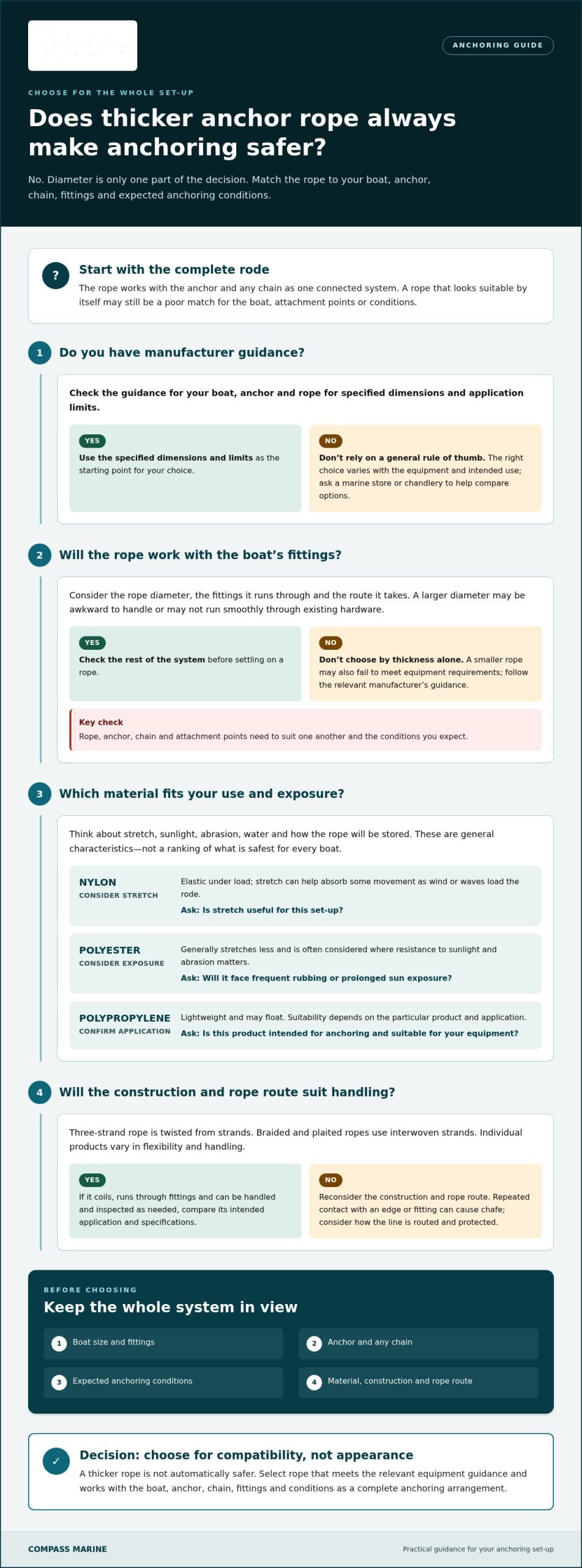
Nylon stretches under load, which can help absorb some movement as wind or waves load the rode. Polyester generally stretches less and is often considered where resistance to sunlight and abrasion matters. Polypropylene is lightweight and can float, but its suitability depends on the particular product and application. These are general characteristics, not a ranking of which material is safest for every boat.
Consider how the rope will be used and stored. A line regularly exposed to strong sun, saltwater or rubbing may need different properties from one kept protected between trips. Check the product information and your boat or equipment manufacturer’s recommendations for application-specific limits.
| Material | General characteristics | Considerations and questions |
|---|---|---|
| Nylon | Elastic under load | Is stretch useful for your set-up, and what does the manufacturer specify? |
| Polyester | Less stretch; commonly valued for resistance to sunlight and abrasion | Will the rope face frequent rubbing or prolonged sun exposure? |
| Polypropylene | Lightweight and may float | Is this product intended for anchoring and suitable for your equipment? |
Does rope construction affect handling and wear?
Yes. Three-strand rope is formed from strands twisted together. Braided and plaited constructions use interwoven strands, and individual products vary in flexibility and handling. Construction can affect how a line coils, runs through fittings and responds to repeated movement. Consider how easily you can handle and inspect it as well as how it feels in use.
Check the rope’s construction and intended application rather than assuming one style will suit every anchoring set-up. Chafe can develop where a line repeatedly contacts an edge or fitting, so the rope’s route and protection matter too. Your boat, anchor, chain and manufacturer’s specifications remain central to choosing appropriate rope dimensions and characteristics.
For practical guidance when comparing marine products, visit Compass Marine’s marine store.
Does thicker anchor rope always make anchoring safer?
No. A thicker rope isn’t automatically the safer choice. Diameter is only one part of the decision, and selecting a rope without considering the rest of the anchoring set-up can create problems. The rope must suit the boat, anchor, any chain, the fittings it runs through and the conditions in which you plan to anchor.
A larger diameter may be more awkward to handle or may not run smoothly through existing hardware. A smaller rope may not meet your equipment’s requirements. Material matters too: stretch and resistance to wear affect how the rope behaves under load and during repeated use. Assess these factors together rather than choosing by appearance or thickness alone.
Safe anchoring depends on the compatibility of the whole system, not on rope thickness in isolation.
What should determine anchor-rope diameter and length?
Start with the manufacturer’s guidance for your boat, anchor and rope. Use it to identify the specified dimensions and any application limits instead of relying on a general rule of thumb. The correct choice can vary with the boat’s design and fittings, the equipment in the rode, and where and how you anchor.
Conditions matter too. A sheltered stop and an exposed anchorage may place different demands on the arrangement, while seabed, depth and changing weather can affect how much rode is needed. Treat these as selection factors, not reasons to guess a specification. If guidance for the boat, anchor and rope differs, resolve the conflict before relying on the set-up.
When should rope be paired with anchor chain?
Some anchoring arrangements combine rope and chain; others are designed differently. Chain can add weight near the anchor and help protect the rope where it might contact the seabed, but it isn’t a universal requirement or a substitute for checking the complete set-up. Its suitability and configuration depend on the equipment and intended use.
Check that the rope, chain and their connections are intended to work together. If you’re comparing chain options, use a dedicated guide to choosing boat anchor chain alongside the relevant manufacturer instructions. Compass Marine’s marine store and chandlery can also provide practical guidance as you compare marine products with your equipment details.
How can you inspect, handle and care for anchor rope?
A short check before each trip can reveal wear before you depend on the rope at anchor. Inspect it along its length, paying particular attention to sections that rub against fittings, the splice and the points where it connects to the boat or chain. Regular inspection is part of maintaining anchor rope you rely on.
What should you check before using anchor rope?
Run the rope through your hands where practical and look for cuts, fraying, flattened or misshapen areas, unusual stiffness and other changes from its normal condition. Examine splices and attachment points closely. Check that fittings are secure and that the rope can move through its route without catching on sharp edges.
Pay extra attention to sections exposed to repeated friction. If you find damage, a compromised splice or a change you can’t confidently assess, don’t rely on that section for anchoring. Remove the rope from use until it has been assessed or replaced. Avoid attempting a repair to damaged load-bearing rope unless you have the appropriate expertise and the repair method is approved for that rope.
How should anchor rope be cleaned and stored?
After use, rinse off salt and grit where appropriate, following the rope maker’s care instructions. Let the rope dry as recommended before stowing it. Damp rope put away without ventilation can remain poorly aired, while grit left between the fibres may contribute to wear as the line moves. Care requirements differ by material and construction, so use the manufacturer’s advice rather than a universal cleaning method.
Stow the rope neatly so it can run out without tangling, and keep it away from avoidable abrasion, sharp edges and damaging storage conditions. Don’t leave it where other equipment will repeatedly crush or rub it. If the rope has been exposed to an unusual load or shows persistent stiffness, damage or deformation, inspect it carefully before its next use.
Routine care can help you spot changes, but appearance alone can’t establish a rope’s remaining strength. If you’re unsure whether visible wear is significant, seek knowledgeable marine guidance rather than guessing. Record the rope’s material and construction, and keep its care instructions with your boat equipment details.
For help comparing marine products and rope-care considerations, contact Compass Marine’s marine store.
Choosing anchor rope with practical marine-store guidance
A suitable rope is one that works with your boat’s complete anchoring arrangement and the conditions you use it in. Before comparing products, gather the details that make the choice specific to your set-up. This is more useful than selecting by thickness or appearance alone.
What information helps you make a suitable rope choice?
Use this checklist to prepare:
- Boat: Record its type, size and relevant manufacturer guidance.
- Anchor and chain: Note the anchor, whether chain forms part of the arrangement, and how the components connect.
- Use and conditions: Consider where you anchor, the conditions you expect, and how often the equipment is used.
- Rope: Compare material, construction, dimensions, handling and care guidance with the requirements for your equipment.
- Storage and exposure: Note whether the rope is regularly exposed to sun, saltwater, damp storage or rubbing against fittings.
These details help narrow your options without relying on a one-size-fits-all recommendation. Check the boat, anchor and rope manufacturer’s guidance, particularly for dimensions and any stated use limits. If the instructions appear to conflict, or you can’t identify how an existing rope and chain are intended to work together, pause before making a change.
When is it worth seeking practical guidance?
Seek knowledgeable input if the equipment specifications are unclear, the current arrangement has been assembled from different components, or you’re unsure whether a rope will work with your fittings. Bring your recorded details and, if practical, the product information for the anchor, chain and rope. That makes it easier to discuss the set-up as a system rather than focusing on one feature in isolation.
Compass Marine operates a marine store and chandlery, offering a practical place to discuss marine products and equipment choices. Use your boat, intended use and storage conditions to compare options, while treating manufacturer specifications as the reference for exact requirements.
Key takeaway: Match rope material, construction and dimensions to the boat, anchor, chain and expected conditions, then follow the relevant manufacturer guidance. For help with marine products and equipment choices, contact Compass Marine.
Choose your anchor rope with confidence
A dependable anchoring arrangement starts with a rope suited to the whole set-up, not simply the thickest option available. Material and construction affect stretch, handling and exposure to wear, while the boat, anchor, chain and conditions all influence what’s appropriate.
Before choosing anchor rope, gather your equipment details and compare them with the relevant manufacturer guidance. Check the rope, connections and areas exposed to chafe before use, then follow the rope maker’s advice for cleaning and storage. If specifications conflict or you’re unsure how the components work together, get practical guidance rather than guessing.
Compass Marine operates a marine store and chandlery and provides practical support for boat owners. Bring your set-up details so you can consider marine products in context. Speak with Compass Marine about marine products and equipment choices.
Frequently Asked Questions
What is the best material for anchor rope?
There isn’t one best material for every boat. Nylon stretches under load, which can help absorb movement; polyester generally stretches less and is often considered where sunlight and abrasion exposure matter. Polypropylene is lightweight and can float. Compare these characteristics with your boat, anchoring conditions, handling needs and storage arrangements. Check the rope and equipment manufacturers’ guidance before choosing, as the right option depends on the complete set-up.
How long should anchor rope be?
The required length depends on your boat, where you anchor, water depth, conditions and applicable safety requirements. Your vessel’s operating category may affect what is required, so check current South African Maritime Safety Authority guidance as well as your boat and anchor-system instructions. Don’t choose a length based only on the size of the boat or a general rule of thumb. Allow for the conditions and anchoring arrangement you actually use.
Is nylon rope suitable for anchoring a boat?
Yes, nylon can be suitable for anchoring, and its stretch can help absorb some movement caused by waves or wind. Suitability still depends on the rope’s specifications and how it works with your anchor, chain, fittings and boat. Check the manufacturer’s guidance for dimensions and use limits. Consider expected exposure and handling as well as material, rather than choosing by diameter alone.
Should anchor rope be used with a chain?
Some anchor arrangements combine rope and chain, while others are designed differently. Chain can add weight near the anchor and help protect rope from contact with the seabed, but it isn’t automatically required for every set-up. The right configuration depends on the boat, anchor, equipment and intended use. Check the manufacturers’ instructions and ensure the rope, chain and connections are suitable to work together.
How do I know when anchor rope needs replacing?
Inspect the full length, paying close attention to splices, connections and areas that rub against fittings. Cuts, fraying, unusual stiffness, deformation or a compromised splice are warning signs. Appearance alone can’t confirm that a rope remains fit for use. If you find damage or can’t assess its significance, don’t rely on it for anchoring. Remove it from use until it has been assessed or replaced, and avoid improvised repairs to load-bearing rope.
How should I clean and store anchor rope?
Where appropriate, rinse off salt and grit, then dry and store the rope as its manufacturer recommends. Care instructions can vary by material and construction, so don’t assume one cleaning method suits every rope. Stow it neatly where it won’t be repeatedly crushed, rubbed against sharp edges or exposed to damaging conditions. Check it again before use, particularly after storage or a trip where it experienced noticeable wear.