
Could polishing make a boat’s finish worse? If the gelcoat is dull or chalky, or a scratch seems deeper than it first appeared, the right next step depends on whether the damage is only on the surface or has reached the fibreglass beneath. Gelcoat repair and polishing aren’t interchangeable: polishing can revive a sound finish, while deeper chips, cracks or gouges may need repair first.
It’s understandable to hesitate before sanding or using a compound, as removing too much material can leave a bigger problem than the original mark. This guide explains how to assess visible damage, distinguish polishing from compounding and repair, and choose a sensible approach without taking unnecessary risks. You’ll also learn which warning signs call for professional assessment, particularly where cracks flex, the surface feels soft or fibreglass fibres are visible. Compass Marine completes gelcoat restoration and buffing in-house, with all work guaranteed for quality and reliability. The aim is to help you protect your boat’s finish and make a considered decision before attempting restoration.
Key Takeaways
- Polishing can improve a sound gelcoat surface, but it cannot replace material missing from chips or gouges.
- Learn how repair, compounding and polishing differ so you can choose an approach that suits the finish’s condition.
- Use careful inspection to spot warning signs that may indicate damage beneath the gelcoat, not just surface dullness.
- Understand when owner-led care is reasonable and when deeper or uncertain damage calls for professional restoration.
- Compass Marine completes gelcoat repair and polishing in-house, with all work guaranteed for quality and reliability.
Gelcoat repair and polishing: how to tell what your boat needs
Polishing can improve the surface, but it cannot replace missing gelcoat. That distinction is the first step in deciding what your boat needs. A faded, chalky finish may need surface treatment, while a chip or gouge has lost material and calls for repair. Cracks need closer assessment because their appearance alone doesn’t show how deep they run.
Gelcoat is the coloured outer layer commonly used on fibreglass boats. It helps protect the underlying laminate and gives the hull its finish. For a plain-language introduction to its composition and uses, see What is Gelcoat? Weather, sun, salt and ordinary use can dull or mark this layer, but a photograph or quick glance can’t reliably reveal the depth of every defect.
Cosmetic gelcoat deterioration affects the finish’s appearance; damage that has removed material, exposed the layer beneath or formed persistent cracks needs assessment for repair. Treat this as a guide, not a remote diagnosis. A clean, dry surface viewed in good light is easier to assess than a wet hull or one seen in glare or shadow.
What dullness, oxidation and scratches can indicate
Oxidation can leave gelcoat faded, chalky or less glossy. Weathering and surface wear can also cause light scratches and swirl-like marks without proving that the fibreglass underneath is damaged. A shallow mark may look like a fine line in the surface; a chip or gouge may have a distinct edge, missing material or a different-coloured layer showing through.
As a first check, widespread dullness with no visible breaks points towards a surface-finish concern, while a localised crater or exposed material is a warning that repair may be needed. This is not a definitive diagnosis. Dirt, reflections and uneven lighting can disguise edges, exaggerate scratches or make a surface look more uniform than it is.
- Mostly dull, with no clear break: note the affected area and check it when clean and dry.
- A shallow-looking line: inspect whether the finish is intact rather than assuming it can be polished out.
- A chip, deep groove or visible underlying material: don’t treat buffing as a substitute for replacing what is missing.
When cracks or crazing need closer assessment
Crazing describes a network of fine cracks in the surface. It may appear as a web of hairline marks, while a single crack can be easier to trace. Neither pattern alone confirms the cause or depth. Note where the cracks appear and whether they change, but avoid pressing hard or trying to open them to investigate.
Repeated, spreading or visibly deep cracks deserve professional assessment, especially if the area feels soft, flexes or shows fibreglass fibres. Polish or wax may make marks less obvious without resolving the underlying issue. Don’t cover suspected damage before it has been assessed; keeping it visible helps distinguish an appearance concern from one that may need repair.
Good gelcoat repair and polishing decisions start with identifying what you can see, while staying cautious about what you can’t. If the surface is broken or cracks are changing, avoid aggressive rubbing and seek an assessment before choosing a treatment.
How gelcoat repair, compounding and polishing differ
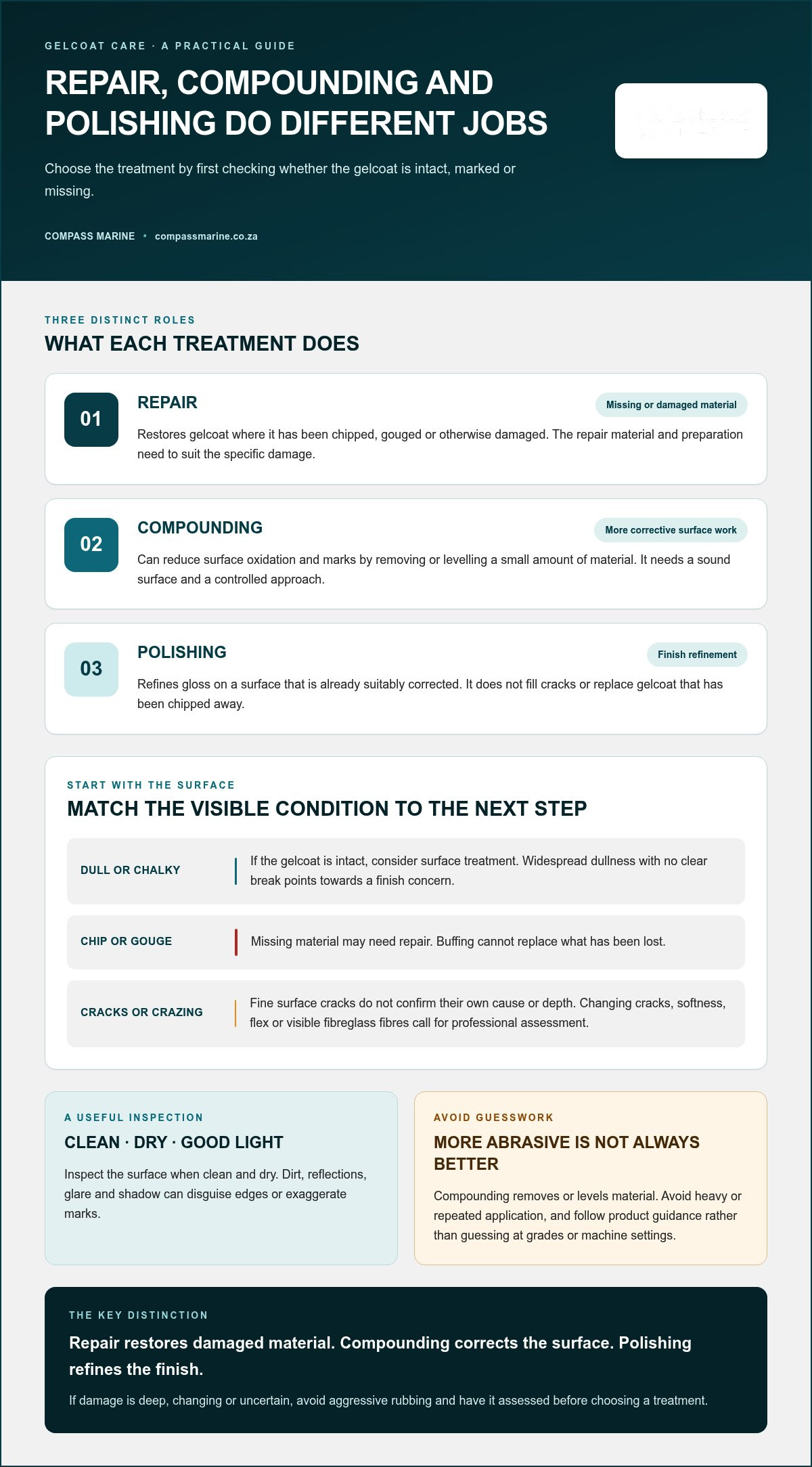
These terms describe different levels of work, not three names for the same process. Repair replaces or restores damaged material; compounding corrects surface defects; polishing refines the finish. Choosing between them depends on whether the gelcoat is intact and how much correction the surface needs. A repair may also need finishing afterwards, but buffing alone can’t address a chip or crack.
- Repair: Used where gelcoat is missing, chipped or damaged. The repair material and preparation need to suit the specific area and type of damage.
- Compounding: A more corrective surface-finishing stage. Its abrasive action can reduce surface oxidation and marks by removing or levelling a small amount of material.
- Polishing: A refinement stage that improves gloss on a surface that’s already suitably corrected. It’s not a filling or structural repair process.
Polishing can refine the surface around a crack, but it cannot fill the crack or replace gelcoat that has been chipped away. That’s why identifying the type of work needed matters before choosing a product or tool.
What compounding does before polishing
Compounding is generally more cutting than final polishing. It can help correct a weathered surface, but it also removes or levels material, so it needs a sound surface and a controlled approach. Polishing follows when appropriate, refining the finish and gloss. The exact products and process depend on the gelcoat’s condition and the product instructions.
Don’t assume that using a stronger compound will solve every mark. Abrasives can reduce the surface layer, so repeated or heavy application may leave thin, damaged or uneven areas worse. Avoid choosing a compound grade, machine speed or abrasive sequence by guesswork; follow the product guidance and stop if the surface behaves unexpectedly.
Why a repair must be assessed before finishing
Repair work needs materials suited to the damage and preparation appropriate to the affected area. A repair may still require careful finishing after the material has cured, but that finishing doesn’t replace getting the repair itself right. The boat’s construction, the location and extent of damage, and the repair product all affect the suitable approach.
Where instructions differ, follow the relevant product and boat manufacturer guidance rather than mixing methods. If you can’t tell whether a mark is only superficial, or the damaged area is extensive, seek a professional assessment before abrading or filling it.
Compass Marine provides fibreglass and gelcoat restoration, as well as gelcoat buffing, with all work completed in-house and guaranteed for quality and reliability. For gelcoat repair and polishing that needs more than routine surface finishing, Compass Marine’s gelcoat restoration is a practical next step.
DIY or professional gelcoat restoration: how to choose
A faded patch or scratch doesn’t automatically need a repair, but it doesn’t automatically respond to polishing either. The right choice depends on whether the surface is intact, how extensive the damage is, the boat’s construction and the guidance for the products and materials involved. If you’re unsure how deep a mark goes, avoid treating it as a simple finishing job.
Owner-led care is generally more suitable for uniform loss of gloss where the gelcoat appears intact. A repair or professional assessment is the safer route if the surface is cracked, chipped, changing or difficult to judge. The aim isn’t to tackle every mark yourself; it’s to avoid making uncertain damage harder to address.
Signs a light surface treatment may be appropriate
A light surface treatment may be worth considering if the finish has lost gloss evenly and you can’t see cracks, chips or exposed underlying material. Clean and dry the area first, then check it in good light. If the product instructions allow, test the treatment on a small, inconspicuous section before working on a prominent area.
Watch the test area closely. Stop if the colour or finish changes unexpectedly, or if a mark remains pronounced after cautious treatment. Don’t keep increasing pressure or abrasiveness to force a result; the finish may need a different approach.
When professional restoration is the safer choice
Seek professional assessment for visible cracks or crazing, missing gelcoat, exposed layers or any damage whose depth you can’t judge. Spreading cracks, a soft or flexing area, recurring damage, or defects returning after surface care are also reasons to stop. These signs don’t establish the cause on their own, but they make polishing alone an uncertain choice.
Broad or repeated deterioration can require more than a local buff, while an isolated area may need a repair suited to the damage. Determining the right route depends on the boat, the condition of the surface and the materials involved. Don’t attempt a repair process that calls for skills or materials you don’t have.
- Pause before treating: cracks, chips, exposed layers or uncertain depth need assessment first.
- Follow product guidance: use products only as directed, and follow the boat manufacturer’s instructions where applicable.
- Stop if the result is unclear: persistent marks, unexpected changes or damage that reappears are reasons not to continue with DIY treatment.
Careful judgement is central to gelcoat repair and polishing. Compass Marine provides in-house fibreglass and gelcoat restoration, with all work guaranteed for quality and reliability. If you’re uncertain about the finish, discuss gelcoat restoration before attempting more abrasive treatment.
A careful gelcoat care sequence, from inspection to aftercare
A methodical approach helps you avoid treating a repair problem as routine surface care. Start by documenting what you can see, then clean and reassess before choosing a treatment. Keep owner checks separate from repair work: if damage is deep, spreading or uncertain, pause rather than sanding or buffing in an attempt to find out more.
Inspect and classify the damage before cleaning, then choose a treatment only after the surface is clean and its condition is clear.
Prepare and inspect before choosing a treatment
Before cleaning, inspect the boat in good light and note where marks, cracks or dull areas appear. A written record or photograph can help you compare the same spot later. After inspection, wash the area with a suitable marine cleaner, following its label rather than guessing a dilution or combining products.
- Inspect: Check the visible area and nearby edges. Record whether the concern is widespread or localised, and whether you can see cracks, chips or exposed material.
- Clean: Use a marine cleaner suitable for the surface and follow its instructions. Rinse as directed, then let the area dry so residue or water doesn’t obscure the finish.
- Reassess: Look again under good lighting. If cleaning reveals a crack, missing gelcoat or an uncertain edge, stop and arrange an assessment rather than abrading the area.
- Select treatment: For an intact surface, choose a compatible care product only after checking its instructions and any relevant boat manufacturer guidance. Don’t assume products or methods suit every finish.
- Finish cautiously: Follow the product directions, use only the method the surface condition permits and check the result as you go. Stop if the finish changes unexpectedly or the damage remains unclear.
This is a general care sequence, not a repair procedure. Filling or restoring damaged gelcoat requires suitable materials and preparation for the specific damage. If you’re not confident that the surface is intact, don’t sand, compound or polish over it. The safest choice for gelcoat repair and polishing depends on the product instructions and the condition you find after cleaning.
Protect the restored finish through routine care
After use, rinse away salt and surface contamination where appropriate, using care products that are compatible with the finish. Follow each product’s manufacturer instructions, and avoid assuming that more frequent or aggressive polishing will protect the boat better.
Keep an eye on areas that repeatedly become dull or where cracks return. Recurring marks may need a fresh assessment rather than another round of abrasive treatment. Note when and where they reappear, and whether they change, so you can give a clearer account of the finish’s condition.
If your inspection leaves you uncertain about the next step, contact Compass Marine about gelcoat restoration before attempting further treatment.
Compass Marine gelcoat restoration: when your boat needs more than polishing
Routine buffing may suit an intact surface that has lost gloss, but it won’t replace missing gelcoat or resolve damage that needs repair. Professional restoration may be a suitable next step when cracks are recurring or changing, material is missing, the affected area is broad, or you can’t confidently judge the damage. The appropriate approach depends on the boat’s construction and the condition of the surface.
Compass Marine provides fibreglass and gelcoat restoration, as well as gelcoat buffing. All work is completed in-house and guaranteed for quality and reliability. These services connect surface care with broader boat refurbishment when the finish needs attention beyond routine polishing.
What to expect when discussing gelcoat restoration
A clear description helps frame the concern. Note where the damage is, what it looks like and whether it has changed. For example, explain whether a mark is near a fitting, along an edge or across a larger section. Photographs taken in good light can help show the area, although they may not reveal its depth.
Mention any previous treatment and whether the same marks have returned. Cracks that appear to spread, a soft area or visible material beneath the finish are useful details. Don’t press, sand or open up a suspected defect to make it easier to describe.
There isn’t one restoration method that suits every boat. The damage and its location inform whether buffing, gelcoat restoration or wider fibreglass work is appropriate. An assessment helps establish the relevant scope without assuming a particular repair method, finish or timeframe in advance.
A practical next step for damaged or dull gelcoat
Use your inspection notes to describe what you’ve found and where. If the condition is uncertain or the damage appears to extend beyond the finish, avoid repeated polishing while you decide what to do next. Keeping the area visible can make it easier to discuss its condition.
For boat owners considering gelcoat repair and polishing, Compass Marine’s restoration services provide a practical option when the work calls for more than routine surface care. All restoration work is completed in-house and guaranteed for quality and reliability.
Discuss your boat’s condition and refurbishment needs with Compass Marine. Share what you’ve noticed and where, and take a considered next step towards caring for the finish.
Take the next step towards a sound finish
Your boat’s finish doesn’t need guesswork. If you’re unsure whether a dull area needs buffing or a damaged section needs restoration, note what you’ve observed and discuss it before trying more abrasive treatment. A clear view of the boat’s condition can help guide the next step, while the right approach depends on the surface and the damage.
With decades of combined experience, the Compass Marine team can discuss your boat’s gelcoat restoration needs. Gelcoat repair and polishing should be guided by the condition of the finish, not just by how a mark looks at first glance. Share where the concern is and whether it has changed, then explore a practical way forward without assuming a particular repair or finish in advance.
Ready to discuss your boat’s gelcoat? Contact Compass Marine to discuss gelcoat restoration. The team completes restoration and buffing in-house, with all work guaranteed for quality and reliability.
Frequently Asked Questions
Can gelcoat be polished without sanding?
Yes, if the aim is to improve gloss and the chosen polish is suitable for the finish. Before applying it, check the product label for surface preparation and application guidance. A hazy appearance can sometimes be affected by residue or contamination, so compare the surface after washing and drying it. Test a small, less visible area first, then check for an even result before treating a larger section.
How can I tell whether a gelcoat crack is only on the surface?
You can’t reliably confirm crack depth by looking at the outside alone. If the corresponding area is accessible from inside the boat without removing fittings or panels, note any visible changes there, such as distortion or staining, and share them during an assessment. Don’t dismantle the boat or press on the crack to investigate. The location and any observations from both sides can help provide useful context.
Does polishing remove scratches from gelcoat?
It may improve very light marks, but first check whether a mark is actually a scratch. After a gentle wash with a suitable cleaner, a scuff or transferred residue may disappear, while a mark that remains may need closer assessment. For gelcoat repair and polishing, avoid using an unapproved solvent or increasing abrasion simply because a line persists; follow the product directions and stop if the surface changes unexpectedly.
Can I repair gelcoat myself?
That depends on the repair, your experience and the boat’s finish. Before attempting a visible patch, consider how its colour and surface may compare with the surrounding gelcoat, which may have weathered differently. A repair that is technically sound may still be noticeable. If appearance matters across a prominent area, or the damage is more than a small, clearly understood defect, get an assessment before starting.
How often should I polish my boat’s gelcoat?
There’s no fixed interval that suits every boat. Rather than polishing before each outing or on a rigid calendar, make a note of changes during routine seasonal checks and consider how the boat is used and stored. Comparing the same area over time can help you spot a change without relying on memory. If the surface still looks sound, routine cleaning may be more appropriate than abrasive polishing.
Can polishing restore gelcoat that has cracks or missing sections?
No. Polishing can’t restore material that has broken away or close a crack. If you’re planning wider refurbishment, include the damaged area in the discussion rather than treating it as an isolated cosmetic mark. Its position relative to nearby panels, fittings or previous repairs can affect how the work is considered. Keep a note of any known impact or earlier repair history to help explain the boat’s condition.