
Master the complexities of marine hydraulic steering to ensure your vessel remains responsive, safe, and reliable in all sea conditions. When your boat’s steering feels stiff, spongy, or unresponsive, it’s not just an inconvenience—it’s a critical safety issue that demands immediate attention. Understanding the source of the problem is the first step in deciding between a simple fix and a necessary professional repair.
This guide provides a professional framework for troubleshooting common hydraulic steering faults, evaluating the condition of your equipment, and making an informed decision. We will explore the symptoms of failure, the diagnostic process used by expert technicians, and why investing in a professional repair often provides greater long-term value and safety than a temporary DIY solution.
Understanding Boat Hydraulic Steering Systems and Common Faults
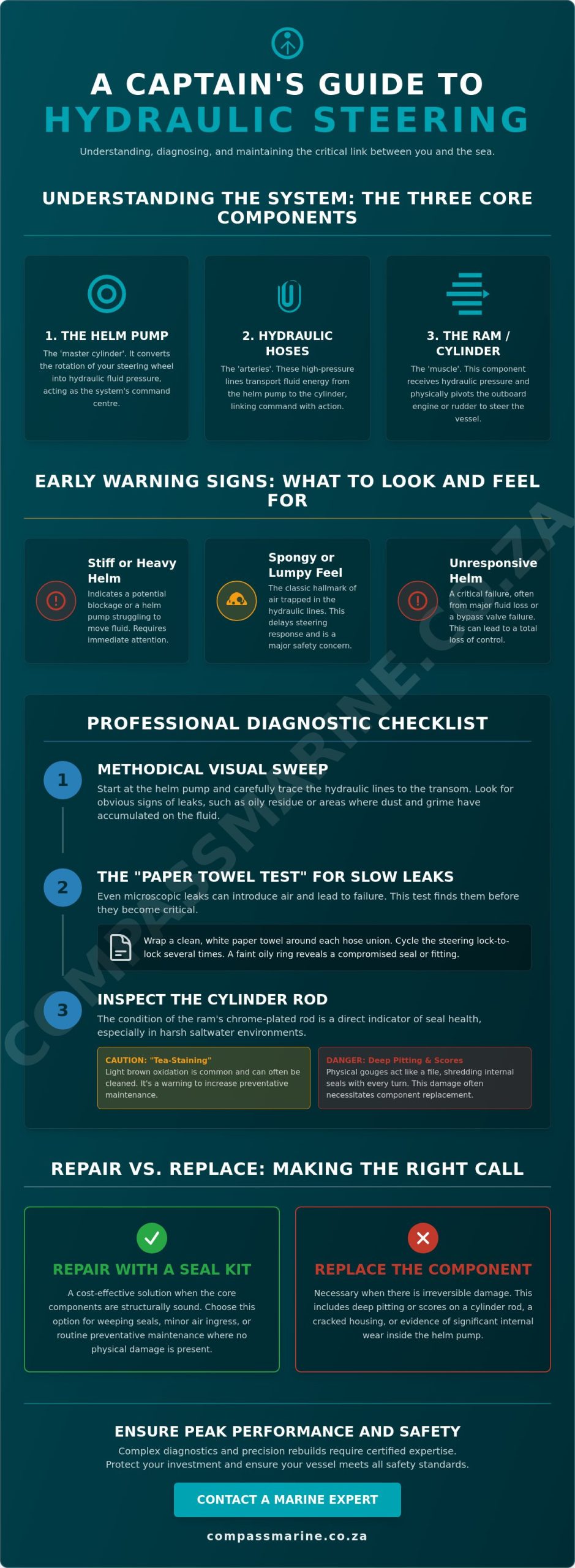
Marine hydraulic steering operates as a closed-loop system, using pressurised fluid to move your engine or rudder with minimal effort at the helm. Its reliability and power make it the standard for vessels with larger outboard engines and inboard systems. To diagnose any issues, it’s essential to first understand its three core components:
- The Helm Pump: Located behind your steering wheel, this unit acts as a pump. When you turn the wheel, it pushes hydraulic fluid into the system. It also contains a series of check valves to prevent the engine’s force from turning the wheel on its own.
- Hydraulic Hoses: These are high-pressure lines that transport the hydraulic fluid from the helm pump to the steering cylinder at the stern. They are designed to be robust but can be vulnerable to UV damage, chafe, and corrosion at the fittings.
- The Ram (Cylinder): This is the workhorse of the system. Mounted at the engine or rudder, the cylinder receives pressurised fluid from the hoses, which drives a piston rod in and out. This linear motion is what turns the engine or rudder, steering your boat.
A crucial safety feature within the helm is the bypass valve. This valve protects the system from extreme pressure spikes, such as when the outboard engine hits an underwater object, preventing catastrophic hose or seal failure.
The Symptoms of a Failing Steering System
A problem in your hydraulic steering system will almost always present clear warning signs. Ignoring them can lead to a complete loss of control, particularly when navigating in close quarters or rough seas. Be vigilant for these key symptoms:
- Stiff or Heavy Steering: If the wheel becomes progressively harder to turn, it can indicate old or contaminated fluid, mechanical binding at the engine pivot, or internal wear within the helm pump.
- Lumpy or Notched Sensation: A jerky or inconsistent feeling as you turn the wheel is a classic sign of air bubbles in the hydraulic fluid. This “spongy” response reduces precision and can worsen over time.
- Unresponsive Helm: This is the most critical symptom. If you can turn the wheel several rotations with no corresponding movement from the engine or rudder, it points to a significant loss of hydraulic fluid or a major internal failure in the helm pump’s check valves.
Why Saltwater is the Primary Enemy
For boaters in South Africa’s coastal waters, saltwater corrosion is the single greatest threat to the longevity of a hydraulic steering system. Its destructive effects attack every component:
- Piston Rods: The chrome-plated piston rod on the steering cylinder is constantly exposed. Even microscopic scratches can allow salt to penetrate, causing the chrome to flake and creating a rough surface that rapidly destroys the main hydraulic seals. This “tea-staining” is an early indicator of future leaks.
- Helm Housings: Many helm pumps are constructed from aluminium. Electrolysis, a galvanic reaction between dissimilar metals in a saltwater environment, can corrode the housing and compromise internal seals.
- Fittings and Hoses: Stainless steel fittings are corrosion-resistant, but not immune. Crevice corrosion can attack the threads of hose fittings, leading to weeping leaks or, in extreme cases, a high-pressure burst that instantly disables your steering.
Diagnostic Steps: Identifying Leaks, Air, and Mechanical Wear
When a client brings a vessel to us with steering problems, our technicians follow a methodical diagnostic process to pinpoint the exact cause. As a boat owner, you can perform a similar initial inspection to better understand the severity of the issue before calling in a professional.
- Visual Inspection: Carefully trace the entire system from the back of the helm down to the cylinder at the transom. Look for obvious signs of hydraulic fluid—it is typically clear or amber and will attract dirt, making leaks appear as dark, greasy patches.
- The “Paper Towel Test”: For slow, weeping leaks that are difficult to see, clean all hose fittings and seals thoroughly. Wrap a clean paper towel around each connection point (at the helm, and at both ends of the cylinder). Operate the steering back and forth. Even a minuscule leak will leave an oily stain on the paper, revealing the source.
- Testing for Internal Bypass: If there are no visible leaks but the steering is unresponsive, the helm pump may be failing internally. A technician will disconnect the hoses and use pressure gauges to confirm if the pump can build and hold pressure. This is not a DIY task, as it involves opening a high-pressure system.
- Assessing the Cylinder Rod: Extend the steering fully and examine the piston rod. Run your fingernail gently along its surface. If you can feel any pitting, scoring, or flaking chrome, the rod is compromised. A new seal kit will not fix a leak if the rod surface is damaged, as the rough texture will shred the new seal almost immediately.
Is it Air or a Leak?
Understanding the difference between air in the system and a fluid leak is key to a correct diagnosis. While they can be related, they present differently.
- Soft or “Spongy” Helm (Air): If the steering feels soft and you can hear a gurgling sound from the helm, you likely have air in the lines. Air is compressible, unlike fluid, which creates the spongy sensation. Air can enter the system through a loose fitting or a worn seal that doesn’t leak fluid externally but allows air to be drawn in.
- Fluid Loss (Leak): If you constantly need to top up the fluid at the helm, you have an active leak. This is often accompanied by spongy steering, as the loss of fluid allows air to take its place. A visible fluid exit is a clear sign that a seal or fitting has failed.
The danger of air in the system is most apparent during high-speed manoeuvres. Spongy steering can cause a delayed reaction, which is extremely hazardous when trying to avoid an obstacle or navigate a busy channel.
Evaluating the Helm Pump Integrity
The helm pump is the heart of your steering system. A professional assessment involves checking several key indicators of its health:
- Fluid Level and Colour: Open the filler cap at the highest point of the system (usually the helm). If the fluid is low, you have a leak. If the fluid appears milky or cloudy, it has been contaminated with water (usually saltwater), which will degrade the fluid’s performance and accelerate internal corrosion.
- Check Valve Test: With the engine off, try to manually push the outboard or rudder from side to side. There should be very little to no movement. If you can move the engine easily, the helm pump’s internal check valves have failed, and the unit will need to be rebuilt or replaced.
- Seals Behind the Wheel: A common failure point is the main shaft seal located directly behind the steering wheel. A leak here is often missed, as the fluid runs down the back of the console. Look for oily residue in this area.
Repair vs. Replace: Evaluating Helm and Cylinder Integrity
Once the fault has been identified, the critical question becomes whether to repair the component or replace it entirely. This decision involves weighing the cost, long-term reliability, and safety implications.
A simple seal kit might seem like a cheap and easy fix, but it is only a viable solution under specific conditions. A professional technician will recommend a rebuild only if the core mechanical components are in excellent condition. For example, a cylinder with a weeping end-cap seal but a perfectly smooth, unpitted piston rod is an ideal candidate for a rebuild.
However, some components are simply un-rebuildable. Deep pitting or scoring on a cylinder rod, structural cracks in a helm housing from corrosion, or bent piston rods mean replacement is the only safe option. Attempting to repair severe damage is a false economy that will fail again, likely at the worst possible time.
A key consideration is the cost-benefit of a professional remanufacturing service versus buying a new, budget-friendly aftermarket unit. High-quality original systems, such as those from SeaStar or Hynautic, are built to last. A professional rebuild using OEM-grade seals and parts often results in a component that is more robust and reliable than a cheaper, brand-new replacement built with inferior materials.
The Risks of DIY Seal Replacement
Whilst it may be tempting to order a seal kit online and attempt a repair yourself, hydraulic steering systems are unforgiving of mistakes. The risks associated with a DIY repair are significant:
- Damaging Internal Components: Hydraulic cylinders have precisely machined internal bores. Using improper tools to remove end-caps can easily scratch or score the bore, creating a new leak path that renders the entire cylinder useless.
- Specialised Tools Required: Many systems require specific pin wrenches and seal installation tools to perform the job without damaging the new seals. Attempting the work without them almost guarantees a failed repair.
- Contamination Risk: Hydraulic systems must be perfectly clean. Introducing even a small amount of dirt, grit, or moisture during the reassembly process can cause premature wear and failure of the entire system, including the expensive helm pump.
Choosing High-Quality Marine Components
Whether repairing or replacing, the quality of the components is paramount, especially in South African waters. Always prioritise parts designed for the harsh marine environment.
- OEM vs. Generic Parts: Original Equipment Manufacturer (OEM) seal kits and parts are engineered to the exact tolerances and material specifications of your system. Generic kits may be cheaper, but they often use inferior materials that degrade quickly in saltwater and with UV exposure.
- Marine-Grade Materials: When replacing fittings or hardware, insist on 316-grade stainless steel. It offers superior corrosion resistance compared to lower grades and is essential for longevity in our coastal conditions.
- Fluid Compatibility: Ensure any new components are compatible with the type of hydraulic fluid specified for your system (e.g., MIL-H-5606). Using the wrong fluid can cause seals to swell or break down, leading to system failure.
Professional Maintenance for Long-Term Reliability
The best way to avoid costly hydraulic steering repairs is through a consistent, professional maintenance schedule. Integrating these checks into your annual engine service ensures small issues are caught before they become critical, mid-season failures.
- Establish a Recurring Schedule: At least once a year, have a technician inspect all seals, fittings, and hoses for signs of wear, chafe, or corrosion.
- Bleed the System Correctly: The procedure for bleeding air from a hydraulic system must be followed precisely. An incomplete bleed will leave the steering feeling spongy and unresponsive. This is a common area where DIY attempts fall short.
- Protect Exposed Rods: After each use, rinse the exposed cylinder rod with fresh water and apply a thin coat of high-quality marine-grade grease. This creates a barrier against saltwater corrosion.
- Check Hose Integrity: Inspect the full length of hydraulic hoses for cracking from UV damage, chafe where they pass through bulkheads, and any blistering or swelling that indicates internal failure.
Fluid Management and System Flushing
The hydraulic fluid is the lifeblood of your steering. Proper management is essential for performance and longevity.
- Never Mix Fluids: Different brands or types of hydraulic fluid may have incompatible additives. Mixing them can cause the fluid to gel or damage seals. If you are unsure what fluid is in your system, a full flush is the safest option.
- Perform Regular Flushes: For vessels used frequently in saltwater, we recommend a full system flush every two to three years. This removes accumulated moisture and contaminants, protecting internal components from wear and corrosion.
–Look for Contamination: As mentioned, milky or cloudy fluid is a sign of water contamination. Dark or burnt-smelling fluid indicates it has broken down due to overheating or age. In either case, the system should be completely flushed and refilled.
Corrosion Control and Hardware Care
Proactive corrosion control is fundamental to protecting your investment. Our technicians pay close attention to the hardware that supports your steering gear.
- Inspect Fabrication Points: Check any custom stainless steel brackets or mounting plates for signs of stress fractures, particularly around welds.
- Check Sacrificial Anodes: Ensure your vessel’s sacrificial anodes are in good condition. They play a vital role in protecting all submerged metal components, including parts of your steering system, from galvanic corrosion.
- Post-Trip Cleaning: A thorough freshwater rinse of the engine, transom, and steering cylinder after every trip is the single most effective way to prevent the build-up of destructive salt crystals.
Expert Marine Technical Services at Compass Marine
A fully functional steering system is non-negotiable for safe boating. At Compass Marine, we provide certified technical expertise to diagnose and resolve even the most complex steering faults, ensuring your vessel is responsive, reliable, and compliant.
Our approach goes beyond simply fixing the immediate problem. We integrate steering system checks into our comprehensive annual engine servicing, providing a holistic view of your boat’s mechanical health. This ensures that every component, from the engine to the helm, works in perfect harmony for your peace of mind on the water.
Most importantly, a faulty steering system is a critical safety failure that will result in an immediate fail on a Certificate of Fitness (COF) inspection. We ensure your steering is not just functional, but 100% compliant with all maritime safety standards.
Why Trust Compass Marine with Your Steering?
Choosing the right technical partner is crucial for protecting your maritime investment. Our team brings a unique combination of skills to every job:
- Certified Expertise: As certified Yamaha and Suzuki mechanics, we have an in-depth understanding of how steering systems integrate with modern outboard engines. This allows us to diagnose issues that others might miss.
- Specialist Fabrication: With in-house expertise in stainless steel fabrication, we can repair or create custom fittings and brackets that are stronger and more corrosion-resistant than original parts.
- A “Safe Pair of Hands” Approach: We treat every vessel with the utmost care, providing transparent diagnostics and clear communication, so you always understand the work being done and why it is necessary.
Total Vessel Care and Compliance
Our services extend to every aspect of your boat’s upkeep, providing a single point of contact for all your needs.
- Compliance Made Easy: We facilitate COF inspections and buoyancy certificates alongside our mechanical repairs, streamlining the process of keeping your vessel legally sea-ready.
- Secure Storage: For vessels undergoing extensive refurbishment or for owners seeking peace of mind, we offer secure indoor boat storage.
- Take the Next Step: Don’t let a steering issue compromise your safety or your time on the water. Ensure your vessel is sea-ready with a professional steering assessment at Compass Marine.
Frequently Asked Questions
- Can I use automatic transmission fluid (ATF) in my boat steering system?
- No. You should only use hydraulic fluid specifically rated for marine steering systems, such as MIL-PRF-5606H or the manufacturer’s recommended fluid. ATF contains additives and detergents that can damage the seals in a marine hydraulic system.
- How do I know if there is air in my hydraulic steering lines?
- The most common symptom of air in the lines is a “spongy” or soft feeling at the helm. You may also notice a delay between turning the wheel and the engine responding, or hear a gurgling sound from the helm pump.
- Why is my boat steering pulling to one side even with hydraulic assist?
- This is often caused by engine torque, especially on boats with a single, high-horsepower outboard. While hydraulic steering dampens this effect, it may not eliminate it. The issue can sometimes be corrected by adjusting the small trim tab anode on the outboard’s cavitation plate.
- How often should I bleed my boat’s hydraulic steering system?
- A healthy system should not require regular bleeding. If you find you need to bleed the system frequently, it is a clear sign that air is entering through a faulty seal or a loose fitting, which requires professional diagnosis and repair.
- Is it possible to repair a pitted hydraulic cylinder rod?
- In most cases, no. Significant pitting or flaking chrome on the rod will destroy any new seal that is installed. Whilst minor surface blemishes can sometimes be polished out by a specialist machine shop, replacement of the cylinder is almost always the safest and most cost-effective long-term solution.
- What is the average lifespan of a marine hydraulic steering system?
- With proper maintenance, a high-quality system can last for 10-15 years or more. However, in harsh saltwater environments without regular cleaning and preventative care, key components like the cylinder can fail in as little as 3-5 years.
- Does a leaking steering system affect my Certificate of Fitness (COF)?
- Yes, absolutely. The steering system is a critical safety component. Any sign of a leak, unresponsiveness, or excessive stiffness will result in a failed COF inspection. The vessel will be deemed unseaworthy until the system is professionally repaired and certified as safe.
- Can Compass Marine repair both inboard and outboard steering systems?
- Yes. Our technicians are experienced in diagnosing and repairing hydraulic steering systems for a wide range of vessels, including those with single or multiple outboards, as well as inboard rudder-steered boats.