
Could the coating that looks toughest on the tin be the wrong choice for your boat? Protective marine coating systems work as intended only when they suit the surface, exposure and preparation. A coating for an underwater hull has a different job from one protecting topsides, a deck or metal fittings, and the layers must be compatible.
Saltwater, coastal humidity and sunlight can affect a vessel’s surfaces, but the right choice also depends on the boat’s materials, the condition of its existing finish and the maintenance it needs. A coating system for a hull below the waterline is not automatically suitable for a deck or a metal fitting. This guide compares the main coating categories and explains what to consider when choosing marine paint, preparing a surface and checking compatibility. It also covers the details to gather before planning refurbishment, so you can compare options on practical grounds rather than appearance alone.
Key Takeaways
- Compare protective marine coating systems by vessel material, application area and exposure, not by product label alone.
- Understand the distinct roles of primers, epoxy barrier coatings, finishes and antifouling before weighing options.
- Record existing coatings, visible surface damage and how the vessel is used to support an informed selection.
- Follow the coating manufacturer’s guidance, particularly where compatibility and application requirements differ.
- Compass Marine stocks marine paint and provides in-house boat and trailer refurbishment, including fibreglass and gelcoat restoration. This service work is guaranteed for quality and reliability.
What Are Protective Marine Coating Systems, and What Do They Protect?
A boat’s paintwork does more than create a clean finish. Depending on the surface and product, coatings can help protect against moisture, corrosion, sunlight, abrasion or marine growth. A coating system combines layers chosen for separate purposes, rather than relying on one coat to do every job.
A marine coating system is a planned combination of compatible layers, each selected for a function such as adhesion, barrier protection or a finished surface. The layers vary by product and application. Some products combine functions; others are designed to form part of a specific sequence. The product instructions and intended use determine which approach is suitable.
Saltwater, salt carried in the air, humidity and strong sunlight can affect exposed surfaces, but different parts of a boat face different conditions. A hull below the waterline, a sun-exposed deck and a metal fitting each present a different coating challenge. Existing paint, damage and the underlying material also affect what can sensibly be applied.
How does a marine coating system differ from ordinary paint?
Ordinary paint is often treated as a single layer chosen mainly for colour and finish. A marine system may use separate coats to help the next layer adhere, provide a barrier or protect the visible finish. Not every system uses all these layers, and a coat’s role depends on the product and application. Using products outside their stated purpose can undermine compatibility, so follow the manufacturer’s instructions.
Protection and appearance are related, but they are not the same goal. A smooth, presentable finish improves appearance, while a protective layer is intended to help shield a surface from particular exposure. Neither the label nor the number of coats alone tells you whether a system suits your vessel. Consider the surface condition, the environment and the full product guidance together.
Which vessel surfaces may need different coating approaches?
Start by separating the boat into application areas. The hull below the waterline faces immersion and marine growth. Antifouling is a separate decision from above-waterline finishing. A general overview of anti-fouling paint explains its distinct purpose. Decks and topsides face weather and sunlight, while fittings may have different substrate and corrosion concerns.
Material matters too. Fibreglass, gelcoat and metal do not present identical surfaces, and an existing coating may affect what can go over it. Look for peeling, blistering, cracks or exposed material, and note where these appear. Those signs do not identify the right replacement system by themselves, but they help define the preparation and assessment needed. Damaged fibreglass or gelcoat may need restoration before coating selection.
Think of coating choice as a match between the boat’s surface, its exposure and the purpose of the finish. A system can protect and improve appearance, but results and upkeep depend on product suitability, surface preparation and application in line with manufacturer guidance.
How Salt, Sunlight and Surface Condition Shape Coating Choice
Two boats can use the same launch ramp yet need different coating decisions. One may spend long periods afloat; another may be trailered between trips and kept under cover. Consider how often each surface is immersed, exposed to salt-laden moisture and sunlight, or handled during normal use. These are general factors for comparing systems, not a substitute for the product maker’s application requirements.
Match coating selection to the substrate’s condition and exposure, as well as the vessel’s use, rather than relying on a product label alone. This is particularly useful when comparing protective marine coating systems for separate areas of one boat. A sun-exposed topside has a different exposure history from a metal fitting near spray or a hull that stays in the water.
Why do saltwater exposure and sunlight matter?
Salt carried in water and coastal air can leave deposits on exposed surfaces, while damp conditions may keep them wet for longer. On metal, moisture and salt can contribute to corrosion. On visible finishes, sunlight and weathering can affect appearance. These conditions make corrosion protection and finish durability relevant comparison points, but no coating should be assumed to prevent every form of damage.
Use patterns help put exposure in context. Note whether the vessel is stored indoors or outside, spends extended periods afloat, or is rinsed after use. A boat kept under cover still needs coating decisions based on its time on the water and the condition of each surface.
What should owners notice about the existing surface?
Before comparing products, inspect the boat in good light and record what you see. Note the location and extent of peeling, blistering, chalking or visible corrosion, along with any areas where the underlying material is exposed. The pattern matters: breakdown concentrated around a fitting may need a different assessment from widespread deterioration across a panel.
- Record the surface material and the area being assessed.
- Photograph visible defects and note whether they recur in the same place.
- Write down what is known about existing coatings and previous repairs.
- Describe the vessel’s storage, use and exposure to saltwater and sunlight.
These notes help frame the comparison, but they do not establish which coating can safely go over an existing layer. Adhesion and compatibility depend on the products involved and the surface beneath them. Follow the relevant manufacturer’s instructions for preparation, overcoating and intended application. If the coating history is uncertain or damage is extensive, a closer assessment can help identify what needs attention before repainting.
The AMPP guide to marine coatings for ships provides broader context on how coating considerations vary across vessel areas. Compass Marine’s marine store stocks marine paint to support your product research; the right choice still depends on the surface and the manufacturer’s guidance.
Marine Coating Systems Compared: Primers, Epoxy, Finishes and Antifouling
These coating categories have different jobs, so one should not be treated as a substitute for another. The right combination depends on the vessel’s material, application area, existing surface and product instructions. Use this comparison to understand each category’s general role, then check the manufacturer’s guidance before deciding whether it suits your boat.
| Category | General role | Relevant surface | Selection caveat |
|---|---|---|---|
| Anti-corrosive primer | May prepare a surface for subsequent coats and provide a protective layer. | Surfaces where the product is intended to be used, including relevant metal applications. | Suitability depends on the substrate, preparation and specified coating sequence. |
| Epoxy barrier coating | Used as a barrier layer within some coating systems. | Surfaces identified by the product maker for that epoxy coating. | Check compatibility with the substrate, existing layers and intended next coat. |
| Polyurethane finish | Provides a finishing coat where the product is specified for that use. | Above-waterline surfaces or other areas stated in the product instructions. | Colour and finish are only part of the choice; confirm the intended application and preparation. |
| Antifouling | Addresses marine growth on the underwater hull. | Hull areas below the waterline, where the product is suitable. | It serves a different purpose from corrosion protection or decorative finishing. |
What role do primers, epoxy coatings and marine finishes play?
A primer may help prepare a surface or provide protection, but its role varies by product. Epoxy barrier coatings provide a barrier within some systems, while polyurethane products are a finish category. These layers are not automatically compatible or required together. Compare their stated purpose and follow the manufacturer’s directions for surface preparation, overcoating and use.
For example, corrosion near a metal fitting is not solved simply by choosing a topcoat. The fitting, surrounding substrate and existing layers all matter. Owners comparing options may also find a marine fasteners guide useful when considering corrosion around fittings, but coating choice should follow the relevant product instructions and the surface condition.
Is antifouling the same as a protective marine coating?
Antifouling is a coating category, but its purpose is to address marine growth below the waterline. It should not be treated as a general-purpose finish or as a replacement for a corrosion-protection layer. If you are assessing this option, consult the dedicated antifouling guide for a closer look at product choice and preparation.
Think of protective marine coating systems as purpose-led combinations, not a fixed recipe. Compare each layer with the surface and job it is meant to handle, then check that the complete sequence is allowed by the manufacturers’ instructions. This category-level comparison helps narrow your questions; the actual product specification determines suitability.
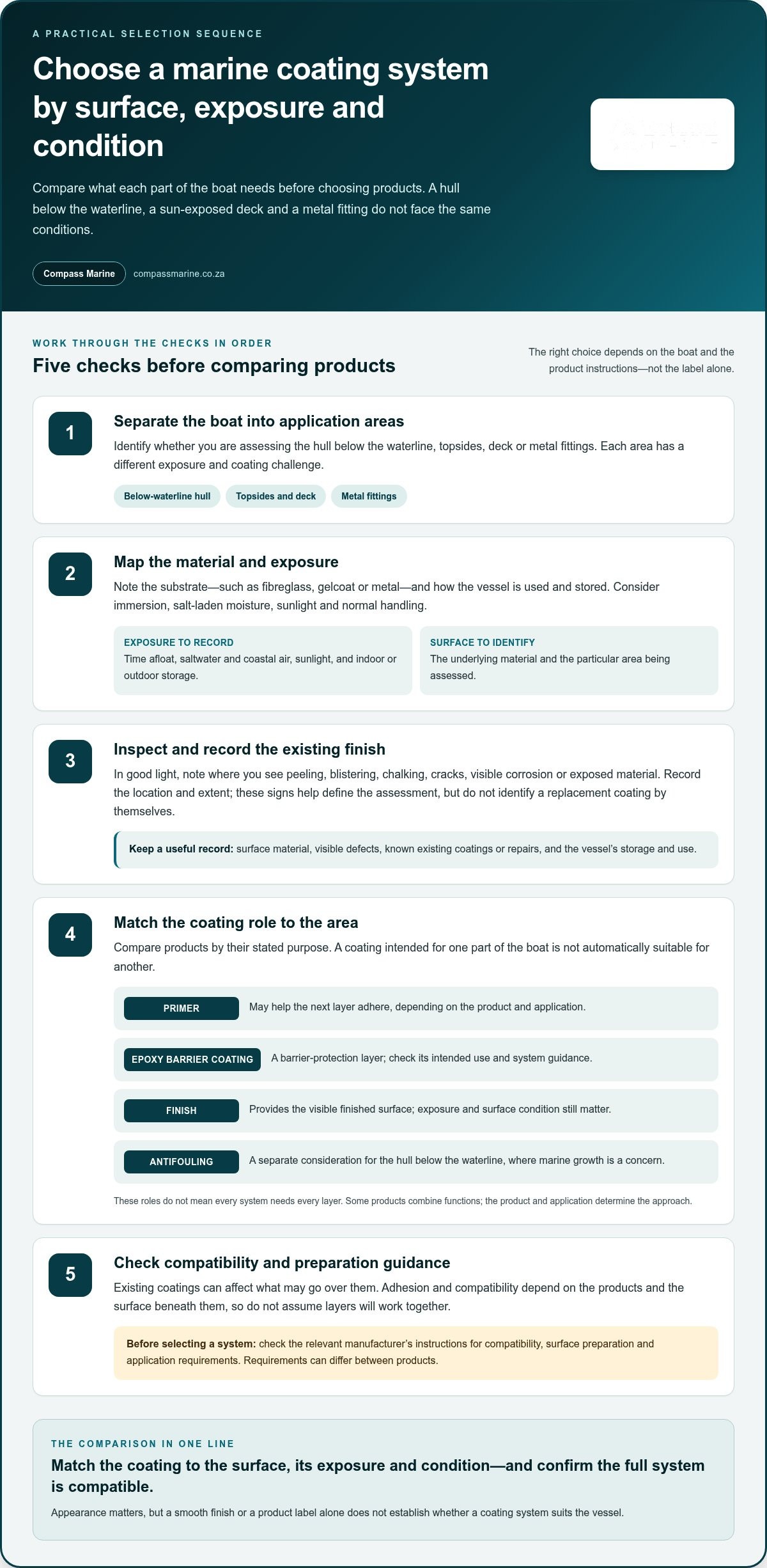
How to Compare Protective Marine Coating Systems for Your Vessel
A useful comparison starts with the boat, not the tin. Before weighing protective marine coating systems, gather details about the surface and its condition, its exposure, and what each product is designed to do. This gives you a clearer basis for comparing options and helps prevent a coating being selected simply because its label sounds suitable.
Identify the surface, exposure, existing condition and product compatibility before comparing coating options. Work through this checklist for each area you are considering, rather than treating the whole vessel as one surface.
- Identify the substrate and application area. Record whether the surface is fibreglass, gelcoat, metal or another material, and note where it sits on the vessel. Specify whether it is above or below the waterline, and whether you are considering a hull, deck, topside or fitting.
- Describe how the boat is used and stored. Note how often the area is immersed or exposed to saltwater and sunlight, and whether the vessel is kept indoors or outside. The pattern of use helps you compare products against real operating conditions.
- Document the existing coating. Write down any product details you have, including labels or records from earlier work. If the coating history is unknown, say so rather than assuming the existing layer is compatible with a new one.
- Record surface condition. Note peeling, blistering, chalking, corrosion or exposed substrate, and where each sign appears. Photographs can help track the location and extent of visible breakdown.
- Compare each product’s stated purpose. Check which surface and application the product is intended for, which substrate it suits, and whether its role is preparation, barrier protection, finishing or antifouling.
- Read the application instructions. Follow the manufacturer’s requirements for preparation, compatible layers and application conditions. If directions differ between products, do not assume they can be combined; use the applicable manufacturer guidance.
How can you avoid common selection mistakes?
A colour match or broad label such as “marine” does not establish that a product is suitable for every boat surface. Compare the stated purpose and compatible substrate, then consider the complete coating sequence. A new layer cannot automatically go over every existing coating, especially if its identity or condition is uncertain.
Keep your assessment within safe limits. You can document surfaces and visible defects, but extensive breakdown, corrosion or uncertain coating compatibility may need a closer assessment. Do not try to resolve a technical problem by adding another coat without understanding the cause and preparation requirements.
Use your notes to narrow the options and explore marine paint choices at Compass Marine. Explore marine paint at Compass Marine through its marine store.
Marine Paint and Refurbishment Support from Compass Marine
Choosing a coating is easier when product research is considered alongside the boat’s actual condition. Compass Marine stocks marine paint through its marine store and provides in-house boat and trailer refurbishment, including fibreglass and gelcoat restoration. This refurbishment work is guaranteed for quality and reliability. Paint supply and restoration are distinct forms of support: paint helps with product research, while restoration addresses surface condition where repair work is needed.
That distinction matters if a finish is peeling or the fibreglass or gelcoat is damaged. A coating choice alone will not resolve an underlying surface problem, and restoration does not by itself specify which coating system is suitable. The vessel’s substrate, existing layers, intended application and product manufacturer’s requirements remain central to the decision.
How can marine paint supply and refurbishment fit the decision?
Compass Marine’s marine store stocks marine paint, giving boat owners a place to explore paint options as part of their research. No single coating combination suits every boat, so selection still depends on the surface and the product’s stated purpose. For damaged fibreglass or gelcoat, Compass Marine’s in-house refurbishment work may be relevant before you settle on a finishing plan. This work is guaranteed for quality and reliability.
What is a practical next step before choosing?
Bring together your observations and any useful records before planning the work. A clear picture of the affected area keeps the decision grounded in the boat’s actual condition, rather than a product label alone.
- Note the vessel material and the specific area requiring attention.
- Record visible damage, coating breakdown and any previous repairs.
- Bring product labels or coating records if you have them.
- Describe how the boat is used, stored and exposed to saltwater and sunlight.
- Keep the relevant vessel or coating documentation available, particularly where manufacturer instructions guide compatibility or application.
This information helps frame the options, but the right recommendation depends on the boat, substrate, existing coating and manufacturer requirements. If you are uncertain whether a surface needs restoration before paint selection, a closer assessment can help clarify the next step. The aim is to address the surface properly and make a considered decision, not to promise a particular coating result.
For boat owners comparing protective marine coating systems, Compass Marine offers marine paint supply and relevant refurbishment support. Contact Compass Marine to discuss marine paint or in-house fibreglass and gelcoat restoration. This refurbishment service is guaranteed for quality and reliability.
Make Your Next Coating Decision with Confidence
Before committing to a paint choice, turn your notes into a clear plan for the specific surface you want to address. Check the product’s intended use and manufacturer instructions against the boat’s material, coating history and operating conditions. If any details are uncertain, resolving them first can help you avoid choosing a system based on appearance or label wording alone.
The right protective marine coating systems depend on the vessel and the job each layer needs to do. A considered selection gives you a practical basis for planning upkeep, without assuming that one product or combination suits every area.
Compass Marine can help with marine paint supply and refurbishment for surfaces that need attention. Contact Compass Marine about marine paint and refurbishment support to plan the next step for your boat.
Frequently Asked Questions
Can you apply a marine coating over existing paint?
Sometimes, but only if the new product is suitable for the substrate and compatible with the existing coating. Check the maker’s guidance for preparation and overcoating, and identify the old paint if possible. A sound finish with a known product history is different from paint that is lifting or unidentified. Do not assume protective marine coating systems can be layered safely just because both products are labelled for marine use.
How often should a boat’s protective coating be renewed?
There is no single renewal interval that suits every boat or coating. Timing depends on the product instructions, how the vessel is used and stored, and the surface condition. Inspect areas during routine cleaning and note wear or changes in appearance. Use the coating manufacturer’s maintenance guidance as your reference, rather than repainting to an assumed schedule or waiting for widespread failure.
What happens if a marine coating starts blistering or peeling?
Blistering or peeling is a reason to assess the affected area before applying another coat. The visible defect alone does not confirm its cause, so note where it occurs and whether nearby surfaces show similar changes. Avoid simply covering the damaged patch: the underlying coating or substrate may also need attention. If the damage is extensive or the coating history is unclear, have the surface assessed before planning repairs.
Can the same marine coating be used above and below the waterline?
Not necessarily. A product intended for topsides may not be designed for continuous immersion, while a coating intended for an underwater hull may not be suitable for a deck or visible finish. Read the label and technical instructions for the specific application, including any limits on where it can be used. If one product is proposed for several areas, confirm that the manufacturer explicitly allows each use.
Is ordinary household paint suitable for a boat?
Do not assume household paint is suitable for a boat. A marine surface may face immersion, salt-laden moisture, sunlight or repeated handling, and a product needs to be specified for its substrate and intended conditions. Check the paint maker’s stated use rather than relying on colour or general water resistance. If the instructions do not identify the application as suitable, choose a product whose guidance does.
Does fibreglass need a different coating approach from metal?
Often, because the substrate and its condition differ. Metal may need consideration of corrosion, while fibreglass or gelcoat can have surface damage, previous repairs or finish condition to assess. Identify the exact area and material before comparing products, then follow the manufacturer’s substrate and preparation instructions. If fibreglass or gelcoat is damaged, assess the surface before deciding on a coating.