
Could a smoother-looking propeller improve your boat’s performance, or is it distracting you from a deeper problem? If you’re considering polishing and searching for outboard lower unit service, first separate surface condition from mechanical symptoms. Polishing may improve a propeller’s finish, but it won’t straighten a bent blade, repair a crack or resolve a fault inside the outboard’s lower unit.
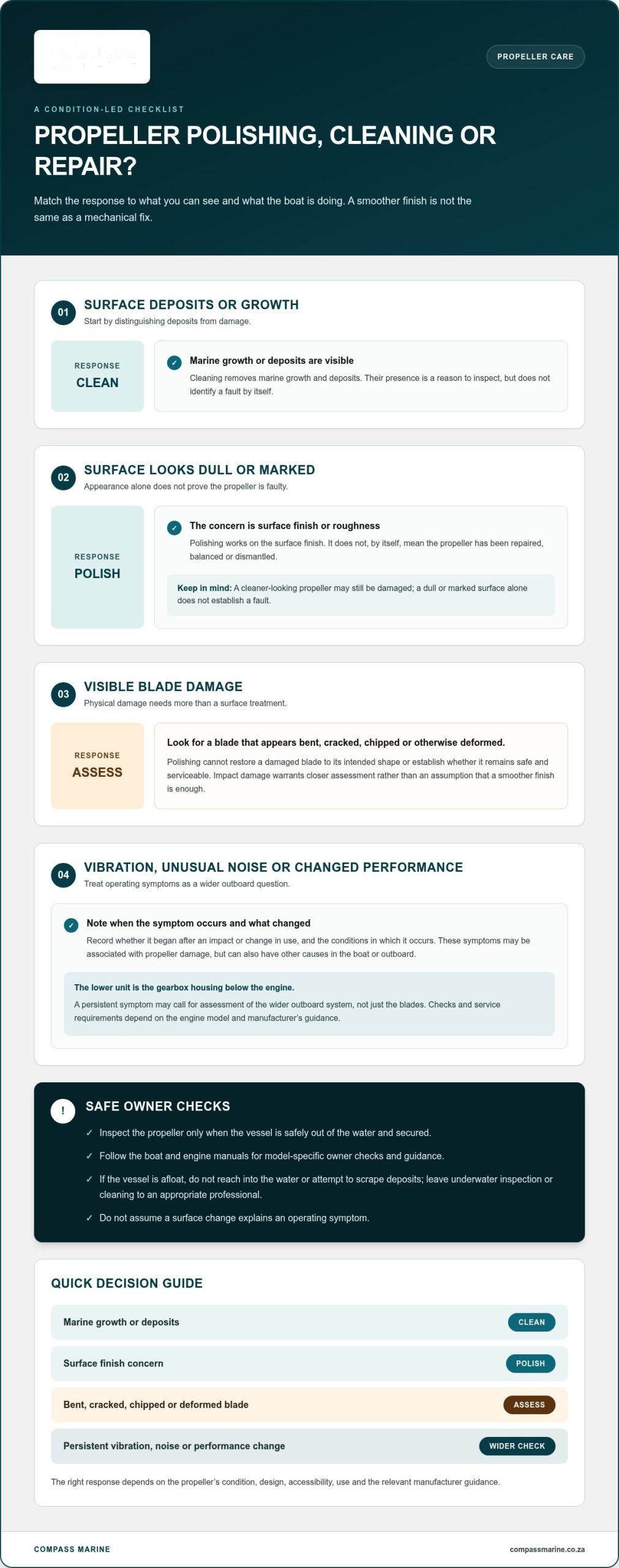
Visible growth, marks or corrosion deserve attention, particularly after regular saltwater use, but they don’t all call for the same response. Cleaning removes marine growth; polishing works on the surface finish; physical damage or persistent vibration, unusual noise and changed performance may call for a marine technician’s assessment.
This guide explains what underwater propeller polishing can and can’t address, how to judge whether a propeller needs attention, and when to consider broader outboard maintenance. It also covers why coastal exposure makes careful inspection worthwhile and how to choose a sensible next step without assuming that a polish alone will solve the problem.
Key Takeaways
- Match the response to the condition: cleaning removes growth, polishing improves surface finish, and damage may need repair.
- Look for visible damage and note changes in vibration, noise or performance rather than assuming polishing will solve them.
- Inspect the propeller only when the vessel is safely out of the water and secured, and consult the relevant manual for model-specific guidance.
- If symptoms point beyond the propeller, outboard lower unit service Durban may be part of a broader mechanical assessment.
- Compass Marine provides propeller cleaning, outboard servicing and marine mechanical work for related maintenance needs.
What underwater propeller polishing can, and cannot, do
Polishing improves a propeller’s surface condition, but it cannot correct every propeller or engine problem. Underwater propeller polishing generally refers to working on the accessible surface while the vessel remains in the water, with the aim of addressing surface roughness or deposits. It does not, by itself, mean the propeller has been repaired, balanced or dismantled.
Polishing treats the surface; mechanical assessment investigates how the propeller and outboard are working. That distinction matters if you’re weighing up a polish after noticing a change in performance. A cleaner-looking propeller may still be damaged, while a dull or marked surface alone doesn’t prove that it is faulty.
What owners mean by underwater propeller polishing
The term describes work focused on the propeller’s surface while it is underwater, rather than a workshop repair involving removal or dismantling. The aim and practical approach depend on the propeller’s condition, design and accessibility. No single method is suitable for every vessel. For a general explanation of marine propeller types and function, remember that blade shape and geometry affect how a propeller produces thrust.
“Polishing” should not be taken as a promise to resolve every visible mark or performance concern. The work needs to suit the condition, and surface treatment has clear limits.
When polishing is not a substitute for assessment
Surface dullness or deposits are different from a blade that appears bent, cracked, chipped or otherwise deformed. Polishing cannot restore a damaged component to its intended shape or establish whether it remains safe and serviceable. Impact damage warrants closer assessment rather than an assumption that a smoother finish is enough.
Symptoms need context too. Vibration, unusual noise or a change in speed or engine behaviour may be associated with propeller damage, but they can also have other causes elsewhere in the boat or outboard. Note when the symptom occurs and whether it began after an impact or a change in use. This information helps a marine technician assess whether the propeller, engine or another component needs attention.
Use the relevant boat and engine manuals for manufacturer-specific inspection guidance and limits. Advice can differ between propellers and outboards, so don’t rely on a general polishing recommendation as a diagnosis. If symptoms persist, a technician’s assessment and, where appropriate, outboard lower unit service Durban can form part of a broader investigation.
How saltwater exposure affects propeller condition and outboard checks
Saltwater use, marine growth and regular operation can all affect a propeller’s condition. Deposits may cling to the blades after time in the water; repeated use can also bring wear or impact marks to light. Salt residue and surface changes are reasons to inspect, but they don’t identify a fault on their own.
Maintenance needs reflect both the water and how the boat is used. A boat used often, left in the water for extended periods or operated in different conditions may show different signs from one launched occasionally. The right response depends on the propeller, outboard, use and observed condition, not on a fixed assumption about saltwater exposure.
Visible signs that warrant closer attention
Deposits, discolouration and obvious blade damage are observations, not diagnoses. Note what you can see and when it first appeared. If a new mark followed contact or grounding, record that context. Also note whether vibration, unusual noise or a change in how the boat operated began at the same time.
Don’t reach into the water, scrape deposits or attempt work on an immersed propeller. If the vessel is afloat, leave underwater inspection or cleaning to an appropriate professional. When it is safely out of the water and secured, follow the boat and engine manuals for owner-level checks. Don’t assume that a surface change explains an operating symptom.
Why the lower unit belongs in the wider maintenance picture
The propeller is connected to the outboard assembly, so a symptom noticed at the propeller may not originate on its surface. The lower unit is the gearbox housing below the engine. Vibration, noise or changed operation may call for an assessment of the wider outboard system, not just a look at the blades. The exact checks and service requirements depend on the engine model and its manufacturer’s guidance.
For example, a visible deposit may be present at the same time as a new operating symptom, but that alone doesn’t prove one caused the other. A useful maintenance record includes when the boat was last used, what changed and the conditions in which the symptom occurred. This gives a technician more context than appearance alone.
Regular outboard servicing puts propeller observations in the wider maintenance picture. If you’re considering outboard lower unit service Durban because of a persistent symptom, a marine technician can assess whether the concern relates to the propeller or needs broader mechanical attention. Compass Marine provides outboard engine servicing and marine mechanical work. See the outboard servicing support available.
Polishing, cleaning or repair: choose the response that fits the condition
The right response depends on what you observe. Cleaning removes deposits, polishing addresses surface finish, inspection helps assess condition, and repair deals with physical damage. These are different tasks, not interchangeable stages. The propeller may need assessment before anyone can decide which is appropriate.
Polishing cannot restore a bent, cracked or otherwise damaged component. Use this comparison as a guide, not a diagnosis. The condition, propeller design and manufacturer guidance all matter.
| Option | Purpose | Signs to discuss | Limits |
|---|---|---|---|
| Cleaning | Removes surface deposits or marine growth. | Visible deposits on accessible surfaces. | Doesn’t correct surface damage or establish whether the propeller is operating properly. |
| Polishing | Addresses surface finish. | A dull or rough-looking surface, once condition has been considered. | Doesn’t remove the need to assess damage or explain operating symptoms. |
| Inspection | Assesses visible condition and reported symptoms. | Uncertainty, visible marks or a change in operation. | Findings depend on access, condition and the relevant manufacturer guidance. |
| Repair | Addresses physical damage where repair is suitable. | A bent, cracked, chipped or deformed blade. | Requires assessment; polishing is not a repair method. |
When cleaning or polishing may be the relevant conversation
Surface deposits may make cleaning worth discussing, while dullness may prompt a conversation about polishing. Cleaning and polishing are not the same: one removes deposits, the other works on surface finish. Neither is automatically necessary on a set schedule for every boat. Let the propeller’s condition, its use and the relevant manual guide the decision.
When damage or symptoms call for professional assessment
Obvious blade damage, unexpected vibration or a noticeable change in how the boat operates are reasons to stop guessing. Don’t assume a polish will resolve them or try to reshape or repair the propeller yourself. A marine technician can consider the propeller alongside the outboard and the circumstances in which the symptom occurs.
For instance, if vibration began after the propeller struck an object, report the timing and what you noticed during operation. If the concern is broader, such as a persistent change in performance, consider the full boat-and-engine picture rather than treating surface appearance as the answer. Manufacturer-specific limits and recommendations vary, so consult the relevant manual.
When symptoms suggest an issue beyond surface condition, outboard lower unit service Durban may be part of a wider mechanical assessment. Compass Marine provides outboard servicing and marine mechanical work to help owners consider propeller condition alongside the outboard’s maintenance needs.
A safe owner checklist before arranging propeller work
A clear record of what you’ve noticed helps a marine technician understand the concern and decide what needs assessment. Keep your role to recording observations and checking the relevant guidance. Don’t attempt underwater inspection, propeller removal or specialist repairs yourself.
What to record before seeking advice
Before arranging an assessment, gather the details below. Inspect the propeller visually only when the vessel is safely out of the water and secured. If it’s afloat, don’t reach towards or work on the propeller.
- Record what you can see. Note deposits, discolouration, marks or apparent blade damage. Describe what you observe without trying to decide what caused it.
- Write down any operating symptoms. Record changes such as unusual vibration, noise or handling, and when you first noticed each one. If a symptom occurs only in particular circumstances, note those too.
- Describe recent use or possible impact. Include relevant context, such as a recent outing or suspected contact with an object. This can assist an assessment, but it doesn’t establish a diagnosis.
- Check the manual and identify the engine. Note the outboard make and model, then consult its manual for applicable owner guidance. Manufacturer recommendations and limits differ, so avoid relying on generic instructions.
Keep your notes together and share them when arranging advice. A simple timeline can help distinguish an older surface mark from a recent change or symptom.
Checks owners should leave to a marine technician
Underwater work, propeller removal and mechanical checks are outside this owner checklist. These tasks can require suitable tools, technical knowledge and safe working conditions. Don’t reach near the propeller or attempt to straighten, dismantle or repair it based on appearance alone.
If visible damage or unexpected vibration raises a safety concern, stop using the boat until it has been assessed. Continuing to operate without understanding the cause may expose the boat and outboard to further risk. A technician can consider the propeller alongside the reported symptoms and relevant outboard guidance, rather than treating a surface observation as a diagnosis.
If your concern involves outboard lower unit service Durban, bring your notes and engine details to the discussion. This helps focus the assessment on what you observed, how the boat was being used and what the manufacturer recommends.
For related mechanical support, discuss marine mechanical support with Compass Marine. Clear observations give the team a useful starting point for considering propeller and outboard maintenance together.
How Compass Marine supports propeller and outboard maintenance decisions
A propeller concern can be a useful reason to look at the outboard as a whole. A surface deposit may call for cleaning, but a change in operation or visible damage may need broader mechanical assessment. Compass Marine provides propeller cleaning, outboard servicing and marine mechanical work, helping owners consider the observed condition alongside the engine’s maintenance needs. The right response depends on what is found, not every concern calls for the same service.
Relating propeller observations to outboard servicing
Notes about visible changes, vibration, noise or altered handling give a technician practical context, but they don’t identify the cause on their own. The engine make and model, service history, current condition and manufacturer’s guidance all affect which checks or maintenance are appropriate. Compass Marine’s mechanics include certified Yamaha and Suzuki technicians, with those certifications applying to their respective brands.
For example, if a boat develops a new vibration and the propeller also has a visible mark, both details are relevant to the assessment. Provide the timeline and operating context rather than assuming the mark explains the symptom. An outboard service discussion can consider the engine’s needs alongside the propeller, instead of treating surface appearance as a complete diagnosis.
For broader service context, consult a professional marine engine servicing guide. Follow the manual for the specific outboard, as service recommendations and inspection guidance vary between models. A general article can help you understand the questions to raise, but it can’t replace manufacturer instructions or an assessment of the individual engine.
A practical next step for boat owners
When arranging support, describe what you’ve observed, when it began and whether the boat’s operation changed at the same time. Include the outboard make and model, and mention any suspected impact or recent change in use. Clear information helps focus the discussion without assuming in advance that cleaning, polishing or mechanical work is the answer.
If you’re considering outboard lower unit service Durban, Compass Marine provides relevant outboard servicing and marine mechanical support. The appropriate assessment depends on the engine and its condition, so bring the details you’ve recorded and refer to the applicable manufacturer guidance. If the propeller needs attention for deposits, Compass Marine also provides propeller cleaning.
For a practical discussion about your propeller concern or a change in operation, contact Compass Marine about marine mechanical support.
Make your next maintenance decision with confidence
Use your observations to plan a sensible next step rather than treating polishing as an automatic fix. If the concern is appearance alone, discuss whether surface care is appropriate. If there’s damage or a change in operation, make assessment the priority before returning to normal use. Your engine manual can also help you understand model-specific maintenance guidance.
For boat owners considering outboard lower unit service Durban, start with a clear description of what you’ve noticed, when it began and how the boat was being used. That gives the maintenance discussion practical context and keeps attention on the issue that matters to you.
Compass Marine can help you consider the next step for your boat’s maintenance needs. Discuss your propeller and outboard maintenance needs with Compass Marine and move forward with a clearer plan for your next outing.
Frequently Asked Questions
Can underwater propeller polishing fix a bent or damaged blade?
No. Polishing won’t straighten a bent blade, repair a crack or reverse impact damage. If you spot a deformation, don’t treat surface work as a remedy or attempt an underwater repair. Note what you observed and any known contact with an object, then arrange an assessment by a marine professional. The relevant propeller and engine manufacturer guidance should inform what happens next.
How often should a boat propeller be polished?
There’s no single polishing schedule that suits every vessel. Appropriate maintenance depends on the propeller’s condition, how the boat is used, its operating environment and the manufacturer’s recommendations. For example, a boat kept afloat may show different deposits from one used occasionally and stored out of the water. Use the observed condition and manual to guide decisions rather than treating polishing as an automatic calendar task.
Will propeller polishing make my boat faster or use less fuel?
Polishing does not guarantee a speed or fuel-use improvement. If the boat seems slower or its fuel use changes, note when you noticed the difference and whether other operating conditions changed too. Don’t assume the propeller’s finish explains it. A marine professional can consider the propeller and outboard together, since performance depends on more than surface appearance and the right assessment depends on the boat and engine.
What should I do if my outboard vibrates after the propeller has been polished?
Arrange an assessment if vibration is unusual rather than assuming it is harmless or caused by the polishing. Record when it began, whether it was present before the work and what operating conditions were involved. Avoid using the boat if the vibration raises a safety concern. A technician can consider the propeller and outboard together; outboard lower unit service Durban may be relevant if the assessment points to broader mechanical attention.
Does propeller polishing replace outboard lower unit servicing?
No. Polishing does not replace servicing the outboard according to its manufacturer’s requirements. Check the manual for the guidance applicable to your engine model, and keep its maintenance separate from decisions about propeller surface care. If you’re unsure which concern to address first, share the engine details and any change in operation with a marine professional so the next step reflects your boat’s condition.
For practical marine support, discuss your propeller and outboard maintenance needs with Compass Marine and take a considered next step for your boat.