
The most advanced chartplotter on the market is nothing more than an expensive paperweight if the wiring behind your dash cannot withstand the relentless humidity of the KwaZulu-Natal coast. Many boaters in Durban have experienced that sinking feeling when a screen flickers and dies just as they are crossing the bar or hunting for a specific reef. It’s frustrating to invest in high-end gear only to have saltwater corrosion or a messy NMEA backbone cause a total system blackout. Proper marine electronics installation is about more than just plugging in cables; it’s about building a resilient ecosystem that survives the Indian Ocean.
This guide will help you master the essentials of boat wiring, system integration, and environmental protection to ensure your marine electronics perform flawlessly whilst at sea. We’ll provide a clear roadmap for the latest 2026 standards, help you understand complex NMEA 2000 networks, and show you how to manage battery loads so your power never falters. From preventing corrosion on expensive sonar units to ensuring your GPS readings remain crystal clear, you’ll gain the confidence to handle your vessel’s technical heart with a steady hand.
Key Takeaways
- Understand the transition from standalone units to integrated Multi-Function Displays (MFDs) and how a networked suite improves safety at sea.
- Learn the architecture of a reliable NMEA 2000 backbone to ensure your sensors and displays communicate without interference.
- Discover why professional marine electronics installation is essential for shielding your investment from the corrosive saltwater environment found in Durban’s coastal waters.
- Identify the common pitfalls of DIY wiring, such as improper grounding, and how to calculate power draw to protect your battery bank.
- Gain insights into the specialised diagnostics and bespoke design services required to maintain high-performance electronics in the KwaZulu-Natal climate.
Understanding Modern Marine Electronics Installation
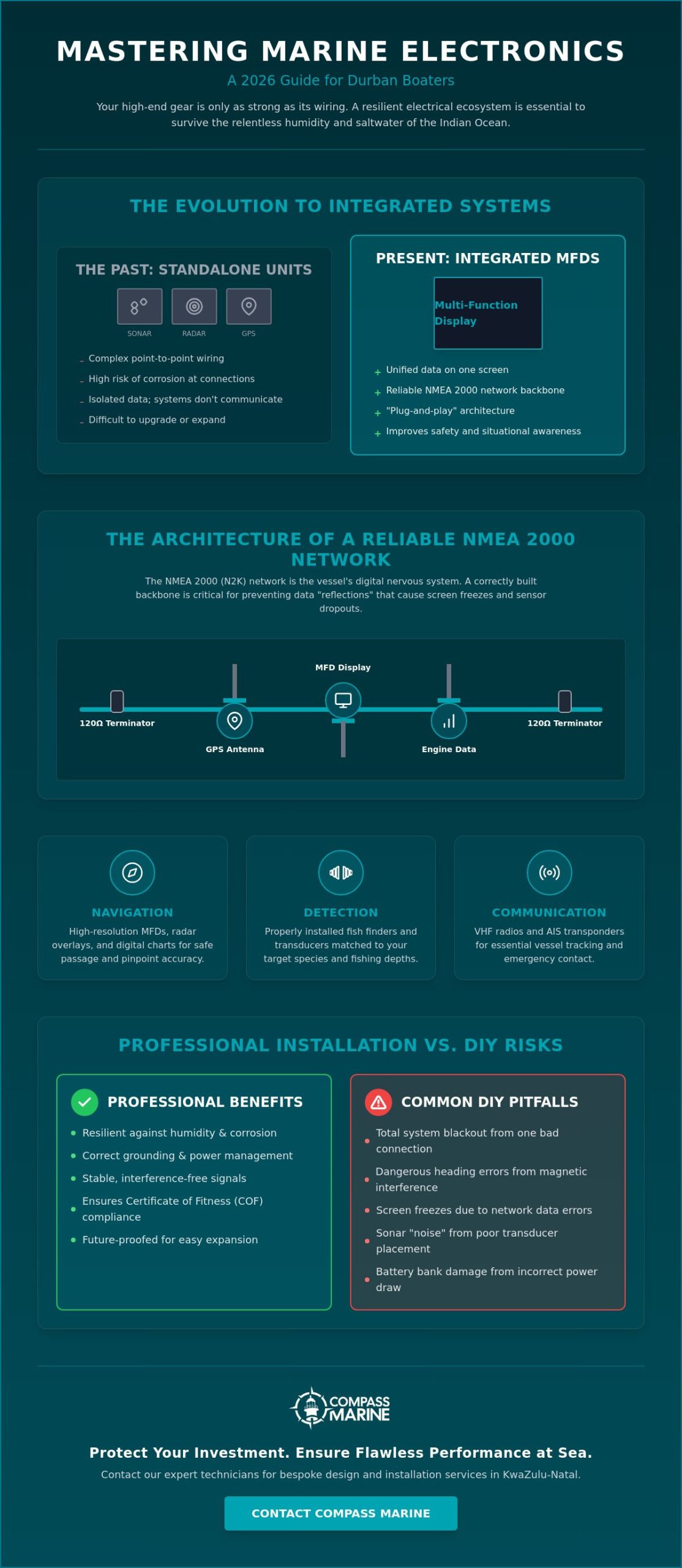
Marine electronics installation has evolved from mounting a single depth sounder to configuring a fully integrated digital nervous system for your vessel. In the past, a boat might have separate displays for radar, sonar, and GPS. Today, these functions are unified within networked Multi-Function Displays (MFDs). This shift allows for seamless data sharing across the boat, but it also increases the complexity of the initial setup. Modern Marine Electronics now encompass everything from engine telemetry to thermal imaging, requiring a sophisticated understanding of how these systems talk to one another.
Safety is the primary driver behind every technical decision we make at the helm. In the unpredictable conditions off the KwaZulu-Natal coast, a faulty connection isn’t just an inconvenience; it’s a risk to your crew. Professional installation ensures that your vessel remains compliant with South African maritime regulations, including the requirements for your Certificate of Fitness (COF). A correctly fitted suite provides the redundant power and reliable data needed to navigate safely back to Durban Harbour when the weather turns.
The Core Components of a Marine Suite
A robust electronics package starts with a high-accuracy GPS antenna and a chartplotter loaded with local hydrographic data. We typically categorise the essential hardware into three functional areas:
- Navigation: High-resolution MFDs that integrate radar overlays with digital charts.
- Detection: Selecting the right fish finder and transducer to match your target species and typical fishing depths.
- Communication: Fixed-mount VHF radios and AIS transponders for vessel tracking and emergency contact.
These devices don’t just help you talk to other skippers; they ensure you are visible to commercial traffic in busy shipping lanes near the harbour.
The Importance of Proper Placement
Where you mount your gear is just as vital as how you wire it. Ergonomics at the helm must allow the skipper to see vital data at a glance whilst under way, without obstructing the view of the horizon. We also have to account for magnetic interference. Placing high-current wires or speakers too close to a fluxgate compass or sensitive sensors can lead to dangerous heading errors. Similarly, transducer placement on the transom or hull requires precision. If the water flow is turbulent, your sonar clarity will suffer, resulting in “noise” that masks the very fish you are trying to find.
The Architecture of Boat Wiring and System Integration
A successful marine electronics installation depends entirely on the integrity of the network backbone. Think of the NMEA 2000 (N2K) network as the vessel’s nervous system. It’s a high-speed data bus that allows your engine, GPS, and sensors to share information instantly. Unlike the older NMEA 0183 standard, which relied on complex point-to-point serial wiring, N2K uses a standardised plug-and-play architecture. This modern approach is far more reliable in the high-humidity environment of KwaZulu-Natal, where traditional wire-to-wire connections often fail due to hidden corrosion.
For skippers running older gear, managing the transition from legacy systems is a common challenge. You don’t necessarily need to replace every sensor when you upgrade your display. We use specialised gateways and converters to bridge NMEA 0183 data into a modern N2K backbone. This allows your existing depth transducers or wind sensors to communicate with the latest MFDs. Adhering to NMEA Installation Standards during this process ensures that data packets aren’t lost and that the network remains stable even when multiple devices are drawing power simultaneously.
Building a Reliable Network Backbone
The backbone is a single main trunk line that runs through the boat, terminated at each end with a 120-ohm resistor. These terminators are critical; without them, data signals “reflect” back through the wire, causing screen freezes and sensor dropouts. We use T-connectors to tap into this line, connecting individual devices via drop cables. This modular design means you can add a new AIS unit or an autopilot sensor later without ripping out your existing looms. Planning for this future expansion during the initial fit-out saves significant labour costs down the line.
Diagnostic Integration and Engine Monitoring
Modern helm design has moved away from analogue gauges in favour of digital dashboards. By connecting your outboard or inboard engines to the N2K network, you can monitor fuel flow, RPMs, and cooling temperatures directly on your screen. This integration is vital for Durban boaters who need to manage fuel ranges accurately when heading out to deep-sea marks. Utilising professional marine engine diagnostics during the installation ensures that your MFD correctly interprets the engine’s data stream, providing early warning signs before a mechanical fault becomes a breakdown. If you’re unsure if your current power plant is compatible, our technicians at Compass Marine can assess your engine’s digital output capabilities.
Professional Installation vs DIY: Evaluating Reliability
Many skippers assume that being “handy” with a car’s electrical system translates directly to the water. This is a dangerous assumption. Marine environments are significantly more hostile than the road, requiring specific materials and techniques to prevent catastrophic failure. A professional marine electronics installation accounts for variables that don’t exist in the automotive world, such as stray current electrolysis and the constant vibration of hull-to-water impact. In a car, a short circuit might blow a fuse; on a boat, it can lead to a fire in a confined space whilst miles from the Durban shoreline.
Manufacturer warranties often hinge on how the equipment was fitted. Most major brands prefer or even require a certified technician to sign off on the install to keep the warranty intact. If a DIY-installed MFD fails due to an avoidable power surge, you might find your claim rejected. Investing in professional electrical wiring and fault diagnostics ensures that grounding is handled correctly, preventing your hull from becoming an accidental anode and protecting your high-value assets from internal corrosion.
Common DIY Installation Mistakes
We frequently encounter vessels where the owner has used standard copper wire instead of tinned marine-grade cable. Standard copper wicks moisture and corrodes internally, leading to a hidden drop in voltage that causes electronics to reboot. Other common errors include:
- Incorrect fuse sizing: Using a fuse that is too large can allow a surge to fry your sensitive circuitry before the circuit breaks.
- Poorly crimped connections: Standard pliers don’t provide the “cold weld” required for marine terminals. These connections eventually vibrate loose in heavy seas, leading to intermittent power loss.
- Ignition protection issues: Failing to use ignition-protected components in petrol engine bays, which violates basic safety protocols.
The Professional Advantage
A professional technician brings more than just a toolbox; they bring a methodical approach to system calibration. Ensuring your boat navigation systems are accurate requires precise setup of heading sensors and GPS offsets. We use specialist tools for cable pulling through tight stringers and signal testing to ensure the NMEA backbone is operating at peak efficiency. Every project we undertake follows strict safety standards, referencing global best practices like the Federal Electrical System Regulations to ensure your vessel is both reliable and compliant. This level of technical mastery provides the peace of mind that your gear will perform exactly when you need it most.
Managing Power and Protecting Against the Marine Environment
Durban’s subtropical climate is a punishing laboratory for electrical systems. The combination of high humidity and constant salt spray creates an environment where standard electrical components fail rapidly. A high-quality marine electronics installation must prioritise environmental sealing and power stability above all else. Salt is a conductor. When saltwater residue settles on an exposed terminal, it creates a bridge for current to leak, leading to rapid electrolytic corrosion that can eat through a connection in weeks. This is why every centimetre of wiring on your vessel requires a level of protection far beyond what is acceptable in land-based applications.
Modern electronics suites are power-hungry. A large 16-inch MFD, a 1kW transducer, and a solid-state radar can pull significant current from your system. Before adding new gear, we calculate the total peak load to ensure your existing battery bank and charging system can handle the demand. If your voltage drops even slightly when you start your engines or run a livewell pump, your sensitive electronics may reboot or lose data. Organising your fuse panel with clear labels and high-quality breakers is not just about neatness; it’s about being able to troubleshoot a fault quickly whilst bouncing in a swell off the Bluff. For boaters looking to go beyond electronics and address overall vessel efficiency, exploring boat performance upgrades can help eliminate issues like poor hole-shot response and excessive fuel consumption that compound the strain on your electrical systems.
Battling Saltwater Corrosion
Tinned copper wire is the only acceptable standard for marine use. Unlike bare copper, which turns black with oxidation and loses conductivity, each strand in a tinned cable is coated to resist the Durban air. We use marine-grade heat-shrink connectors with internal adhesive linings. When heated, this adhesive melts to form a watertight seal around the wire. Additionally, applying dielectric grease to plug connections adds an extra layer of moisture protection. Sealing cable entries through the console with proper glands prevents water from following the loom down into your sensitive fuse blocks. The same principle applies to every piece of hardware used to mount your equipment; using the correct 316 stainless steel fasteners in Durban for antenna mounts, radar arches, and transducer brackets ensures that the hardware holding your electronics in place is as corrosion-resistant as the wiring itself.
Power Management and Battery Health
We strongly recommend separating your electronics from your engine starting circuit. Dedicated “house” batteries ensure that your navigation and safety gear remain powered even if the starting battery is depleted. To manage this automatically, we install Voltage Sensitive Relays (VSRs). These devices allow the alternator to charge the starting battery first and then switch to the house bank once the engine is running. This prevents “voltage sag” during engine cranking, which is the leading cause of corrupted software in modern chartplotters. If you are experiencing flickering screens or frequent reboots, it is time to have your system professionally assessed. You can book an inspection for electrical wiring and fault diagnostics to ensure your power delivery is stable and safe.
Expert Marine Technical Services and Electronics Support
At Compass Marine, we view every marine electronics installation as a bespoke engineering project rather than a simple hardware swap. No two vessels are identical, and the requirements of a competitive angler launching from Vetch’s Pier differ vastly from a recreational cruiser moored in the marina. Our approach begins with a comprehensive technical consultation to understand your specific needs, vessel layout, and power capacity. We pride ourselves on being a “safe pair of hands,” ensuring that your investment is protected by high-quality craftsmanship and industry-leading diagnostic standards.
As an authorised Lowrance agent, we provide expert guidance on selecting the right fish finder and sonar technology for our local conditions. Whether you are hunting for Natal Snoek in the shallows or tracking Billfish in the deep, we ensure your transducers are positioned for maximum clarity and zero signal interference. Our support doesn’t end once the boat leaves the workshop; we provide ongoing assistance with firmware updates and system troubleshooting to keep your suite running at peak performance year after year.
Maintaining complex electronics requires a high degree of technical skill, a principle that applies whether the equipment is mounted on a console or flying overhead. For boaters who also utilise drones for scouting or photography, Caswell Aviation Ltd offers professional drone services including repairs and aerial imagery to ensure your secondary tech is as reliable as your primary navigation suite.
Tailored Electronics Solutions
Designing a system for a high-speed skiboat requires a different mindset than fitting out a displacement hull. We specialise in retro-fitting modern technology into classic hulls, ensuring that new MFDs and sensors are integrated sympathetically with existing structures. Often, a standard mounting bracket isn’t sufficient for the vibrations of the Indian Ocean. In these cases, our in-house stainless steel fabrication team can create custom antenna mounts and radar arches that are as durable as they are functional. To ensure these custom structures remain secure in the long term, every fitting point relies on marine-grade 316 stainless steel fasteners that resist the galling and corrosion common in KwaZulu-Natal’s high-salinity environment. This level of customisation ensures that your equipment is positioned for optimal line-of-sight and signal reception.
Comprehensive Marine Care
Reliability at sea is achieved by looking at the vessel as a whole. We believe that your electronics’ health is inextricably linked to your mechanical maintenance. During an annual outboard engine service, we perform a routine check of your electrical looms and battery health to catch potential faults before they leave you stranded. This holistic approach ensures that your boat navigation systems, safety equipment, and engine telemetry all work in harmony. By combining technical mastery with a proactive approach to problem-solving, we help Durban skippers maintain their vessels to the highest national compliance standards, ensuring every launch is a confident one.
This proactive approach to vessel safety also extends to the remote monitoring of critical equipment such as bilge pumps and HVAC units; for advanced alert systems that keep you informed of your boat’s status while it is moored, check out inTouch R&B.
Future-Proofing Your Vessel for the Seasons Ahead
Modern seafaring relies on the seamless integration of data, power, and protection. As we move through 2026, a high-quality marine electronics installation is no longer just about mounting a screen; it’s about engineering a resilient system that can withstand the aggressive saltwater environment of KwaZulu-Natal. By prioritising a robust NMEA 2000 backbone and ensuring your power management is handled with surgical precision, you protect your vessel from the common pitfalls of electrical failure and signal interference.
With decades of experience in marine technical services and our status as an authorised Lowrance agent, we bring a level of integrity to every project that DIY attempts simply cannot match. Our team provides certified technical expertise in electrical diagnostics to ensure your suite is both compliant and reliable. Don’t leave your safety to chance when you’re crossing the bar or heading into deep water. You can book a professional marine electronics consultation with Compass Marine today to design a suite that performs flawlessly. We look forward to helping you navigate the Indian Ocean with absolute confidence.
Frequently Asked Questions
How do I stop my fish finder from losing the bottom at high speeds?
Signal loss at speed is typically caused by cavitation or air bubbles passing under the transducer face. To fix this, ensure the transducer is mounted slightly below the hull’s running surface and away from strakes or through-hull fittings that create turbulence. In Durban’s choppy conditions, even a two-millimetre downward adjustment can significantly improve sonar clarity whilst you are on the plane.
Is it necessary to update the software on my marine electronics?
Regular firmware updates are essential for maintaining system stability and ensuring compatibility between different networked devices. Manufacturers often release patches that improve GPS accuracy and sonar processing speeds. We recommend checking for updates during your annual engine service to ensure your marine electronics installation continues to meet the latest 2026 performance standards.
What are the primary warning signs of a failing electrical system?
Common indicators include flickering displays when using high-draw equipment like trim tabs and intermittent “no data” messages on your MFD. You may also notice a slow GPS fix or physical signs of green oxidation on your fuse blocks. These symptoms suggest high resistance or voltage drops caused by the harsh KwaZulu-Natal humidity and require immediate professional attention to prevent a total blackout at sea. Understanding the principles of marine electrical fault finding can help you identify and diagnose these issues before they escalate into a full system failure.
Can a DIY marine electronics installation void my equipment warranty?
Yes, many leading manufacturers require a certified technician to perform or sign off on the work for the full warranty period to remain valid. If a device fails due to a short circuit or improper grounding caused by a DIY fit-out, the manufacturer may reject your claim. Professional fitting protects your high-value assets and ensures you are fully covered if a hardware fault occurs.
Why is my depth reading inaccurate when I am in shallow water?
Inaccurate shallow-water readings often result from “double-bounce” echoes or an incorrect transducer offset setting in your system menu. You must calibrate your keel offset to ensure the depth displayed accounts for the distance between the transducer and the lowest point of your vessel. This calibration is a vital step in any professional marine electronics installation to prevent accidental groundings in shifting harbour channels.