
Could a rope that looks sound at the dock become a weak point when surge puts it under load? Sunlight, saltwater and repeated strain can all affect a line’s condition, while the wrong material or diameter may compromise its performance. If you’re searching for Southern Ropes, start by matching the line to its job, rather than choosing by thickness or appearance alone.
This guide explains how to compare rope materials and constructions for mooring, anchoring and sailing, and what to consider when assessing stretch, durability and handling. You’ll also learn how wear and unsuitable terminations can affect performance. Compass Marine’s chandlery stocks Southern Ropes. The following sections will help you ask informed questions and choose lines suited to your vessel, equipment and operating conditions.
Key Takeaways
- Choose rope for its job: the right material and construction depend on whether it’s used for sailing, mooring or anchoring.
- Compare how different fibres handle stretch and load before choosing a line for your vessel and berth.
- Limit wear by rinsing rope with fresh water and checking for heat damage around winches.
- Understand why a rope’s termination matters, and when to ask a marine professional about suitable splicing or lengths.
- Compass Marine’s chandlery stocks Southern Ropes. Confirm current availability when asking about a line for your application.
Why Southern Ropes is the Preferred Choice for South African Mariners
Choosing a rope brand is only part of making sound rigging decisions. You also need to know what the line is designed to do, how its performance is described and where to get product-specific guidance. Southern Ropes is a South African manufacturer with more than 40 years of experience and a range of synthetic and natural fibre ropes for marine applications. That gives boat owners a locally manufactured option, while the suitability of each rope still depends on the vessel, equipment and intended use.
Compass Marine’s chandlery stocks Southern Ropes. Confirm current availability and ask for information about the particular line you’re considering, rather than assuming every rope in a range shares the same performance or application.
The Southern Ropes Legacy for Mariners
Buying from a South African manufacturer gives boat owners an option produced closer to home, with a stockist as a point of contact. It doesn’t mean every product will suit every vessel, or that locally made automatically means better for a specific job. Ask about the rope’s intended application, construction and available load information, then compare those details with your boat’s requirements.
For a useful foundation on how rope types are constructed, see this overview of Rope construction and materials. Use it as background, not as a substitute for the specifications of the line you plan to use.
Quality Information for Demanding Conditions
Marine rope is used across a wide range of conditions and applications. Rather than relying on broad claims about UV resistance or abrasion protection, check the specific product information for its intended use and care guidance. This is particularly important for lines exposed to prolonged sun, rubbing against fittings or repeated loading.
Southern Ropes is an ISO-certified manufacturer, but that does not mean every rope has identical characteristics or is automatically right for a given vessel. Standards such as ISO 2307:2019 describe methods for measuring physical and mechanical properties of fibre ropes; they don’t replace the product’s own application and load information. Before choosing a line, confirm its specifications, compatibility with your fittings and suitability for the task. This helps you make a considered choice based on verifiable details, not brand reputation alone.
Understanding Rope Materials: Which Fibre Do You Need?
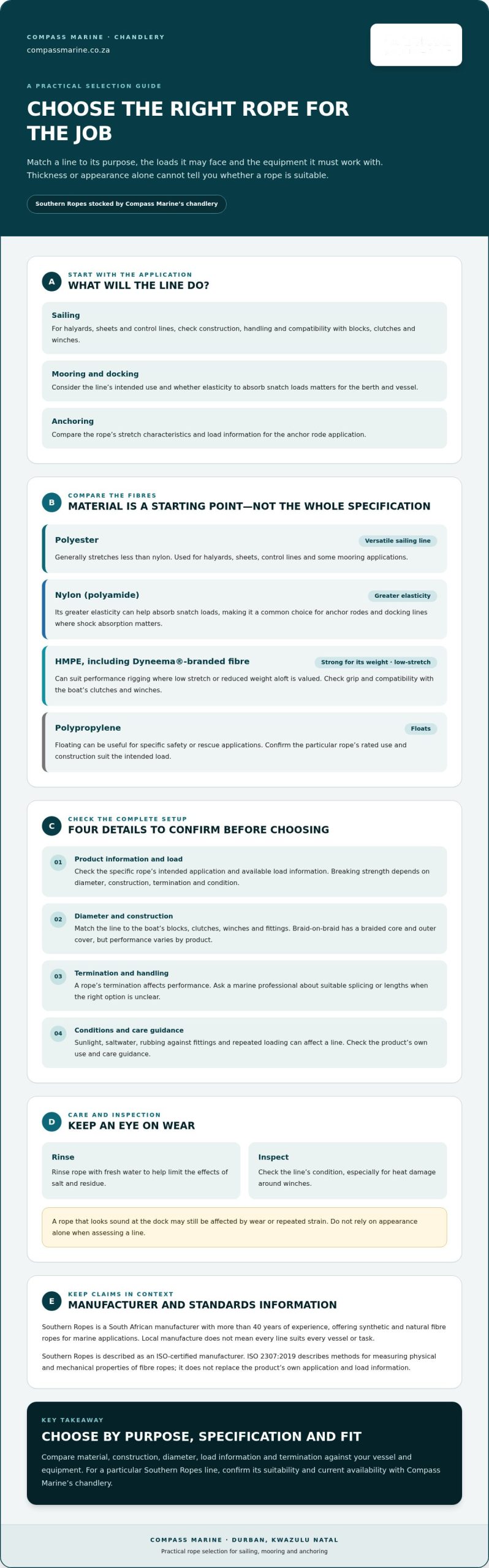
The best rope depends on the job. A line that works well as a sheet may not provide the stretch needed for an anchor rode, and a high-strength halyard still needs to run properly through its masthead sheaves, clutches and winches. Compare the rope’s intended use, construction, diameter and manufacturer’s load information rather than selecting by fibre name alone.
- Polyester: A versatile choice for halyards, sheets, control lines and some mooring applications. It generally stretches less than nylon and handles well in many everyday sailing roles.
- Nylon (polyamide): Its greater elasticity can help absorb snatch loads, making it a common option for anchor rodes and docking lines where shock absorption matters.
- HMPE, including Dyneema®-branded fibre: Strong for its weight and low-stretch, it can suit performance rigging. It isn’t automatically the right choice for every deck fitting or rope-handling system.
- Polypropylene: It floats, which can be useful for specific safety or rescue applications. Confirm that the particular rope’s rated use and construction suit the intended load.
Polyester Braid-on-Braid: A Practical Cruising Option
Braid-on-braid rope has a braided core and outer cover. This construction can provide a comfortable grip and manageable handling for common sailing lines, but performance varies by product. For a main halyard, jib sheet or control line, check that the diameter suits the boat’s blocks and clutches. Confirm the rope’s load rating and follow the equipment maker’s guidance for use and termination.
High-Tech Fibres: When to Consider HMPE
HMPE’s high strength-to-weight ratio and low stretch can make it useful where reduced weight aloft or limited elongation is valued. Don’t compare it with steel wire or polyester by fibre name alone: breaking strength depends on the rope’s diameter, construction, termination and condition. Ask for the specific product data, and check that any cover provides suitable grip in the boat’s clutches and winches.
Rope selection is part of safe rigging, but guidance must fit the setting. The US OSHA Safe Rigging Practices reference addresses workplace rigging, not marine rope selection; use your vessel and equipment manufacturers’ instructions for marine applications. For Southern Ropes Durban enquiries, Compass Marine’s chandlery stocks Southern Ropes, though availability of a particular type should be confirmed. Browse the Compass Marine chandlery for a starting point.
Selection Guide: Matching Southern Ropes to Your Application
Start with the job the line must do, then consider your vessel’s size and displacement, the loads it may experience, how it runs through fittings and how often it’s used. A rope choice that suits a light fishing boat may not be appropriate for a heavier yacht. There isn’t one diameter or construction that fits every boat, so check the rope manufacturer’s specifications and your equipment guidance before buying.
Mooring Lines: Protecting Your Investment in the Harbour
At a berth exposed to movement or surge, some stretch can help soften sudden loads on cleats and other deck hardware. Nylon is often considered for this role because it stretches more than polyester; suitable purpose-made dock lines are another option. The correct diameter depends on the rope’s rated capacity, vessel displacement, exposure and fittings. Don’t size by boat length alone, and avoid choosing an oversized line that won’t sit or work properly on the hardware.
Chafe can damage even a correctly selected line. Check where it passes through fairleads or rubs against a pontoon, and use appropriate chafe protection where needed. Inspect regularly for worn covers, broken strands or flattened sections. Reliable mooring arrangements are vital wherever you tie up; for skippers travelling abroad or looking into transient slip rentals in Florida, you can learn more about Buccaneer Marina to explore dedicated waterfront facilities.
Running Rigging: Optimising Sailing Performance
Halyards that stretch under load can affect sail trim, while sheets need to remain manageable through blocks and winches. A low-stretch line may suit a halyard, but confirm that its diameter and cover are compatible with the clutches and winches aboard. Soft shackles and other modern terminations can reduce metal hardware, but their suitability depends on the attachment point, load and correct installation.
Rig tuning involves more than replacing rope. For further background on marine technical considerations, see marine technical services; use a suitably qualified professional for work that requires specialist assessment.
Anchor Ropes for Your Conditions
An anchor rode commonly combines chain and rope, but don’t assume a universal chain-to-rope ratio. The appropriate arrangement depends on the anchor, vessel, water depth, seabed, conditions and equipment guidance. Rope provides useful length and handling flexibility, while chain contributes weight near the anchor. Some small-boat systems use weighted or lead-core rope, but check the specific product’s intended use and handling requirements before choosing it.
Make sure connecting hardware is suited to the rope, chain and anchor, and inspect it for wear or corrosion. Compass Marine’s guide to 316 stainless steel fasteners offers background on marine-grade hardware.
Safety and Towing Lines
Carry lines suited to your actual boating and emergency needs, such as suitable spare mooring or anchoring line. A towing line must be selected for the vessels, attachment points and anticipated loads; don’t use an ordinary dock line as a towline without confirming it’s appropriate. Keep lines accessible, inspect them before trips and replace any with damage that could compromise their use. Reviewing a marine safety equipment checklist for South African boat owners can help you identify gaps in what you carry before departure.
For a Southern Ropes Durban purchase, match the line to the application and confirm the specific product’s availability and specifications with Compass Marine’s chandlery.
Maintenance and Longevity: Caring for Your Southern Ropes
Sun, humidity and saltwater exposure make routine rope care worthwhile. After use, rinse lines with fresh water to help remove salt and grit. Salt deposits and trapped particles can contribute to abrasion as rope fibres move against one another, especially in a line that is repeatedly loaded or passes through a fitting. Let rope dry thoroughly before storing it, and follow the manufacturer’s care instructions for the specific product.
Heat is another source of damage. A line slipping under load on a winch or capstan can heat through friction, potentially glazing or weakening fibres. Use the equipment as intended, avoid uncontrolled slipping and check rope-contact areas for hard, shiny or melted-looking patches. Store lines out of direct sunlight where practical, and away from fuel, solvents, battery chemicals and other substances that may damage fibres.
Combating Salt and UV Damage
Inspect ropes regularly, particularly after heavy use or exposure to rough conditions. Look for a fuzzy surface, fading, stiffness, fraying and damage where the line rubs against a cleat, fairlead or deck edge. Some surface wear may be cosmetic, but deep furring, broken yarns or a damaged cover deserve attention. Don’t use bleach, strong detergents or unapproved cleaners; they may harm rope fibres or protective finishes. Use fresh water unless the manufacturer recommends another method. Choosing the right cleaning product for each surface on your vessel matters just as much as rope care; a guide to Star brite boat cleaning products can help you identify suitable options for different tasks and finishes.
When to Retire Your Ropes
Check the full length, not just the sections visible on deck. Feel for flat spots, local bulges or herniations, unusually stiff areas and changes in diameter. On covered rope, look for signs that the core has shifted relative to the cover, such as bunching or unevenness. These can indicate internal damage that a quick visual check may miss.
- Remove a line from service if strands are cut or badly abraded, the core is exposed, or there are heat-damaged sections.
- Investigate changes in shape or diameter. A percentage-based rule, including a suggested 10% reduction, isn’t a universal discard threshold for every rope construction. Compare with the product’s original dimensions and seek advice if the core may be compromised.
- Consider age alongside condition. There isn’t a single five-year retirement point that applies to all synthetic ropes. Exposure, use, storage and manufacturer guidance all matter.
Keep an inspection record for critical lines, noting their use and any damage or repairs. If you’re unsure whether a line remains fit for purpose, don’t rely on it for a safety-critical task. For Southern Ropes enquiries or help finding a replacement line, contact the Compass Marine chandlery and confirm current product availability.
Expert Splicing and Rigging Services at Compass Marine
A rope’s termination matters as much as its fibre and diameter. A poorly chosen knot or unsuitable connection can reduce a line’s effective strength, create a bulky point that catches in deck hardware, or make inspection difficult. A splice may preserve more of a rope’s strength than some knots, but performance depends on the rope construction and splice type. There’s no sound basis for promising that every splice retains 100% of a line’s breaking strength.
For halyards, mooring lines and other safety-related rigging, follow the rope manufacturer’s termination guidance. A professional rigger can assess whether a splice, eye or other termination suits the specific rope and hardware. Tapering, whipping or protective leathering may be appropriate in some setups, but these choices depend on the line’s use and how it passes through blocks, organisers and fittings.
Plan the Termination Around the Job
Before replacing a line, record its purpose, required finished length, attachment points and the fittings it must pass through. A mooring line for a particular berth, for example, needs enough length for the boat’s position and movement without creating an avoidable snag or chafe point. Don’t assume a knot or eye will fit simply because it works on another line.
Halyard replacement can involve removing the old line and reeving the replacement through existing mast hardware. This can be difficult to do correctly without the right method and access. If you’re unsure, use a suitably experienced marine professional rather than risking a lost messenger line or an incorrectly routed halyard.
Connect Rigging to Wider Vessel Checks
Rigging is one part of a vessel’s overall condition. During seasonal checks, inspect the line, terminations, attachment points and nearby fittings together. Compass Marine’s guide to a COF certificate provides background on Certificates of Fitness. Don’t assume that replacing rope alone establishes compliance; requirements depend on the vessel and applicable assessment.
New rigging may also need to work around existing onboard equipment. For general information on electrical and electronic considerations, see the guide to marine electronics installation. Check that new lines can run freely without fouling equipment or wiring.
Compass Marine’s chandlery stocks Southern Ropes, although the exact rope type and current availability should be confirmed. For Southern Ropes Durban enquiries, contact Compass Marine about suitable rope options. For splicing, custom terminations or a full rigging assessment, ask directly whether the required work is available or seek a qualified rigging professional.
Choose Rigging That’s Ready for Your Next Trip
The right rope depends on its job, your vessel and the equipment it must work with. Match fibre and construction to the load and conditions, check manufacturer guidance for specifications, and inspect lines regularly for wear, heat damage and deterioration from sun and saltwater.
Terminations matter too. A suitable splice or connection should work with the rope construction and deck hardware, so don’t rely on a knot or fitting without checking that it’s appropriate. These choices support safer, more dependable rigging, alongside your vessel’s wider maintenance and safety checks.
For Southern Ropes Durban, Ask about the line that suits your application and confirm current availability. Contact Compass Marine’s chandlery to ask about Southern Ropes options.
Frequently Asked Questions
What is the best rope for permanent mooring in a harbour?
There isn’t one best rope for every permanent berth. Nylon’s stretch can help absorb sudden loads from vessel movement, whilst a purpose-made mooring line may suit the setup. Consider your boat’s displacement, berth exposure, cleats and chafe points, then check the line’s product specifications. If you’re searching for Southern Ropes Durban, Compass Marine stocks Southern Ropes, but confirm current availability and suitability for your mooring arrangement.
How do I choose between 3-strand and braid-on-braid Southern Ropes?
Choose according to how the line will be used and handled. Three-strand construction is commonly used for applications such as mooring, whilst braid-on-braid may be considered for running rigging where grip and handling matter. These are general distinctions, not a substitute for checking the specific rope’s specifications. Consider how it will run through your boat’s fittings, and confirm that its diameter, load rating and termination suit the application.
Can I use Dyneema for my anchor rope?
Dyneema is a low-stretch, high-strength fibre, but that doesn’t automatically make it the right choice for an anchor rode. Some stretch can help absorb movement and sudden loads, so consider the complete rode, including any chain, anchor, fittings and intended conditions. Check the rope manufacturer’s guidance and your anchoring equipment requirements. If you’re unsure whether a particular line is suitable, ask a marine professional before relying on it.
How often should I replace my running rigging?
There’s no fixed replacement interval that applies to every boat. Service life depends on exposure to sunlight and salt, frequency of use, loading, chafe and storage. Inspect running rigging regularly, paying attention to sections that pass through sheaves, clutches and winches. Look for fraying, stiffness, damaged covers, broken strands or uneven areas. Replace a line if its condition raises concern, and follow the rope manufacturer’s care and retirement guidance.
Does Southern Ropes offer a warranty on their products?
Warranty coverage and conditions aren’t confirmed here, so don’t assume that every rope has the same protection. Check the warranty information supplied with the specific product or ask Southern Ropes or the stockist before purchase. Keep relevant purchase details and follow the manufacturer’s instructions for use and care. A warranty, where applicable, doesn’t replace regular inspection or make a visibly damaged line safe to use.
What is the best way to clean salt-encrusted marine ropes?
Rinse the rope with fresh water to help remove salt and grit, then allow it to dry thoroughly before storage. Avoid bleach, harsh detergents and unapproved cleaning products, as these may damage fibres or protective finishes. Follow the care instructions for the specific rope. Cleaning won’t restore a line that’s already badly worn, heat-damaged or structurally compromised, so inspect it along its full length before putting it back into service.
Why should I choose Southern Ropes over imported brands?
There isn’t a universal reason to choose one rope brand over another; compare products for the job your vessel needs them to do. Southern Ropes is a South African manufacturer with marine rope options in different materials. Check the specific line’s construction, load information and intended application rather than assuming that origin alone guarantees suitability. A stockist can also be a useful point of contact for product selection and availability.
Can Compass Marine splice my existing Southern Ropes lines?
Compass Marine’s confirmed business information identifies it as a Southern Ropes stockist, but doesn’t confirm whether rope splicing is available. Contact the chandlery to ask about the specific line and termination you need. Be ready to describe the rope’s material, construction, diameter, intended use and condition. If the line is damaged or safety-critical, don’t rely on it until a suitable professional has assessed it.