
If you’re comparing boat anchor chain options, the heaviest chain is not automatically the safest choice. The chain should suit your vessel, anchor, connecting hardware and windlass, if fitted.
It’s understandable to focus on chain thickness or material, especially when saltwater exposure can cause corrosion and wear. But chain that does not match a windlass gypsy may run poorly, while damaged links or fittings can compromise the anchoring arrangement. Choosing suitable chain means checking compatibility and condition, not relying on a product description alone.
This guide explains the chain’s role in an anchoring setup and the boat, anchor and hardware details to compare before choosing. You’ll also learn what to look for during an inspection, including signs that need closer attention or professional advice. Use these checks to make a more informed choice and keep your anchoring equipment in better condition.
Key Takeaways
- Choose anchor chain as part of the full anchoring arrangement, including its connection to the anchor, boat and handling equipment.
- Compare material, dimensions and connectors with your vessel’s needs and the equipment manufacturers’ guidance.
- Before choosing chain, note the specifications of your boat, anchor, existing chain, connectors and storage arrangement.
- Inspect chain and connectors for corrosion, deformation and damage. Wear can vary with use, material and storage.
- If an inspection raises concerns, seek professional marine advice before relying on the anchoring arrangement.
Boat Anchor Chain: What It Does and Why It Matters
Anchor chain connects an anchor to the boat’s anchoring arrangement, either on its own or as part of a rode that also includes rope. It provides a physical connection, adds weight to the rode and affects how the equipment is handled and stowed. Having chain does not guarantee that an anchor will hold. The complete arrangement and conditions matter.
For a recreational boat, chain is one part of a working system, not a stand-alone solution. The anchor, chain, rope, connectors and boat fittings all need to work together. An unsuitable connector or a mismatch with handling equipment can affect how the system is used. Check the relevant equipment manuals for requirements specific to your setup.
Boat anchor chain Durban: how it works with an anchor and rode
The rode is the connection between the boat and anchor. Depending on the arrangement, it may consist of chain, rope or a combination. The Anchor rode reference explains common anchoring terms and provides further background on anchors and their connection to a vessel.
When the boat is at anchor, its fittings secure the rode while the anchor interacts with the seabed. Chain contributes weight along the connection and is handled differently from rope. Performance also depends on factors such as the anchor, seabed, conditions and how the system is deployed. Chain alone cannot prevent dragging or make an unsuitable setup work.
Mooring chain has a different purpose. It forms part of a mooring arrangement that secures a vessel to a fixed mooring point, rather than connecting a deployed anchor to the boat. Listings may use the terms together, but the intended uses and associated equipment are not necessarily interchangeable.
Anchor chain versus anchor rope
Chain and rope differ in material, weight, flexibility, storage and handling. Chain is metal and adds weight to the rode; anchor rope is more flexible and may be easier to handle in some arrangements. Neither is automatically right for every vessel. Some systems combine rope and chain, with the design determining how they connect and are managed.
A boat with a manual setup may be handled differently from one with powered equipment. In either case, do not choose by appearance alone. Check the boat and equipment manuals, including guidance for the anchor, connectors and any windlass or other handling gear.
If you’re also comparing anchor types, see Best Small Boat Anchors: Guide for South African Boaters for related guidance. Considering the anchor and rode as one arrangement gives you a clearer basis for comparing chain options.
Anchor Chain Materials and Specifications: What to Compare
Material and thickness alone do not determine whether chain suits your boat. Suitability depends on the vessel, anchor, equipment and operating conditions. Compare the components as a complete arrangement, then check their specifications against the relevant manuals. Do not assume a chain will fit because it looks similar to the one being replaced.
| What to compare | What to check |
|---|---|
| Material | Consider the material, its condition and the marine environment. Neither galvanised nor stainless-steel chain is maintenance-free. |
| Chain dimensions | Check the stated dimensions and measurement convention against the anchor, connectors and handling equipment. |
| Connectors | Confirm that shackles or other connecting hardware fit the chain and anchor arrangement correctly. |
| Intended arrangement | Check whether the setup uses chain alone or combines chain with rope, and how the rode is stored and handled. |
Galvanised and stainless-steel chain considerations
Galvanised chain has a protective coating that can wear with use, so inspect it for exposed metal and corrosion. Stainless steel is also used in marine settings, but it still needs inspection and care. Salt, moisture, abrasion and storage conditions can affect both chain and fittings. Choose material with the vessel’s use and complete setup in mind, rather than assuming one option is always better.
For additional background on chain materials and grades, see Practical Sailor’s Anchor Rode Buyer’s Guide. Treat general guidance as a starting point; the specifications for your own equipment take priority.
Dimensions, connectors and equipment compatibility
Chain measurements can use different conventions, so a stated diameter alone may not tell you whether a chain will suit your equipment. This matters particularly if a windlass is fitted: its chain wheel, often called a gypsy, must be compatible with the chain’s dimensions and specification. Check the equipment documentation before replacing chain or assuming an existing connector will fit.
Check how the chain joins the anchor, any rope section and the boat’s attachment point. A poorly fitting connector or incompatible handling equipment can prevent an otherwise suitable chain from working properly in the arrangement. If manuals give different specifications, follow the guidance for the specific component. Seek professional advice if compatibility remains unclear.
For help considering marine fittings as part of your boat’s setup, you can read about Compass Marine’s marine support.
How to Choose Anchor Chain for Your Boat
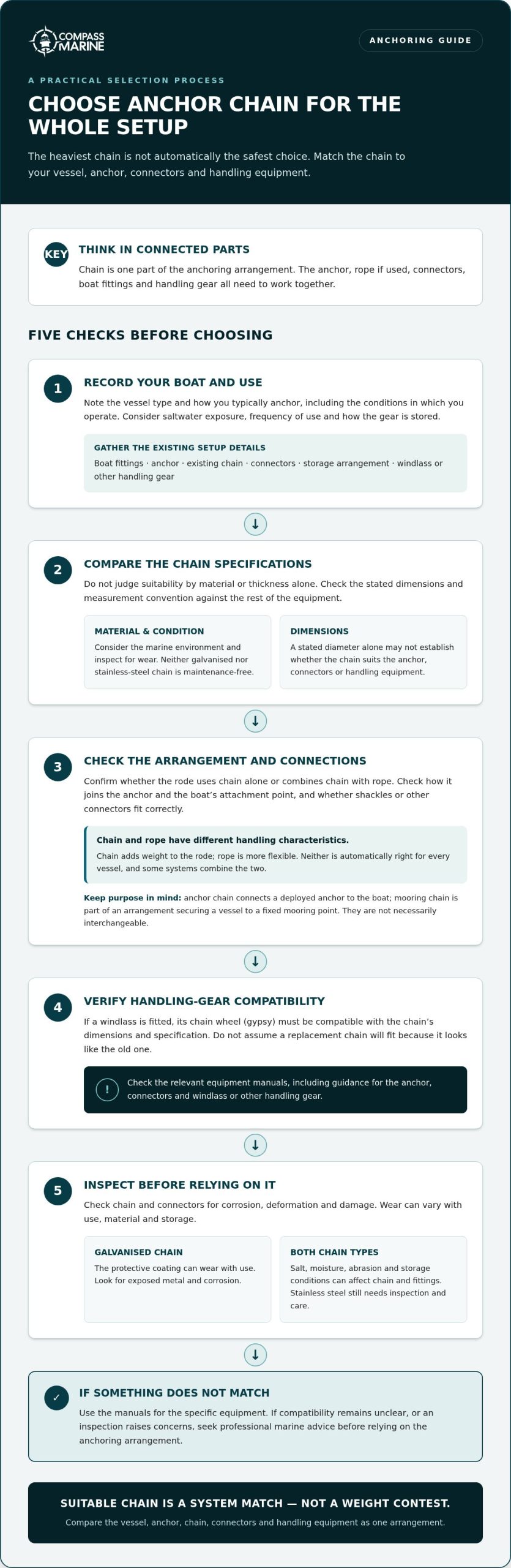
Start with the vessel and the anchoring arrangement already fitted. Replacing chain without considering the anchor, connectors, storage space and handling equipment can create a mismatch elsewhere in the setup. Gather the relevant details before deciding what to change.
- Identify the vessel and its use. Note the boat type and how you typically anchor, including the conditions in which you operate. Saltwater exposure, frequency of use and storage all matter, but none points to one chain choice for every vessel.
- Check the anchor and boat documentation. Look for manufacturer guidance on compatible chain, connectors and attachment points. Record the anchor’s details and how the rode is secured aboard.
- Document the existing chain and connectors. Note the chain’s material, stated dimensions and any markings, along with the type and condition of the connecting hardware. If details are unclear, do not guess from appearance alone.
- Review handling and storage. Record whether the chain is handled manually or by powered equipment, and how it passes through or sits in that equipment. Check that the chain and any rope section can be stored without fouling or obstructing the arrangement.
- Compare the complete setup with equipment guidance. Check the chain against the anchor, connectors, boat fittings and handling equipment. If manuals give conflicting specifications, or the setup has been altered or is difficult to assess, have the full arrangement reviewed before replacing chain in isolation.
Start with the boat, anchor and existing equipment
A useful record includes the vessel and anchor details, chain material and dimensions, connector type, storage arrangement and any windlass or other handling equipment. Keep photographs and manual information together. These can help identify a mismatch or explain the setup during an assessment. A complete review is especially useful if you’re changing the anchor, adding handling equipment or modifying how the rode is stored.
Match the chain to intended use and handling
Think about how you use the boat. A setup used occasionally for short stops may face different handling demands from one used regularly in varied conditions. The right answer still depends on the vessel, equipment and manufacturer guidance. The chain must suit its connections and be manageable with the boat’s existing storage and handling arrangement.
If you’re uncertain how the components fit together, discuss the full anchoring arrangement with Compass Marine. Bring the vessel and equipment details to keep the discussion practical and focused.
How to Inspect and Care for Boat Anchor Chain
A visual check can help you spot changes before relying on the anchoring arrangement again. Examine as much of the chain as you can safely access, including sections near the anchor, connectors and stowage point. Regular checks matter because corrosion, wear or damage can go unnoticed between uses.
Warning signs that deserve closer attention
Inspect the chain and connectors for changes such as:
- Corrosion: Check for rust, pitting or areas where a protective coating has worn away. The significance depends partly on the chain material.
- Deformation: Look for links that are bent, stretched or inconsistent with the surrounding links.
- Cracks or damaged links: Any visible crack, split or other damage needs closer assessment.
- Connector problems: Check for distortion, corrosion, damage or signs that a shackle or other fitting no longer connects securely.
Do not assume that cleaning a link makes it sound, or that a clean appearance proves the chain is suitable. Severe corrosion, distorted links, cracks, unusual wear or an unreliable connection call for a qualified assessment. Stop relying on affected equipment until it has been assessed. If you are unsure what you’re seeing, get advice before using the anchoring arrangement.
Rinsing, drying and storage considerations
Care depends on the chain material, how it is used and how it is stored. Follow the chain and equipment manufacturers’ instructions for cleaning, drying and stowage rather than applying an unverified treatment. Saltwater exposure and damp storage can contribute to corrosion, while abrasion may affect coatings. Pay particular attention to contact points and accessible chain in the locker.
Stow the chain as the boat’s arrangement is designed to accommodate it. During inspection, check the sections you can reach without dismantling equipment or putting yourself at risk. If parts are hidden, difficult to inspect, or do not run or stow as expected, a visual check alone may not be enough to judge their condition.
Inspection findings depend on the chain material, use, storage conditions and manufacturer guidance. Keep notes or photographs of any changes you observe. Comparing them over time can help you explain concerns clearly during an assessment.
If you’ve found wear or want to consider the chain and its fittings as part of your boat’s wider marine care, read about Compass Marine’s marine support.
Choosing Boat Anchor Chain: Practical Next Steps with Compass Marine
Before replacing or upgrading anchor chain, assess the whole arrangement rather than treating the chain as an isolated part. Consider the boat, anchor, connectors, storage and handling equipment alongside the manufacturers’ guidance. Changing one component can affect whether the others fit and work together as intended.
Before replacing or upgrading your chain
Gather the information you have before making a change. A clear record makes it easier to compare options and identify questions that need a closer look.
- Vessel: Note the boat type and details relevant to its anchoring arrangement.
- Anchor: Record its make, model or other identifying information, if available, and check its documentation.
- Chain: Note the material, stated dimensions and any visible markings.
- Connectors: Record the type of fittings joining the chain to the anchor, rope or boat.
- Handling and storage: Describe any windlass or other handling equipment, where the rode is stowed, and any difficulty retrieving or storing it.
- Condition and guidance: Note visible damage or unusual wear, and gather the relevant boat and equipment manuals.
Use the documentation for the specific equipment, especially if specifications differ. If the chain is damaged, connectors do not fit as expected, or the arrangement has been modified, consider the complete setup before replacing anything. A new chain may not resolve a problem elsewhere in the system.
Get practical marine support
Compass Marine’s chandlery and marine expertise can support boat owners considering equipment and fittings as part of responsible boat care. Bring your notes and available manuals so the discussion can focus on your boat’s existing arrangement. This is useful if you’re unsure how a proposed change may affect connections, handling or stowage.
For practical marine support with your anchoring arrangement, contact Compass Marine.
Make Your Next Anchoring Decision with Confidence
Choosing anchor chain means matching components, not selecting by material or size alone. Check the boat, anchor, chain, connectors and handling equipment together, and use the relevant manuals to guide compatibility decisions. The right option depends on the vessel, its equipment and the conditions it faces.
Keep inspecting the chain and connections for corrosion, distortion and damage. If anything looks worn or uncertain, do not rely on appearance alone. Seek a qualified assessment before using the arrangement. These checks are a practical part of responsible boat ownership.
Key takeaway: Record your setup, check each component against its manufacturer’s guidance and treat visible damage as a reason for closer assessment. Compass Marine’s marine store and chandlery, along with its stainless-steel fabrication and fittings expertise, offer relevant support for boat owners considering marine equipment and fittings. Contact Compass Marine for practical marine support and bring your boat and equipment details.
Frequently Asked Questions
What does boat anchor chain do?
Boat anchor chain connects the anchor to the boat’s anchoring arrangement, either by itself or as part of a rode that also includes rope. It provides a physical connection and adds weight to the rode, while affecting how the equipment is handled and stored. Chain does not guarantee that an anchor will hold. The result depends on the complete arrangement, the seabed and operating conditions.
Is galvanised or stainless-steel anchor chain better for a boat?
Neither is automatically better for every boat. Galvanised chain has a protective coating that can wear, while stainless steel can also be affected by marine conditions and needs inspection. Consider the chain’s condition, intended use, storage and compatibility with the rest of the anchoring arrangement. Follow the manufacturer’s care guidance, and do not assume either material is maintenance-free or suitable without checking equipment specifications.
How do I choose the right anchor chain for my boat?
Start with your boat, anchor and existing anchoring arrangement. Record the chain’s material and stated dimensions, connector details, storage method and any windlass or other handling equipment. Check the boat and equipment manuals for compatibility and measurement guidance, as chain dimensions can use different conventions. The correct choice depends on the specific vessel, equipment, use and operating conditions.
How can I tell if boat anchor chain needs replacing?
Look for severe corrosion, coating loss, distorted or stretched links, cracks and damaged or unreliable connectors. These signs warrant closer assessment, but appearance alone cannot confirm that chain is suitable for use. If you see damage or unusual wear, or are uncertain about the chain’s condition, stop relying on it and seek a qualified assessment before using the anchoring arrangement again.
Can I use anchor chain with anchor rope?
Yes, some anchoring arrangements combine chain and rope, but the setup must be designed for the specific boat and equipment. The materials differ in weight, flexibility, handling and storage, so check how they connect and how the complete rode is managed aboard. Follow the manufacturers’ instructions for the anchor, rope, chain, connectors and handling equipment rather than assuming any combination will suit.
How should I care for anchor chain after use in salt water?
Follow the chain manufacturer’s instructions for cleaning, drying and storage. If the guidance permits, rinsing away salt and allowing accessible sections to dry can help you inspect for corrosion, coating wear, damaged links and connector problems. Stow the chain as the boat’s arrangement is designed to accommodate it. Appropriate care depends on the chain material and storage conditions, so do not apply unapproved treatments.