
If you’re searching for reliable bilge pumps, it helps to know how to check the full system, not just whether the pump makes a sound. A blocked intake, restricted discharge, faulty float switch or damaged wiring can stop a pump clearing water, even if it appears ready to run.
A straightforward visual inspection can help you spot changes without attempting an unsafe repair. This guide explains how the pump, controls, wiring and discharge work together, and offers practical checks to carry out before and after boating. You’ll also learn which warning signs to note and when to seek qualified marine electrical support.
Follow the relevant boat and pump manuals, as test procedures and requirements vary by installation. If your checks point to an electrical fault, Compass Marine provides marine electrical wiring and fault diagnostics. Use the routine below to understand what you can inspect safely and what may need professional attention.
Key Takeaways
- A bilge pump depends on its intake, discharge route, power supply and controls working together. Check the full system, not just the pump.
- Secure the boat and follow its manuals before operating controls or testing equipment.
- Look for visible obstructions, hose damage, unusual cycling, persistent water and changes in pump operation. Each sign can have more than one cause.
- Build repeatable checks into your boating and storage routine. Leave damaged wiring and uncertain electrical faults to a qualified marine technician.
- Use safe visual checks to understand what has changed, then seek professional diagnostics when the fault is unclear.
Bilge pumps explained: what the system does and why it matters
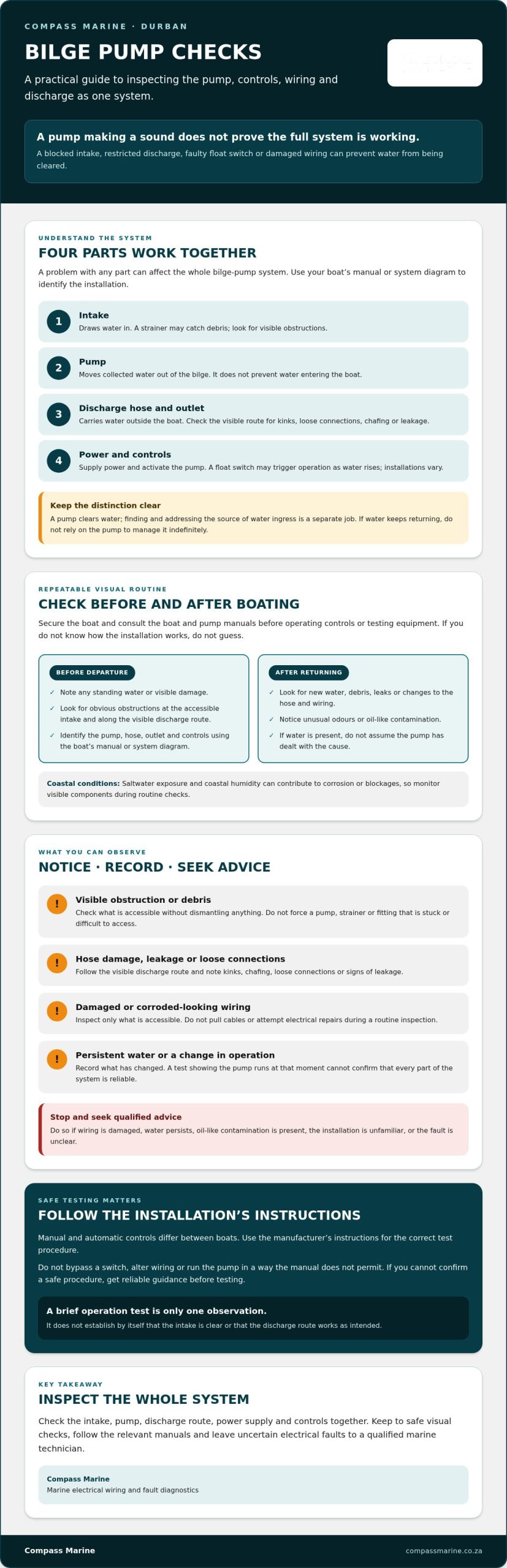
A bilge pump moves unwanted water out of the bilge, the low area inside a boat’s hull where water can collect. For the system to work, the pump needs a clear intake, an unobstructed discharge route, a functioning power supply and controls that activate it correctly. A problem with any one part can affect the whole system.
Bilge water may come from splashing or minor seepage, but a change in how much water collects deserves attention. Saltwater, debris and coastal humidity can contribute to corrosion or blockages, so regular visual checks are useful. The Bilge pump overview explains the basic purpose and operating principle, although your boat’s arrangement may differ.
Which parts make up a typical bilge-pump system?
The pump draws water through an intake, which may have a strainer to catch debris. A discharge hose carries water to an outlet outside the boat. The electrical supply powers the pump, while a float switch may activate it as the water rises. Some installations use different controls, so check your boat’s manual rather than assuming how the system works.
Use the boat’s manual or system diagram to identify the pump, intake, hose, outlet and controls before inspecting them. Knowing where each component is can help you follow the discharge route and avoid disturbing unfamiliar wiring or fittings.
What can a bilge pump do, and what can it not do?
A bilge pump removes collected water. It doesn’t prevent water from entering or explain why the bilge is wet. If water keeps returning, investigate the cause rather than relying on the pump to manage it indefinitely.
A pump clears water from the bilge; finding and addressing the source of water ingress is a separate job.
If you’re searching for “bilge pumps Durban”, use this guide for general checks, then refer to your boat’s manuals for the correct setup and inspection steps. The details depend on the individual boat and installation.
How to inspect a bilge-pump system before and after boating
A consistent check before departure and after returning can help you notice changes early. Secure the boat and consult the boat and pump manuals before operating controls or testing equipment. If you don’t know how the installation works, don’t guess.
A visual check of the bilge, intake and discharge
Start with what you can see without dismantling anything. Look for loose debris around the bilge and intake, standing water, unusual odours, oil-like contamination and visible damage. Don’t force the pump, strainer or other fittings if they are stuck or difficult to access.
Follow the visible discharge hose towards its outlet. Look for kinks, loose connections, chafing or signs of leakage. Check accessible wiring for visible damage, corrosion or connections that look loose, but don’t pull on cables or attempt electrical repairs during a routine inspection.
- Before departure: Note any water or damage. Check that the accessible intake and visible discharge route have no obvious obstructions.
- After returning: Look for new water, debris, leaks or changes to the hose and wiring. If water is present, don’t assume the pump has dealt with the cause.
Saltwater exposure and coastal humidity can make corrosion worth monitoring. If you find oil-like contamination, persistent water, damaged wiring or an installation you can’t identify, stop and seek qualified advice rather than probing further. If your inspection also reveals seepage around deck fittings or hull penetrations, choosing the right Sikaflex marine sealant Durban product for the joint type and materials involved is a separate but related consideration.
Checking controls and automatic operation safely
Manual and automatic controls vary between boats. Use the manufacturer’s instructions to identify the correct test procedure. Don’t bypass a switch, alter wiring or run the pump in a way the manual does not permit. If you can’t confirm a safe procedure, get reliable guidance before testing.
A brief operation test can show that the pump runs at that moment, but it can’t confirm that every part of the system is reliable. It doesn’t establish on its own that the intake is clear or the discharge route works as intended.
The linked U.S. federal regulations concern bilge-pump requirements for sailing school vessels in the United States. They are not a guide to South African requirements. Consult applicable South African guidance and your vessel’s documentation for local obligations.
If a visual check points to a wiring fault, Compass Marine provides marine electrical wiring and fault diagnostics. Don’t attempt a repair if the fault or installation is uncertain.
Bilge-pump warning signs: what common symptoms may indicate
A change in how your bilge pump behaves deserves attention, but one symptom rarely identifies the fault. No operation, repeated cycling, water remaining in the bilge or an unfamiliar noise can each have several possible explanations. Treat these signs as reasons to inspect safely and record what you notice, not as a diagnosis.
Note whether the boat was in use or stored, whether water is visibly collecting, which control was selected and what the pump did. These details can help a marine professional assess the problem. Don’t open electrical components or attempt repairs beyond your knowledge.
If the pump does not operate or discharge water
If the pump doesn’t run, or runs without visibly clearing water, start with the boat and pump manuals. You can check accessible controls and look for an obvious obstruction around the intake if you can do so safely without dismantling equipment. Don’t bypass switches or disturb wiring to see if the pump will start.
Possible explanations include a power-supply or switching issue, an obstruction, a problem with the discharge route or a fault with the pump itself. These possibilities can overlap, and appearance alone may not reveal the cause. If basic checks don’t explain the symptom, stop and arrange qualified diagnosis. A pump that runs but doesn’t clear water should not be assumed to be working adequately.
If the pump runs too often or keeps running
Note when the pump cycles. Does it happen after launching, while the boat is underway, after rain or during storage? Check whether water is visibly accumulating and whether the pump stops again. A pattern is more useful than an isolated observation, so record when the behaviour occurs.
Repeated or continuous operation may relate to a float switch, water entering the bilge, an obstruction or a discharge problem, among other possibilities. Persistent running leaves the underlying fault unresolved and may place ongoing demand on the boat’s electrical system. If safe visual checks don’t reveal a clear explanation, seek professional help rather than ignoring it.
Other changes to notice
Unusual noise, vibration or a new smell may also indicate a change, but none confirms a specific fault. Record when it occurs. Stop testing if the pump or nearby wiring appears damaged, becomes unusually hot or presents another safety concern. Keep clear of exposed or damaged electrical components.
If a symptom may involve the electrical supply or controls, qualified diagnosis can help establish what needs attention without relying on guesswork.
A practical bilge-pump maintenance routine for boat owners
Make bilge-pump checks part of your boating routine instead of relying on a fixed interval that may not suit your boat. A visual inspection before launching, after returning and before storage can help you notice changes in water levels, cleanliness or visible condition. Follow the maintenance schedule in the pump and boat manuals if it differs from this general guidance.
Build a repeatable inspection checklist
Use the same sequence each time and record anything that has changed. A simple note can help you spot a developing pattern rather than treating each observation in isolation.
- Bilge area: Look for loose debris, visible water, unusual odours or signs of contamination.
- Intake: Check that the accessible area is clear. Remove debris only as the manual permits, and don’t force or dismantle components.
- Hose and outlet: Check visible hosework for kinks, damage, loose connections or signs of leakage. Look for obvious obstructions at the accessible discharge outlet.
- Observed operation: Note unusual cycling, persistent running, unexpected noise or changes in how the pump behaves. Test controls only as the manufacturer directs.
- Visible condition: Watch for corrosion or deterioration, especially after saltwater use or periods in coastal humidity.
Keep the inspection visual and within your competence. Don’t open electrical components, disturb wiring or reach into an unsafe space to remove debris. If access is difficult or you find damaged wiring, stop and seek qualified help.
Prepare the bilge system for storage
Before placing a boat into storage, inspect the bilge and visible pump equipment for water, debris, corrosion, hose damage or changes in operation. Record concerns and seek advice before leaving the boat unattended. This does not mean switching off, disconnecting or operating equipment according to a universal storage routine. The right preparation depends on the boat and installation, so follow their manuals.
For broader preparation advice, consult Compass Marine’s guide, The Ultimate Guide to Secure Indoor Boat Storage: Protecting Your Maritime Investment. Use the pump manufacturer’s instructions for any pump-specific storage steps.
If your inspection reveals a suspected wiring fault, contact Compass Marine about marine electrical wiring and fault diagnostics. Ask whether the work you need, including any pump-specific service, falls within the scope of assistance available.
When to call a marine professional about bilge-pump faults
Stop at safe visual checks and seek professional help if you find damaged wiring, water that keeps returning, repeated unexplained cycling or a fault you can’t confidently identify. A pump that runs continuously, fails to operate or runs without clearing water may need attention beyond routine owner checks. Don’t open electrical components, alter wiring or dismantle the system to find the cause.
Electrical diagnosis and repair can require a qualified marine technician, particularly when wiring, controls or the installation are involved. Contact the team to check whether the bilge-pump work you need is within the scope of assistance available.
What information to share when asking for help
A clear description helps a professional understand what you observed without requiring you to carry out further tests. Explain what the pump did, when the symptom occurred and whether water was visible in the bilge. Mention any unusual noise, smell or recent change you noticed during safe visual checks.
If available, have the boat and pump details to hand, including identifying labels or relevant manual pages. Don’t dismantle equipment or attempt a test you can’t perform safely just to gather more information.
How electrical diagnosis fits into the wider system
A symptom doesn’t necessarily point to one component. The cause may involve a control, wiring, an obstruction, the discharge route or the pump itself. Replacing a part based on one symptom can leave the underlying issue unresolved. A sound assessment considers the installation as a whole and follows the manufacturer’s instructions for the particular boat and equipment.
For broader context on marine electrical systems, see the marine electronics installation guide. Use the boat and pump manuals for model-specific information, and ask a marine professional to clarify any uncertain instructions.
If you’ve found a suspected electrical fault or aren’t sure what your safe checks mean, contact Compass Marine to discuss its marine electrical wiring and fault diagnostics. Describe the symptoms and boat details, and confirm whether the required bilge-pump work is within the service scope.
Keep your bilge-pump checks part of every outing
A reliable bilge-pump system depends on more than the pump alone. Make visual checks part of your boating routine, follow the boat and pump manuals, and note changes such as persistent water, repeated cycling or damaged wiring. These signs can have several causes, so avoid guessing or attempting electrical repairs beyond your competence.
For readers searching “bilge pumps Durban”, the practical first step is to know what you can inspect safely and when a fault needs professional attention. Compass Marine provides marine electrical wiring and fault diagnostics, alongside marine mechanical and technical services. Ask about the scope of work before arranging bilge-pump assistance.
If your safe checks point to a possible electrical fault, contact Compass Marine about marine electrical fault diagnostics. Share what you observed and any accessible boat or pump details. A steady inspection routine, combined with qualified help when needed, can help you prepare for your next outing.
Frequently Asked Questions
How do I know if my boat’s bilge pump is working?
Follow the test procedure in your boat and pump manuals, then check for the response they describe, such as the pump operating and water discharging through the outlet. Automatic and manual controls differ, so don’t assume one test suits every system. A pump that runs briefly may still have an obstructed intake or discharge problem. This is a useful starting point when researching bilge pumps Durban, but it can’t confirm that every component is reliable.
How often should I check a bilge pump?
Build a visual check into your boating routine, such as before departure, after returning and before storage. Look for new water, debris, visible hose or wiring damage, corrosion and changes in operation. Follow the pump and boat manuals for any specific testing or maintenance schedule, as requirements vary by equipment and installation. If you notice a change, record when it happens and seek advice if safe visual checks don’t clarify it.
Can I test a bilge pump without putting my boat in the water?
Possibly, but only if the manufacturer’s instructions describe a safe test for your boat’s installation. Some pumps or controls may have a specified test method, while others may require conditions that aren’t present when the boat is ashore. Don’t run a pump dry or pour water into the bilge to trigger it unless the manual expressly allows that procedure. If the instructions are unclear, ask a marine professional before testing.
Why does my bilge pump keep running?
Repeated cycling or continuous operation can have several possible causes, including water entering the bilge, a control or float-switch issue, an obstruction or a discharge problem. Note when it happens and whether water is visibly collecting, but don’t treat one symptom as a diagnosis. Persistent running shouldn’t be ignored. If the cause isn’t clear after safe visual checks, stop experimenting and seek qualified help to assess the system.
What should I check if my bilge pump is not pumping water?
Start with the boat and pump manuals. If it’s safe, inspect the accessible intake for visible debris and look at the discharge hose and outlet for obvious kinks, damage or obstruction. Check only controls you understand. A power, switching, blockage, discharge or pump-condition issue may be involved, but the symptom alone can’t confirm the cause. Don’t dismantle the pump or disturb wiring; seek qualified diagnosis if basic checks don’t explain it.
Can I repair bilge-pump wiring myself?
Only carry out checks that the manual identifies as safe and that you’re competent to perform. Don’t open electrical components, bypass switches or alter wiring to make the pump run. Marine electrical faults can be difficult to assess by sight, and an incorrect repair may create further risk. Confirm whether the specific bilge-pump work you need falls within its service scope.
What causes water to remain in the bilge after the pump runs?
Water may remain because of the pump’s position or the shape of the bilge, or because of an obstruction, discharge restriction or pump problem. The explanation depends on the boat and installed equipment. Check the relevant manual and observe whether the remaining water level changes, but don’t assume persistent or increasing water is harmless. If water keeps returning or the pump runs without clearing it, arrange a professional assessment. Where persistent water ingress is traced to a leaking deck fitting or hull penetration, understanding how to select the correct marine sealant for the joint type and materials involved may be relevant to addressing the source.