A jet ski engine is only as reliable as its last encounter with the Indian Ocean’s corrosive salt spray. For any rider in KwaZulu-Natal, the excitement of an offshore launch is often shadowed by the quiet fear of a mechanical failure whilst navigating the Durban coastline. Finding a professional jet ski service durban experts recommend is the only way to ensure your personal watercraft remains a source of adventure rather than a liability.
We understand that you want total peace of mind when you’re out on the water, knowing your investment is protected from the relentless effects of saltwater and humidity. This professional guide details the technical standards required to maintain peak engine response, protect your hardware from internal corrosion, and ensure you remain fully compliant with SAMSA regulations. We will examine the critical maintenance protocols that safeguard your safety, optimise fuel efficiency, and build a well-documented service history that adds real value to your vessel.
Key Takeaways
- Understand why standard garden hose flushing is insufficient for internal protection and how specialised mechanical care combats the corrosive effects of the Indian Ocean.
- Learn the importance of computerised diagnostics and certified mechanical expertise in maintaining the precision timing of modern EFI marine engines.
- Discover how professional hull refurbishment and custom stainless steel fabrication safeguard your vessel’s structural integrity against coastal humidity and stress.
- Gain a clear understanding of SAMSA compliance requirements, including buoyancy certificates and the essential safety equipment needed for Category C and D certification.
- Learn how a comprehensive jet ski service durban creates a documented maintenance history that improves engine response and significantly increases resale value.
Why Professional Jet Ski Servicing is Essential for Saltwater Reliability
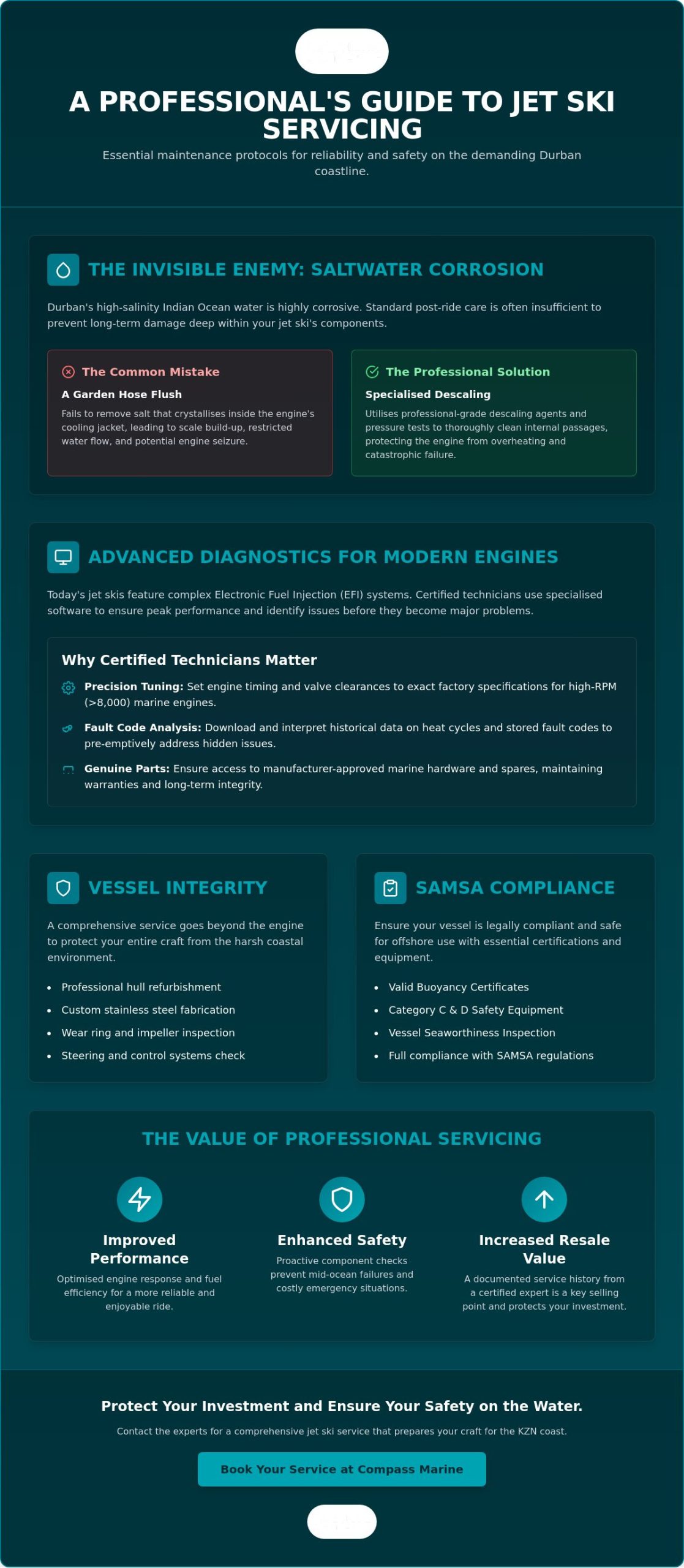
Durban’s coastline offers some of the most exhilarating riding in South Africa, but the warm, high-salinity waters of the Indian Ocean are notoriously aggressive toward mechanical components. A professional jet ski service durban ensures that your machine isn’t just clean on the outside, but protected where it matters most. While many owners believe a quick rinse with a garden hose after a day at the beach is sufficient, this rarely addresses the salt that has already begun to crystallise deep within the engine’s cooling jacket. Over time, these deposits harden into a scale that restricts water flow, leading to hot spots and eventual engine seizure.
A Personal Watercraft (PWC) operates at high RPMs and high temperatures, meaning even a minor cooling blockage can result in a catastrophic failure within minutes. Professional servicing involves specialised descaling agents and pressure tests that a standard hose simply cannot replicate. Beyond the engine, a documented service history is the most effective way to preserve your investment. In the local market, buyers look for proof of professional care. A logbook stamped by a certified technician demonstrates that the craft has been shielded from the unique stresses of the KZN coast, ensuring you get the best possible price when it’s time to upgrade.
The Impact of Saltwater on Marine Components
Saltwater is an invisible enemy to electrical systems and metal alloys. The fine mist of salt spray common in Durban’s humid air can penetrate electrical looms and corrode sensitive sensors. This leads to intermittent faults that are difficult to diagnose without proper tools. Experts provide uncomplicated answers to these complex technical issues, identifying green corrosion on terminals before they snap or fail whilst you are kilometres offshore. By addressing these minor issues during a scheduled service, you prevent the slow degradation of the electrical harness and internal engine components.
Reliability as a Safety Requirement
Out on the ocean, mechanical reliability is your primary safety net. Knowing your craft has been through a rigorous inspection by a safe pair of hands provides a level of professional calm that DIY maintenance cannot offer. Proactive component replacement, such as checking wear rings and impellers for salt-pitting, prevents mid-ocean failures and the expensive, dangerous reality of emergency salvage. It’s about identifying warning signs like stiff steering or unusual engine vibrations before they escalate into an emergency situation in the harbour or open sea.
Advanced Diagnostics and Mechanical Mastery for Modern Jet Skis
Modern personal watercraft have evolved into sophisticated pieces of marine engineering. They rely heavily on Electronic Fuel Injection (EFI) and complex engine management systems to deliver the power required for offshore excursions. A standard jet ski service durban goes beyond oil changes; it requires specialised software to communicate with the onboard computer. This diagnostic link allows technicians to download data on engine hours, historical heat cycles, and stored fault codes that might not trigger a warning light but indicate an underlying issue. Precision is everything when you’re kilometres from the shore.
Electrical systems are particularly vulnerable in the humid KwaZulu-Natal climate. Salt air can lead to high resistance in wiring looms, causing intermittent sensor failures that only manifest under full load. Diagnostic tools help identify these hidden gremlins before they result in a total loss of power at sea. Additionally, fuel quality is a major concern for local riders. Ethanol-blended fuels can lead to phase separation in marine tanks, where water is absorbed into the fuel. This creates a lean-running condition that can damage pistons. Professional fuel system cleaning is a vital part of preventative care to avoid these costly repairs.
Certified Mechanics vs. General Workshops
High-performance marine engines operate under extreme loads, often exceeding 8,000 RPM. Choosing a certified Suzuki or certified Yamaha mechanic ensures your engine timing and valve clearances are set to factory specifications. General workshops often lack the specific tolerances and specialised tools required for these high-revving units. Authorised centres also provide access to genuine marine hardware and spare parts, which is essential for maintaining manufacturer warranties and long-term mechanical integrity. We take pride in offering multi-brand expertise, ensuring that whether you ride a Yamaha or a Suzuki, your craft receives the same level of technical mastery.
Precision Electrical and Diagnostic Work
A thorough diagnostic check includes a load test on the battery and a detailed inspection of the charging circuit. If your battery isn’t receiving the correct voltage, your electronics may behave erratically or fail entirely. This technical rigour is also a cornerstone of Maritime Compliance, ensuring that your craft meets the safety standards required for legal operation in South African waters. By tracking intermittent sensor data, we can replace a failing component before it leaves you stranded in the Durban harbour or beyond the backline.
Beyond the Engine: Hull Refurbishment and Stainless Steel Fabrication
While the engine is the heart of the craft, the hull and fittings are its skeleton and skin. A comprehensive jet ski service durban must address the structural and aesthetic integrity of the vessel to ensure long-term value. Durban’s harsh sun and high-impact surf conditions put immense strain on fiberglass and metal components. Ignoring hairline cracks in the gelcoat or rust on a trailer can lead to expensive failures that mechanical maintenance alone cannot prevent. We view the craft as a complete system where every component, from the smallest bolt to the hull itself, requires professional attention.
Structural integrity is paramount when launching through the surf at sites like Vetch’s Pier. Over time, the repeated impact of waves can cause stress points in the fiberglass that aren’t immediately visible to the untrained eye. If left unaddressed, these small fractures can allow water to penetrate the core of the hull, leading to delamination and a significant loss of buoyancy. Our refurbishment services focus on identifying these vulnerabilities early, ensuring your craft remains safe and seaworthy in the challenging Indian Ocean swells.
Marine Fabrication and Stainless Steel Fittings
Marine-grade 316 stainless steel is the non-negotiable standard for any hardware added to your craft. We specialise in custom stainless steel fabrication, creating bespoke fishing rod holders, roll bars, and boarding ladders that are built to withstand the corrosive coastal atmosphere. Professional welding is critical; poor-quality welds are often the first point of failure when exposed to salt. Ensuring these fittings are properly earthed and secured prevents galvanic corrosion, a key factor in maintaining Saltwater Reliability over many seasons of use.
Hull and Gelcoat Restoration
Structural fatigue often begins as osmotic blistering or small stress points where the hull meets the deck. These issues are frequently hidden beneath the waterline or obscured by grime. Our refurbishment process involves a thorough inspection for these defects, followed by precision repairs that match the original marine paint and gelcoat. This isn’t just about appearance; professional detailing and UV-resistant coatings prevent the craft’s colour from fading and protect the underlying fiberglass from becoming brittle under the KZN sun.
Safety also extends to the road. Trailer refurbishment is a vital part of the ownership lifecycle. We inspect axles, bearings, and leaf springs for rust that could lead to a breakdown whilst you’re en route to the launch site. Similarly, the Durban sun is relentless on vinyl. Regular upholstery care and the installation of custom-fitted canopies protect your seats and dashboard from cracking, ensuring the craft remains comfortable and visually appealing for resale.
Maritime Compliance and Secure Storage: Protecting Your Asset
Operating a personal watercraft in South African waters requires more than just mechanical skill; it demands strict adherence to national safety regulations. Navigating the requirements set out by the South African Maritime Safety Authority (SAMSA) can be complex for many owners. A professional jet ski service durban provides the technical foundation needed to pass annual inspections, ensuring your craft is legally compliant and equipped for the unpredictable conditions of the Indian Ocean. These regulations exist to ensure that if a mechanical failure occurs, you have the necessary tools to signal for help and stay afloat whilst awaiting assistance.
Safety equipment requirements differ based on your vessel’s classification. Category D watercraft are restricted to 5 nautical miles from the coast, whilst Category C vessels may venture up to 15 nautical miles offshore. Each category requires a specific checklist of safety gear, including correctly rated lifejackets, waterproof torches, fire extinguishers, and unexpired flares. Ensuring these items are present and functional is a non-negotiable part of maritime safety. Beyond the gear, your craft must possess a valid buoyancy certificate, proving that the vessel will remain buoyant even when completely swamped by a wave.
Achieving Compliance Through COF Surveys
Securing a Certificate of Fitness (COF) is an annual requirement that confirms your jet ski is seaworthy. The process is most efficient when handled in three logical stages. First, we conduct a pre-survey audit of all mechanical systems and safety equipment to identify any deficiencies. Second, we verify that your buoyancy certificates are up to date, as these are often required by the surveyor before an inspection begins. Finally, we organise the physical inspection with a certified surveyor. This methodical approach removes the stress of compliance and ensures your craft is ready for the water without delay.
The Advantages of Professional Marine Storage
Durban’s coastal environment is relentless. Leaving a high-value asset in a driveway exposes it to extreme temperature fluctuations, high humidity, and intense UV radiation that degrades gelcoat and upholstery. Secure indoor storage is the most effective defence against these elements. Beyond environmental protection, lock-up facilities provide a level of security that residential storage cannot match. By choosing professional boat storage kzn, you also gain the opportunity to integrate off-season maintenance programmes. This ensures your battery is kept on a tender and your fuel system is treated with stabilisers to prevent degradation during periods of inactivity.
Expert Marine Technical Services with Compass Marine
Compass Marine has established itself as a cornerstone of the KwaZulu-Natal boating community through decades of institutional knowledge and a serious commitment to maritime safety. We recognise that a high-performance watercraft is a significant investment that requires more than just basic maintenance. Our facility provides a comprehensive engineering approach that integrates mechanical repairs, custom stainless steel fabrication, and professional storage solutions under one roof. This holistic model ensures that every technical aspect of your craft is managed by a single, reliable partner who understands the specific challenges of the Durban coastline.
Practicality is at the heart of our service. Our on-site chandlery is fully stocked with essential safety gear, marine paints, and hardware, allowing you to source everything from lifejackets to specialised fittings without leaving the premises. This is particularly beneficial when preparing for a COF survey, as any missing or expired safety equipment can be replaced immediately. By combining technical expertise with a well-equipped retail environment, we reduce the administrative burden of ownership, leaving you more time to enjoy the water. Our commitment to quality ensures that when you launch into the Indian Ocean, you do so with total peace of mind.
A Seasoned Partner for Your Maritime Lifestyle
The value of a one-stop shop cannot be overstated for busy boat owners. We handle the transition between active use and off-season care seamlessly, offering a structured environment where servicing, storage, and compliance are managed concurrently. This integrated approach prevents the small oversights that often lead to mechanical failure. You can learn more about our detailed methodology in our guide to professional marine engine servicing, which explores the technical rigour we apply to every vessel in our care.
Get Started with Your Professional Service
Scheduling a professional jet ski service durban starts with a thorough technical consultation. We begin every engagement with a comprehensive multi-point inspection that covers the engine, electrical systems, and hull integrity. This transparent process identifies potential issues before they become costly repairs, allowing us to provide an accurate scope of work tailored to your craft’s specific operating conditions. Whether you require a routine seasonal check-up or a complex mechanical overhaul, our team provides the steady hand and technical mastery required to keep your vessel in peak condition.
Enquire about our jet ski service and storage solutions today to ensure your watercraft remains a reliable asset for seasons to come.
Protecting Your Maritime Investment for the Long Term
The unforgiving nature of the Indian Ocean means that proactive maintenance is the only way to ensure your personal watercraft remains a source of joy rather than a source of stress. By prioritising professional diagnostics and specialised saltwater protection, you safeguard your engine against the internal corrosion that standard cleaning often misses. A well-maintained craft doesn’t just perform better; it holds its value and provides the reliability you need when navigating the Durban backline or venturing offshore.
Choosing a professional jet ski service durban through Compass Marine gives you access to a safe pair of hands. Our team of certified Yamaha and Suzuki mechanics provides the technical mastery required for modern EFI engines, whilst our secure indoor storage facilities protect your hull from the relentless KZN sun. We also provide full SAMSA compliance support to ensure your COF and buoyancy certifications are always up to date. This comprehensive approach allows you to focus on the water, knowing every technical detail is managed with integrity and professional calm.
Book your expert jet ski service at Compass Marine today and experience the confidence that comes with professional marine care. We look forward to helping you make every launch safer, easier, and more enjoyable.
Frequently Asked Questions
How often should I have my jet ski serviced for saltwater use?
You should have your jet ski serviced every 50 hours of operation or at least once a year, whichever occurs first. Saltwater environments are significantly more demanding on internal components than freshwater. Even if you don’t reach the hour limit, an annual service is vital to address salt-crystallisation in the cooling jacket and to inspect electrical terminals for green corrosion before they fail.
Do I really need a buoyancy certificate for my jet ski?
Yes, a buoyancy certificate is a legal requirement for all small vessels operating in South African waters. This document confirms that your craft contains enough approved floatation material to remain buoyant if it’s capsized or swamped by a wave. You cannot obtain a Certificate of Fitness (COF) without a valid buoyancy certificate, making it essential for legal launching at Durban undersea clubs and harbours.
What is the difference between a minor and a major jet ski service?
A minor service focuses on engine oil and filter changes alongside basic safety inspections, whilst a major service is a comprehensive mechanical audit. During a major jet ski service durban owners receive, we conduct valve clearance checks, replace spark plugs, and perform a full computerised diagnostic test. We also inspect the wear ring and jet pump for salt-pitting to ensure your engine response remains sharp.
Can Compass Marine service jet skis other than Yamaha and Suzuki?
We possess the technical expertise and diagnostic equipment to service a variety of personal watercraft brands beyond our core specialities. While we are recognised as a certified hub for Yamaha and Suzuki, our team applies the same rigorous engineering standards to other marine engines. We ensure that every craft, regardless of the manufacturer, is prepared for the specific challenges of the KwaZulu-Natal coastline.
How long does a typical COF survey and certification take?
A physical COF inspection usually takes approximately 45 to 60 minutes if all safety equipment is present and in good working order. However, the entire administrative process, including the pre-survey audit and document filing, generally takes two to three working days. We recommend booking your survey at least two weeks before your current certificate expires to ensure you don’t miss any time on the water.
What safety equipment is required for a Category C jet ski?
Category C vessels require specific safety gear for operation up to 15 nautical miles offshore. This includes a waterproof VHF radio, unexpired flares, a fire extinguisher, and a capsize bottle with a rope. You must also carry a toolkit, a first aid kit, an anchor with a suitable chain, and SABS-approved lifejackets. These items are strictly checked during your annual survey to ensure maritime compliance.
Is indoor boat storage worth the investment for a jet ski?
Professional indoor storage is a highly effective way to protect your vessel’s resale value and structural integrity. Durban’s high humidity and intense UV radiation cause rapid fading of gelcoat and cracking of vinyl upholstery. Storing your craft in a secure, covered facility prevents environmental damage and provides a level of security that a residential driveway simply cannot offer, especially during the off-season.
What should I do if my jet ski engine is submerged in saltwater?
You must transport the craft to a qualified technician immediately and do not attempt to start the engine. Attempting to crank a submerged engine can cause hydraulic lock, leading to bent connecting rods and total engine failure. A professional “pickling” process is required to remove all saltwater from the cylinders and oil system, stopping the rapid oxidation that can seize an engine within hours.