The true cost of a missed engine service isn’t found on an invoice; it’s measured in the silence that follows a mechanical failure twenty nautical miles offshore. Every South African mariner knows that our coastline is as unforgiving as it is beautiful, and that professional marine engine servicing is your most critical safety protocol. You’ve likely felt that brief moment of anxiety when turning the key, wondering if the salt air and heavy swells have finally taken their toll on your hardware.
We understand that your vessel is a high-value asset that deserves unwavering reliability. A structured maintenance schedule ensures total peace of mind during every voyage, whilst simultaneously preserving your vessel’s resale value and ensuring compliance with the latest 2026 safety regulations. By trusting a certified hand to manage your maintenance, you eliminate the confusion surrounding warranty requirements and protect your engine from the aggressive corrosion typical of our local saltwater environments.
This guide provides a comprehensive look at what a professional service entails, from digital diagnostic scans to the specific requirements for Yamaha and Suzuki systems. We’ll outline how to maintain your Certificate of Fitness (COF) and why recent shifts toward digital emission-controlled units make expert oversight more essential than ever for the modern boater.
Key Takeaways
- Professional marine engine servicing is a critical safety protocol that protects your high-value asset against the aggressive corrosion of South African saltwater environments.
- Following a structured 100-hour or annual service interval is the most effective way to ensure peak performance and avoid the risk of engine failure at sea.
- Utilising certified mechanics for brand-specific diagnostics preserves your manufacturer warranty and identifies hidden electrical faults before they become costly repairs.
- Comprehensive vessel care involves integrating engine maintenance with trailer refurbishment and electrical diagnostics to guarantee a seamless journey from road to water.
- Maintaining a relationship with a technical maritime partner ensures your vessel remains compliant with all safety regulations, including COF and buoyancy requirements.
Understanding the Vital Role of Marine Engine Servicing
Professional marine engine servicing is far more than a simple oil change; it is a comprehensive technical audit of your vessel’s mechanical and electrical systems. This process involves a systematic evaluation of fluid integrity, filtration efficiency, and electronic health to ensure every component operates within strict manufacturer specifications. For any South African mariner, this routine is the primary defence against the harsh conditions of our coastline. A thorough understanding of understanding marine propulsion systems helps boat owners appreciate the complexity of the machinery that keeps them safe at sea.
Our local saltwater environments necessitate much more frequent intervention than freshwater equivalents. Salt is a relentless catalyst for galvanic corrosion and mineral buildup. Without regular flushing and inspection, salt crystals can crystallise within narrow cooling passages, leading to hotspots and eventual engine failure. Beyond simple reliability, regular marine engine servicing directly impacts your operational costs. A well-tuned engine achieves optimal combustion, which significantly improves fuel efficiency and reduces your carbon footprint. In an era of rising fuel prices and environmental awareness, a clean-running motor is both a fiscal and ethical priority; to find out how you can achieve similar energy efficiency in your home or business through the solar and heating systems offered by Commodus, click here.
The relationship between a documented service history and the resale value of pre-owned boats cannot be overstated. When it comes time to upgrade, a comprehensive logbook signed by certified mechanics acts as a guarantee of asset quality. Prospective buyers in the South African market prioritising reliability will often pay a premium for a vessel that has been professionally maintained, viewing the service record as proof of a “safe pair of hands” at the helm. If you’re currently searching for pre-owned boats for sale in Durban, understanding the importance of a verified service history is one of the most critical steps in making a sound investment.
Outboard vs Inboard Servicing: Key Differences
Outboard motors face unique cooling system challenges because they rely on raw water intake through relatively small apertures. This makes impeller health and thermostat function critical. In contrast, inboard engines often present accessibility hurdles, requiring specialised tools for lubrication and belt tensioning in cramped engine bays. Jet ski servicing is another distinct category; these high-revving units utilise water-jet propulsion rather than traditional propellers, demanding specific checks on wear rings and internal impellers to maintain thrust efficiency.
The Consequences of Neglected Maintenance
Neglecting your maintenance schedule triggers a dangerous chemical transition within your engine. Over time, engine oil breaks down and reacts with combustion by-products to form acidic compounds that eat away at internal bearings. If salt ingress occurs through a failing seal, it can lead to internal piston seizure and permanent sleeve damage within days. Furthermore, the high-humidity maritime climate in many of our coastal areas creates a breeding ground for electrical faults. Without professional diagnostics, microscopic corrosion on wiring looms can lead to total system blackouts whilst you’re far from the safety of the harbour.
The Technical Anatomy of a Professional Marine Service
The industry benchmark for vessel reliability is the 100-hour or annual service interval. Whichever milestone occurs first, it represents the point where mechanical tolerances must be verified. A professional marine engine servicing protocol begins with a comprehensive digital diagnostic scan. Modern engines utilise Electronic Control Units (ECUs) to store fault codes that can reveal hidden electrical issues or sensor malfunctions before they manifest as a breakdown. Understanding how marine engine diagnostics have evolved into comprehensive predictive health systems can help you appreciate why this data-driven approach is so critical to long-term vessel reliability. Our technicians adhere to global benchmarks, including ABYC technical standards, to ensure every circuit and connection remains resilient against the corrosive effects of salt-laden air.
Beyond electronics, the fuel system requires meticulous attention. South African boaters often face challenges with condensation and contaminants, making it vital to check for water in the fuel supply. Water ingress can cause catastrophic injector failure or mid-water stalling. Similarly, the steering system, whether hydraulic or cable-driven, must be inspected for leaks, stiffening, or frayed components. A seized steering arm is just as dangerous as a dead engine when navigating a narrow harbour entrance or a heavy swell.
Fuel and Cooling System Integrity
We replace fuel filters and water separators as a standard precaution to ensure a clean supply to the engine. The cooling system receives equal focus; we inspect impellers and water pumps for any signs of wear or brittleness. Overheating is the fastest way to ruin a cylinder head or melt internal seals. A thorough flush of the cooling passages removes salt deposits that can restrict flow and cause hotspots within the block.
Drive Train and Propeller Optimisation
The gearcase lubricant is a window into the health of your drivetrain. We drain the oil to check for metal shavings, which indicate gear wear, or a milky appearance, which suggests water ingress through a failing seal. We also examine the propeller for dings or incorrect pitch. Even minor damage can cause vibrations that destroy seals and reduce fuel economy. Proper marine engine servicing includes the lubrication of all grease points and steering pivots to prevent the salt-induced seizing that plagues neglected vessels. For those who value total peace of mind, partnering with the technical experts at Compass Marine ensures these granular details are never overlooked.
Certified Expertise vs DIY Repairs: Protecting Your Warranty
Attempting “backyard” repairs on a modern vessel is a gamble that rarely pays off. Whilst the initial saving might seem attractive, uncertified intervention often leads to expensive long-term failures that far outweigh the cost of professional marine engine servicing. Manufacturers like Yamaha and Suzuki have engineered their units with extreme precision; they expect that same precision during maintenance. Without a professional stamp in your service logbook from a certified workshop, you risk a total warranty voidance. This leaves you liable for the full cost of major component failures, which can easily run into tens of thousands of Rands.
A certified mechanic acts as a guardian of your investment. They use brand-specific diagnostic software to communicate with the engine’s internal computer, providing a transparent history of how the unit has been operated. This data includes over-revving incidents, temperature spikes, and sensor performance logs. This level of insight is impossible to achieve with standard garage tools. By choosing professional care, you aren’t just fixing a problem; you’re building a verifiable history of excellence that protects both your boat’s resale value and your personal safety.
The Advantage of Certified Yamaha and Suzuki Mechanics
Modern four-stroke outboards require specialised knowledge that goes beyond basic mechanics. Certified experts are trained to identify brand-specific wear patterns early, often catching minor issues before they become terminal. For example, specific cooling system blockages or fuel rail pressures are unique to different models and years. The risks of entrusting your engine to a generalist are significant, and understanding why a certified Yamaha mechanic is essential for engine longevity can help you make a more informed decision about who services your vessel. We use only genuine spare parts. Aftermarket alternatives might look similar, but they rarely match the metallurgical standards required to survive the South African coast. Using the correct filters, seals, and lubricants ensures your engine remains a reliable partner on the water, maintaining the peak performance you expect.
Electrical Diagnostics and Fault Finding
Modern engines record fault codes that remain invisible without professional scanners. Guesswork in marine electronics is a recipe for disaster. Marine wiring is complex and operates in a high-vibration, high-humidity environment where corrosion is a constant threat. Poorly executed DIY repairs are a leading cause of electrical fires and total system blackouts. Professional marine engine servicing includes a comprehensive review of battery health and the charging system. We ensure your vessel has the power to support your electronics and start reliably every time you leave the jetty.
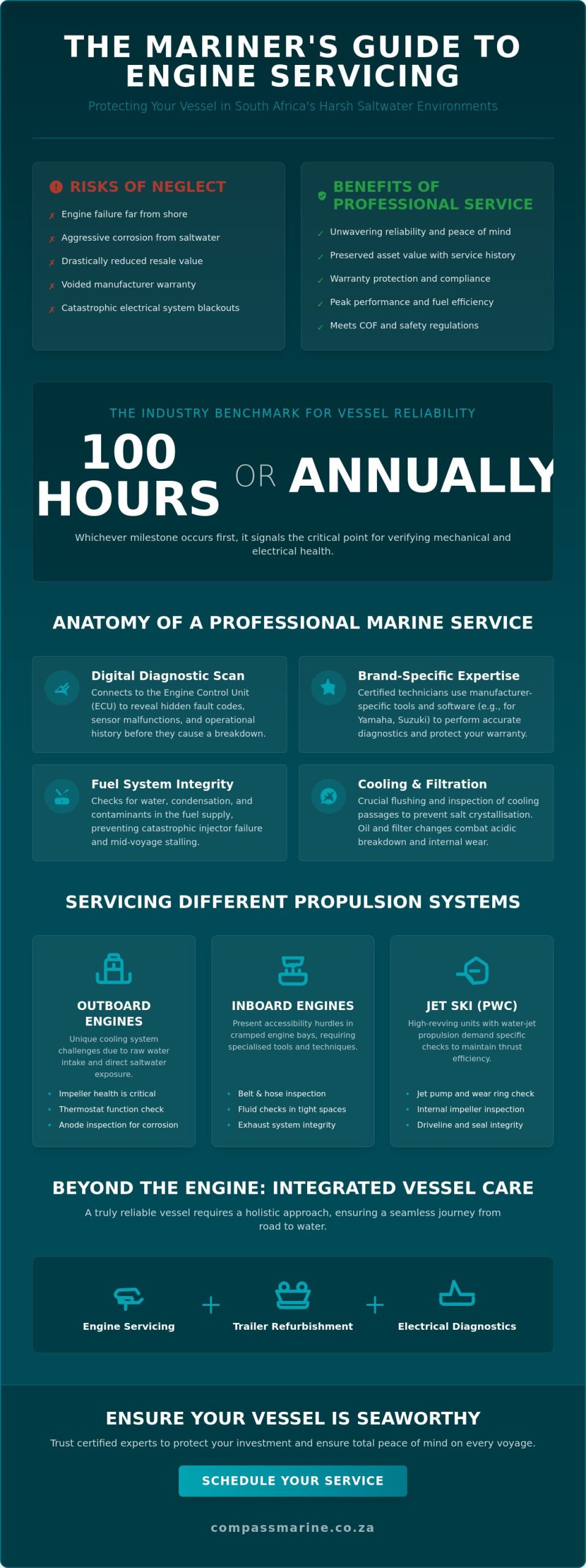
Beyond the Engine: Integrated Care for Long-Term Reliability
A vessel operates as a singular ecosystem where every component must function in harmony. Whilst marine engine servicing ensures your propulsion is reliable, that power is only as effective as the hull and hardware supporting it. Structural fittings, often overlooked, are subject to the same relentless salt spray as your outboard. Professional maintenance includes a meticulous assessment of your stainless steel fabrication and fittings. Corroded T-tops, railings, or cleats don’t just look poor; they represent a significant safety risk if they fail under load or during a heavy swell.
Integrating engine care with broader vessel maintenance is the only way to guarantee total peace of mind. For example, a perfectly tuned motor cannot compensate for a hull with compromised buoyancy. In South Africa, maritime safety is strictly governed, and keeping your vessel in peak condition simplifies the process of obtaining Certificates of Fitness (COFs) and buoyancy certificates. These documents are vital proof that your boat meets the necessary safety standards for its category, such as Cat C, ensuring you’re legally permitted to launch. Ensure your vessel is fully compliant and sea-ready by booking a comprehensive inspection with Compass Marine today.
Trailer Maintenance and Refurbishment
The safety of your voyage begins long before you reach the slipway. Trailer failure on the road is a common and avoidable disaster for many South African boaters. We conduct thorough inspections of axles, bearings, and leaf springs to identify rust fatigue before it leads to a breakdown. Saltwater is particularly aggressive toward trailer frames and moving parts. Professional refurbishment often includes replacing corroded components and ensuring that trailer lights are fully functional. This isn’t just a legal requirement for road safety; it’s a practical necessity for stress-free launching and retrieval at the water’s edge.
Safety Compliance and Maritime Legalities
A well-documented history of marine engine servicing is often the first thing a surveyor looks for during a COF survey. Compliance involves more than just a running engine. It requires a complete audit of your safety equipment, including life jackets, flares, and fire extinguishers, as per Cat C regulations. Ensuring your buoyancy certificates are up to date is equally critical. These certifications prove that your vessel will remain afloat even if swamped. A fully compliant vessel allows you to focus on the enjoyment of the maritime lifestyle, knowing that every technical and legal detail has been handled by experts. For those who venture beyond local waters into international shipping lanes, you can learn more about Adimar Shipping, Inc. and their specialised vessel agency services.
Partnering with Compass Marine for National Technical Excellence
Compass Marine acts as a dedicated partner in your maritime journey, providing a steady hand for all technical requirements. Choosing a service provider involves more than just selecting a mechanical skill set; it’s about finding a guardian for your investment who understands the nuances of the South African coast. Our facility is designed to offer a comprehensive solution, housing a professional workshop, a well-stocked marine store, and secure storage under one roof. This integrated approach ensures that every aspect of your vessel’s health is managed with the same level of integrity and technical mastery that we bring to every marine engine servicing appointment.
Total Care: From Servicing to Secure Storage
The transition from a state of concern to a state of confidence is often achieved through proactive protection. Beyond regular marine engine servicing, the environment in which your boat is kept between voyages plays a vital role in its longevity. Our secure indoor boat storage facilities protect your high-value assets from the corrosive coastal air and harsh UV damage that plague vessels left outdoors in KwaZulu-Natal. This controlled environment significantly slows the degradation of seals, upholstery, and delicate electrical components. Having access to a full-service chandlery and marine store on-site means that any necessary boating accessories or safety equipment can be sourced immediately. This provides an all-encompassing convenience that saves you time and reduces the logistical stress of vessel ownership. We invite you to experience a professional consultation where we can tailor a maintenance and storage plan that fits your specific maritime lifestyle.
Expertise in Leading Brands and Custom Solutions
Our commitment to craftsmanship is most evident in our specialised knowledge of Yamaha and Suzuki outboard systems. As certified mechanics, we possess the institutional knowledge required to handle complex technical challenges that others might overlook. This expertise extends far beyond the engine block to include custom stainless steel fabrication and fittings, as well as the full refurbishment of boats and trailers. Whether you require a routine check or a complete vessel overhaul, our team approaches every task with a proactive problem-solving mindset. We take pride in being a local authority that the South African boating community can respect and rely upon for honest, high-quality work. To ensure your vessel remains in peak condition for your next voyage, Book your next service with the experts at Compass Marine.
Securing Your Maritime Future with Professional Care
Your vessel represents more than just a financial investment; it’s a gateway to the unique freedom of the South African coastline. We’ve explored how marine engine servicing acts as a critical safety protocol, ensuring your propulsion systems remain resilient against the relentless effects of saltwater corrosion. By moving beyond simple mechanical checks to include integrated trailer care and safety compliance, you protect the entire lifecycle of your boat whilst maintaining its peak performance and resale value.
Trusting a “safe pair of hands” is essential for navigating the technical complexities of modern maritime hardware. Our team of certified Yamaha and Suzuki mechanics provides the institutional knowledge required to keep your vessel compliant and sea-ready. With access to a comprehensive marine chandlery and the added protection of secure indoor boat storage facilities, you can enjoy total peace of mind during every voyage. Whether you’re preparing for a seasonal survey or a weekend launch, we’re here to act as your dedicated technical partner.
Ensure your vessel is sea-ready with a professional engine service from Compass Marine. We look forward to seeing you on the water soon.
Frequently Asked Questions
How often should I service my marine engine?
You should service your marine engine every 100 hours of operation or at least once every twelve months, whichever milestone occurs first. This frequency is essential for vessels operating in South African coastal waters, where the salt air accelerates the degradation of lubricants and seals. Regular intervals ensure that minor wear is identified before it leads to a mechanical failure whilst you’re offshore.
What is the difference between a 100-hour and a 300-hour service?
A 100-hour service is a routine maintenance check that focuses on replacing engine oil, gear lubricants, and basic filters. In contrast, a 300-hour service is a comprehensive technical overhaul. This major service includes the replacement of water pump impellers, spark plugs, and thermostats, ensuring the engine’s cooling and ignition systems remain at peak performance for several more seasons.
Can I service my own outboard motor without voiding the warranty?
Attempting to service your own modern outboard motor will almost certainly void your manufacturer warranty. Brands like Yamaha and Suzuki require a verifiable service history performed by a certified mechanic to honour any future claims. Professional marine engine servicing ensures that all work is recorded in your logbook with an official stamp, which also preserves the resale value of your vessel.
Why is my marine engine losing power at high RPMs?
Power loss at high RPMs is often a symptom of fuel restriction or an ignition system fault. It’s common for a clogged fuel filter or water contamination in the separator to starve the engine when demand is highest. Alternatively, a spun propeller hub or fouled spark plugs could be the cause. A professional marine engine diagnostic scan is the most reliable way to identify the specific fault code stored in the engine’s computer.
How much does a standard marine engine service cost?
The cost of a service depends entirely on the engine’s horsepower, the type of unit, and whether it requires a routine or major interval. Every engine has different requirements for parts like specialised oils and genuine filters. For an accurate assessment, it’s best to consult with a professional workshop to receive a detailed quote tailored to your vessel’s specific mechanical needs.
Does my boat trailer need regular servicing as well?
Yes, your boat trailer is a critical component of your maritime setup and requires regular maintenance to ensure road safety. Saltwater exposure is incredibly aggressive toward wheel bearings, leaf springs, and braking systems. Regular servicing prevents these parts from seizing or snapping, which could lead to a dangerous breakdown during transport to the slipway.
What is included in a professional marine electrical diagnostic?
A professional electrical diagnostic involves a systematic check of the engine’s Electronic Control Unit (ECU) to read stored fault codes. Technicians also evaluate battery health, the charging system’s output, and the integrity of the wiring loom. This process is vital for identifying microscopic corrosion on terminals that could lead to a total system blackout in high-humidity environments.
How does saltwater affect my engine differently than freshwater?
Saltwater acts as a powerful electrolyte that accelerates galvanic corrosion on all metal components. It also leaves behind mineral deposits that can crystallise and block the narrow cooling passages within the engine block. This necessitates more frequent flushing and the regular replacement of sacrificial anodes compared to engines that only operate in freshwater lakes or rivers.