The Indian Ocean doesn’t offer second chances when your propulsion fails five kilometres off the Durban coast. You likely view your vessel as a gateway to adventure, but the relentless salt air and humidity of KwaZulu-Natal are constantly working against your engine’s internal components. Securing professional outboard engine servicing Durban is more than a maintenance task; it’s a specialised strategy to defend your high-value assets against one of the most corrosive environments on earth.
We know that the complexity of modern electronic diagnostics and the shifting landscape of SAMSA safety regulations can feel like a heavy burden for any skipper. This guide provides the clarity you need to keep your boat reliable, safe, and fully compliant with the latest 2024 standards. You’ll learn how certified technical care preserves your manufacturer warranty, prevents unexpected failures at sea, and ensures your boat remains a valuable asset for years to come.
Key Takeaways
- Understand how Durban’s high salinity affects your cooling passages and why professional flushing prevents salt crystallisation within the engine block.
- Discover what a comprehensive outboard engine servicing Durban entails, from electronic diagnostic testing of the ECU to full fuel system overhauls.
- Learn to identify early warning signs of engine fatigue, such as changes in harmonics or the presence of water ingress in your gearcase oil.
- Gain insights into the importance of using certified Yamaha and Suzuki technicians to maintain your manufacturer warranty and access proprietary diagnostic software.
- See how routine mechanical maintenance directly impacts your annual COF survey and ensures your vessel meets the latest SAMSA safety standards.
Why Outboard Engine Servicing in Durban is Critical for Reliability
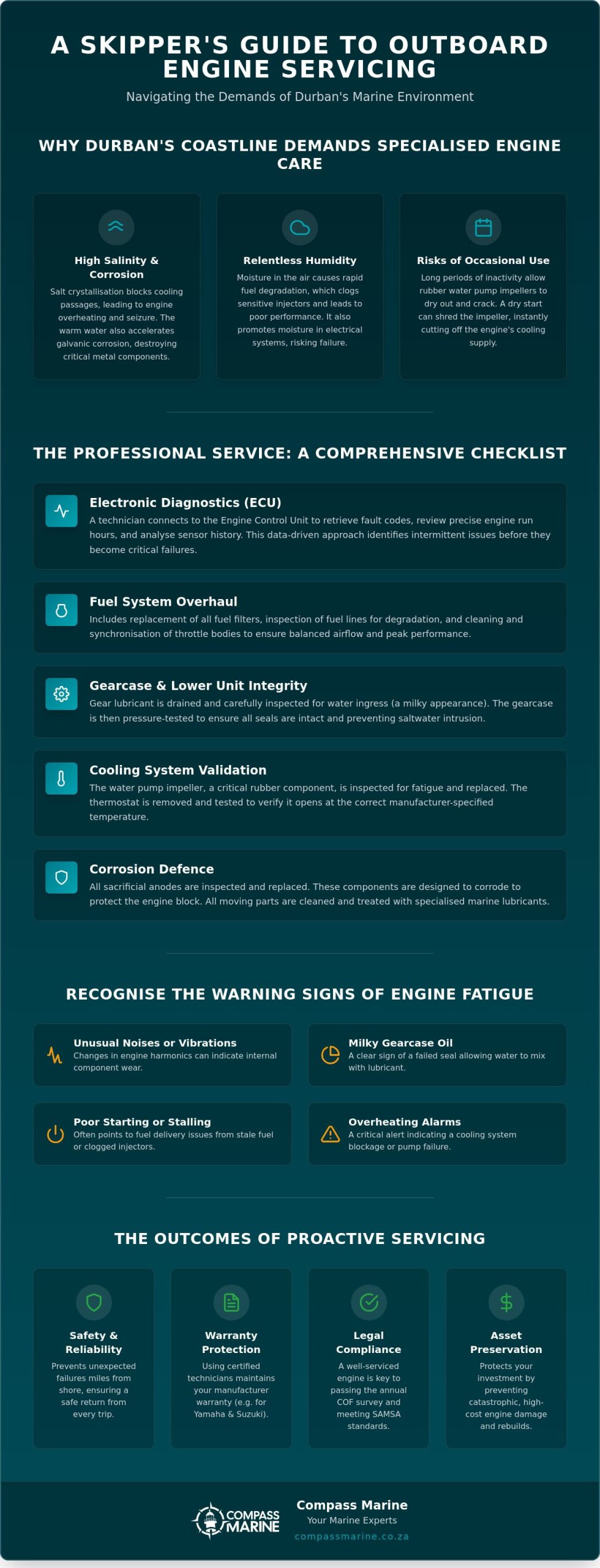
A professional service is a comprehensive technical audit of your vessel’s fuel, cooling, and electrical systems. For skippers operating along the KwaZulu-Natal coastline, outboard engine servicing Durban is the only reliable way to ensure these systems don’t fail when you’re navigating heavy swells or returning through the harbour mouth. The high salinity and relentless humidity of our local environment create a perfect storm for mechanical degradation. Saltwater doesn’t just sit on the exterior; it enters the cooling passages where it can crystallise and block the flow of water. This results in rapid overheating and potential engine seizure. Choosing proactive maintenance over emergency mechanical repairs isn’t just about safety, it’s a sound financial decision that prevents the astronomical costs of a total engine rebuild.
Combating Saltwater Corrosion and Oxidation
The warm waters of the South African coastline act as a powerful catalyst for galvanic corrosion. This makes frequent sacrificial anode inspections vital, as these components are specifically designed to corrode so your outboard motor doesn’t. We apply specialised marine lubricants to create a moisture-resistant barrier on all moving parts, which prevents the seizing that often plagues steering cables and tilt-trim units. Distinguishing between minor surface rust and structural oxidation is a key part of our process. While surface spots are often cosmetic, structural oxidation compromises the integrity of the engine’s mounting brackets and midsection, which can lead to catastrophic failure if left unchecked.
The Risks of Neglecting Seasonal Maintenance
Many boat owners believe that low engine hours equate to low maintenance requirements. In reality, occasional usage actually increases the need for professional inspections. Modern fuel-injected outboards are incredibly sensitive to fuel degradation, which happens rapidly in our humid climate. Stale fuel can clog high-pressure injectors and lead to poor performance or complete starting failure. Additionally, the rubber water pump impeller can develop fatigue or “set” over time, even if the engine remains idle. Dry-starting an engine with a brittle impeller will shred the blades instantly, cutting off the cooling supply. Regular professional check-ups identify these hidden risks before they leave you stranded at sea.
The Professional Outboard Service: A Comprehensive Maintenance Checklist
A professional service goes far beyond a basic oil change and a garden-hose flush. It’s a systematic deep dive into the mechanical and electronic health of your motor. When you book your vessel for professional outboard engine servicing Durban, the process begins with diagnostic computer testing. By connecting to the Electronic Control Unit (ECU), we can retrieve fault codes, review engine run hours, and analyse sensor history that isn’t visible to the naked eye. This data-driven approach is essential for modern fuel-injected engines, allowing us to identify intermittent issues before they manifest as a mid-sea breakdown. A comprehensive maintenance checklist ensures that every critical system is validated against manufacturer specifications.
The checklist continues with a full fuel system overhaul and gearbox pressure testing. We replace high-pressure filters and inspect lines for signs of UV degradation or internal collapse. In the lower unit, we don’t just change the lubricant; we pressure test the gearcase to ensure seals are preventing water ingress. Spark plug analysis follows, where the colour and condition of the electrodes provide a “health report” of your engine’s combustion. Finally, we calibrate the ignition timing and validate the cooling system by testing the thermostat’s opening temperature in a controlled environment. While some basic checks can be performed at home, a professional engine service provides the diagnostic depth required for total peace of mind.
Fuel System Integrity and Filtration
Durban’s high humidity makes fuel management a constant challenge. Water-separating fuel filters are your primary defence against “phase separation” in ethanol-blend fuels, which can wreak havoc on high-pressure injectors. During a service, we don’t just swap filters; we clean and synchronise the throttle bodies. This ensures balanced airflow across all cylinders, which is the secret to achieving optimal fuel economy and a smooth idle whilst trolling for game fish.
Cooling System and Impeller Replacement
The water pump impeller is a critical wear part that requires replacement regardless of engine hours. The rubber blades can become brittle or lose their “memory” over time, especially if the boat has been in storage. This level of technical rigour is why outboard engine servicing Durban is best left to certified technicians who can professionally flush the cooling galleries. We remove stubborn salt deposits that a standard flush misses, ensuring your tell-tale stream remains strong and your engine stays cool in the warm KZN waters.
Recognising Symptoms of Outboard Engine Failure and Fatigue
Experienced skippers develop a keen ear for their machinery’s unique rhythm. When those familiar harmonics shift or unusual vibrations begin to rattle the hull, it’s often the first warning of an underlying mechanical issue. Ignoring these subtle cues can lead to a complete failure whilst you’re navigating the Durban harbour mouth or heading out to the deep. Understanding these warning signs is a critical skill for any boat owner, as it allows you to schedule outboard engine servicing Durban before a minor fault becomes a catastrophic breakdown. Maintaining your vessel’s legal compliance and performance requires a proactive approach to these sensory warning signs.
Monitoring the health of your lower unit is equally vital. When you check your gearcase oil, it should be clear and dark; if it appears milky or opaque, you’re looking at water ingress caused by a failed seal. This contamination destroys the lubricating properties of the oil and will quickly lead to gear failure if not addressed. Additionally, modern engines use “limp-mode” triggers to protect themselves from damage during overheating or oil pressure drops. Whilst these intermittent alarms can be frustrating, they’re designed to save your powerhead from total destruction. A drop in top-end RPM often signals a fuel delivery or propeller pitch issue.
Performance Red Flags and Power Loss
Sudden difficulty in getting on plane is a classic red flag that your engine is struggling to produce its rated horsepower. This power loss can stem from various sources, including fouled ignition components or a fuel system restricted by debris. You should also pay close attention to your engine’s behaviour at idle. An uneven or hunting idle often points to a vacuum leak or clogged injectors. It’s also important to distinguish between propeller cavitation, which sounds like stones hitting the hull, and hub slippage, where the engine revs freely but the boat loses forward thrust. Both require immediate technical attention to prevent further damage.
Visual Indicators of Internal Trouble
A thorough visual inspection can reveal hidden problems before they leave you stranded. Look for weeping seals around the lower unit and tilt-trim rams, as even a small oily residue suggests a seal is failing. In our coastal environment, identify any salt-crust buildup around gaskets and cylinder heads, which indicates a slow cooling leak that could lead to internal corrosion. Finally, inspect your electrical looms for “green death.” This distinctive green oxidation on copper terminals is a common result of Durban’s high humidity and will eventually cause intermittent electrical faults or starting failures if the wires aren’t cleaned and protected.
The Advantage of Certified Yamaha and Suzuki Technical Expertise
Entrusting your powerhead to a certified specialist is the most effective way to safeguard your maritime investment. Whilst general mechanical knowledge has its place, outboard engine servicing Durban demands brand-specific mastery to navigate the sophisticated systems of modern motors. Certified Yamaha and Suzuki technicians have direct access to proprietary diagnostic software, which is essential for precise fault finding and sensor calibration. This technical advantage is reinforced by the strict use of genuine OEM parts. Using factory-approved components is the only way to preserve your manufacturer warranty and ensure that every replacement part meets the exact tolerances required for the KZN coastline. To understand how these high standards translate into long-term vessel health, read our guide on professional marine engine servicing.
Our facility is equipped with the specialised tools required for precision stainless steel fabrication and fittings. Whether you need custom-fabricated rod holders or structural reinforcements, having these services integrated with your mechanical care ensures a seamless ownership experience. This all-encompassing approach reduces the time your vessel spends on a trailer and maximises your hours on the water. Professional care means every bolt is torqued to spec and every fitting is marine-grade.
Precision Diagnostics and Electrical Fault Finding
Modern outboards function like high-performance computers. The ECU records a detailed history of the engine’s life, including hidden overheat events and intermittent sensor failures that may not trigger a permanent warning light. A certified mechanic can interpret these complex error codes to identify developing issues before they lead to a mid-sea failure. This is also the ideal time to consider upgrading your marine electronics. Integrating new fish finders or GPS units whilst the engine is in for service allows for a comprehensive check of your vessel’s electrical loom and battery charging system.
Preserving Resale Value through Service Records
A meticulously stamped service book is a powerful asset in the pre-owned boats for sale market. Prospective buyers in South Africa prioritise documented history, as it provides tangible proof that the engine has been shielded from the worst effects of saltwater corrosion. Documented maintenance builds immediate buyer confidence and often justifies a higher asking price. By ensuring all marine technical services are performed by a reputable, certified facility, you are effectively protecting the future equity of your boat.
If you want to ensure your engine remains in peak condition, contact our certified technicians to schedule your next comprehensive service.
Ensuring Legal Compliance and Performance on the Water
Maintaining your vessel’s legal standing is just as important as its mechanical health. In South Africa, the annual Certificate of Fitness (COF) survey requires your boat to be in a seaworthy condition, which includes having a reliable means of propulsion. When you invest in outboard engine servicing Durban, you aren’t just buying performance; you’re ensuring that your vessel meets the stringent requirements of the South African Maritime Safety Authority (SAMSA). A failing engine or a corroded steering system can result in a failed inspection, keeping you grounded until repairs are certified by a professional.
A holistic approach to safety means integrating your engine maintenance with other legal requirements. This includes keeping your buoyancy certificates up to date and ensuring all safety gear is in good working order. Don’t overlook your trailer during this process. Safe transport to the Durban harbour depends on well-maintained bearings, functional lights, and a structurally sound frame. A breakdown on the road can be just as dangerous as one at sea, so we recommend including a trailer inspection as part of your annual maintenance routine.
Preparing for the SAMSA Safety Survey
During a safety survey, inspectors will verify that your engine serial numbers match your vessel’s documentation exactly. We ensure these plates are clean and legible as part of our service. We also test emergency kill-switches and battery isolation systems to confirm they function perfectly, as these are non-negotiable safety items under South African regulations. Finally, we verify that your steering and control cables are free of binding or corrosion, providing the responsive handling needed for safe navigation in crowded harbour channels.
Post-Service Care and Best Practices
The longevity of your engine depends heavily on the habits you form after the service is complete. An essential fresh water flush after every launch is the best way to remove salt from the cooling galleries before it has a chance to crystallise. We also recommend applying corrosion-inhibiting sprays to the powerhead after every trip to combat the high coastal humidity of KwaZulu-Natal. Always check your propeller for fishing line entanglement; a single strand of nylon can shred a prop-shaft seal, leading to water ingress and gearcase failure.
When the season ends or you’re facing a long period of inactivity, the best way to protect your maritime investment is through secure indoor boat storage. This shields your engine, upholstery, and electronics from the corrosive Durban air, ensuring your vessel is ready for its next launch without the need for extensive refurbishment or emergency repairs.
Secure Your Peace of Mind on the Water
Operating a vessel in the Indian Ocean requires more than just passion; it demands a disciplined approach to mechanical preservation. We’ve explored how proactive maintenance defends your engine against Durban’s high salinity and how certified technical expertise ensures your vessel remains compliant with the latest SAMSA regulations. By recognising early warning signs of fatigue and prioritising professional outboard engine servicing Durban, you protect both your safety at sea and the long-term resale value of your boat.
Our team brings decades of maritime technical expertise to every project, supported by a comprehensive marine store and chandlery on-site for all your boating needs. Whether you require precision fault finding from a certified Yamaha or Suzuki technician or a routine annual check, we provide the steady hand your investment deserves. Don’t wait for a mechanical failure to disrupt your time on the water.
Book your expert outboard engine service with Compass Marine today and enjoy total confidence during your next launch from the Durban harbour.
Frequently Asked Questions
How often should I service my outboard engine for saltwater use?
You should service your outboard engine every 100 hours of operation or at least once every twelve months, whichever comes first. The high salinity of the Durban coastline makes this schedule non-negotiable; even if you don’t reach 100 hours, the salt and humidity can cause internal corrosion and crystallisation in the cooling passages whilst the boat is stationary.
What is the difference between a minor and a major outboard service?
A minor service focuses on essential lubrication and filtration, including engine oil, gear oil, and primary fuel filters. A major service is far more comprehensive, involving the replacement of the water pump impeller, thermostats, and spark plugs. It also includes a deep inspection of the fuel injectors and a pressure test of the gearbox seals to ensure no water ingress has occurred.
Can I service my Yamaha or Suzuki outboard myself to save money?
Whilst owners should perform basic post-trip maintenance like freshwater flushing, a professional outboard engine servicing Durban is required for technical repairs. Modern engines require proprietary diagnostic software to pull fault codes and calibrate sensors. Attempting complex work yourself can void your manufacturer warranty and may lead to safety risks if critical components are not torqued to factory specifications.
How long does a professional outboard engine service typically take?
A typical service for a mid-size 4-stroke outboard engine usually requires 4 to 5 hours of labour to complete all diagnostic and mechanical checks. For smaller 2-stroke engines, the process is generally faster, taking between 2 and 3 hours. These times ensure that every system, from the fuel lines to the cooling galleries, is thoroughly validated before the vessel is returned to the water.
Does a service include a diagnostic report for the engine’s electronics?
Yes, every professional service for a modern fuel-injected engine includes a full diagnostic health report. Our certified technicians connect to the engine’s Electronic Control Unit (ECU) to review run-hour history, temperature logs, and any stored fault codes. This data allows us to identify intermittent electrical issues or sensor failures that aren’t visible during a standard mechanical inspection.
Will a professional service help me pass my COF inspection?
A professional service is a critical component of passing your annual Certificate of Fitness (COF) survey. We ensure that your engine’s propulsion, steering, and emergency stop systems are in full working order. This technical validation provides the necessary assurance to the surveyor that your vessel meets the latest SAMSA safety standards for operating in South African coastal waters.
What happens if I miss a scheduled service interval?
Missing a service interval significantly increases the risk of an unexpected engine failure whilst out at sea. Beyond the safety risks, neglected maintenance leads to the rapid buildup of salt deposits and the degradation of sacrificial anodes, which can cause permanent damage to the engine block. It also negatively impacts your engine’s resale value and will likely void any remaining manufacturer warranty.
Do you provide servicing for both 2-stroke and 4-stroke outboard motors?
We provide comprehensive outboard engine servicing Durban for both traditional 2-stroke and modern 4-stroke motors. Whilst 4-stroke engines require more frequent oil and filter changes, older 2-stroke models need specialised attention regarding their carburetion and oil-injection systems. Our technicians are trained to handle the unique mechanical requirements of both technologies to ensure peak performance on the water.