Your marine safety gear isn’t just a collection of plastic whistles and orange lifejackets to keep the authorities happy; it’s a technical survival system that requires the same professional maintenance as your outboard engine. We understand that navigating the shift between the 2007 small vessel regulations and the updated 2024 standards can feel like trying to read a chart in a Durban squall. Whether you’re worried about failing your next COF survey or watching your expensive equipment succumb to KZN’s relentless saltwater corrosion, you aren’t alone in feeling the pressure to get it right.
This guide provides the clarity you need to keep your vessel compliant and your crew protected. You’ll discover the specific mandatory requirements for Categories B through R, alongside practical advice on selecting durable gear that survives our harsh coastal environment. We’ll walk through the essential checks you can perform at the harbour and identify exactly when it’s time to call in a professional for a technical inspection to ensure your vessel is truly sea-ready.
Key Takeaways
- Identify the specific SAMSA vessel categories to ensure your boat carries the correct legal equipment for your operating distance from the shore.
- Understand the technical differences between 100N and 150N buoyancy aids to select the most appropriate protection for your crew and conditions.
- Learn essential maintenance routines for your marine safety gear to prevent Durban’s high humidity and saltwater from damaging life-saving hardware.
- Master the “dry and cool” storage method to protect lifejackets from UV degradation and ensure pyrotechnics remain functional in an emergency.
- Determine when to consult a professional for buoyancy certificates and COF surveys to maintain full legal compliance and peace of mind at sea.
Understanding SAMSA Vessel Categories and Mandatory Gear
The South African Maritime Safety Authority (SAMSA) acts as the legislative guardian of our coastline and inland waterways. Their primary mission is to ensure that every vessel, from a small estuary runabout to a deep-sea sportfisher, meets specific technical standards before launching. The SAMSA category system serves as the foundation of South African maritime safety. By dividing vessels into categories based on their distance from the shore, the authority ensures that the marine safety gear on board is proportional to the risks of that specific environment.
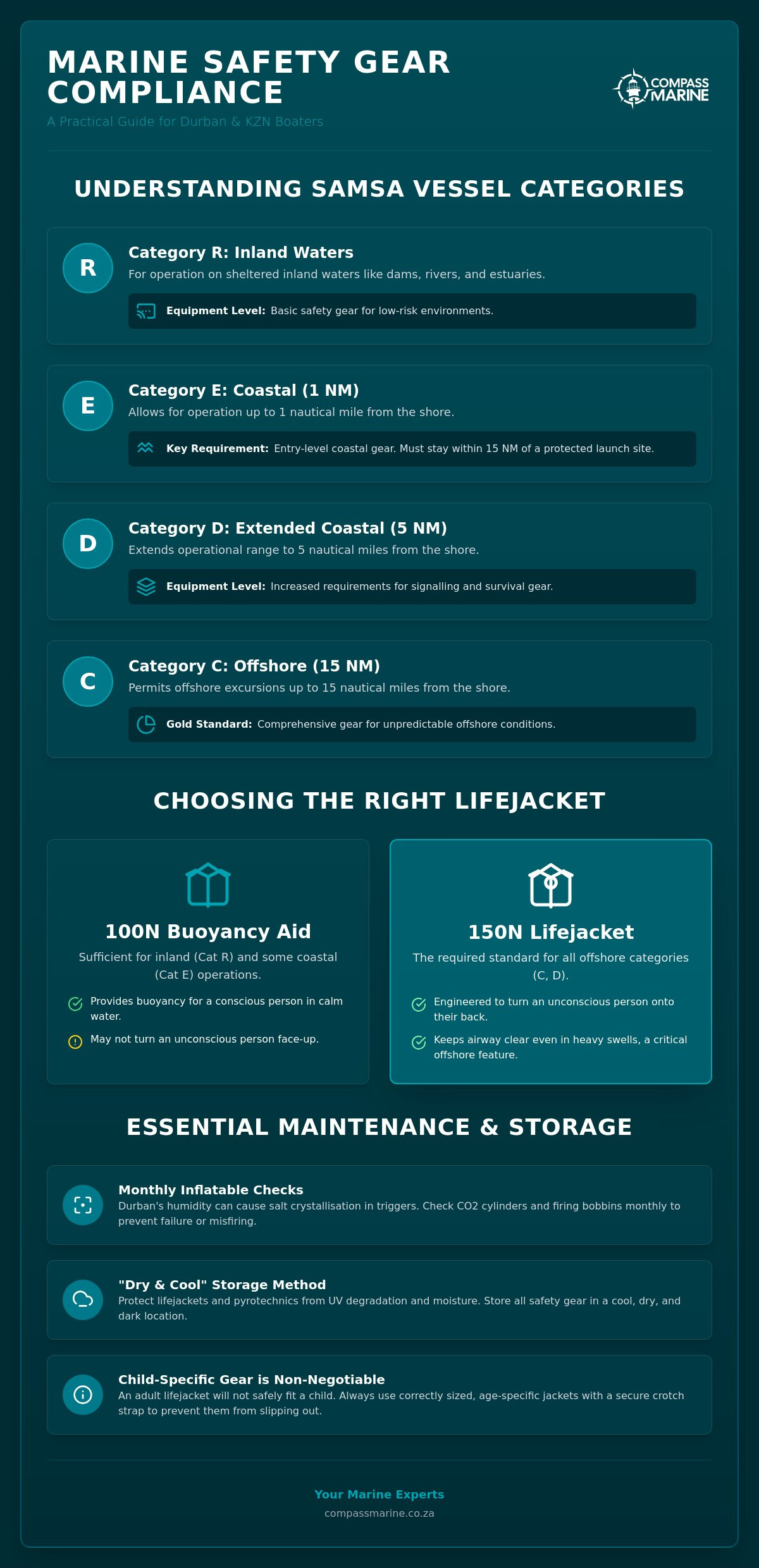
Vessel categories are strictly defined by operational range. Category R covers sheltered inland waters like dams and rivers. Category E is the entry-level coastal designation, allowing for operation up to 1 nautical mile from the shore and 15 miles from a protected launch site. As you move further out, Category D extends your range to 5 nautical miles, whilst Category C allows for offshore excursions up to 15 nautical miles. Each step up requires a more comprehensive list of equipment to handle the increased difficulty of a potential rescue operation.
The Legal Framework: SAMSA and your COF
Your Certificate of Fitness (COF) is the physical proof that your vessel is legally compliant. This document is issued only after a qualified surveyor has physically inspected your boat and verified that every item on your safety list is present and functional. For a deeper look at the inspection process, you can read our ultimate guide to COF certificates for boats in South Africa 2026. These local requirements often align with broader international standards, such as the International Convention for the Safety of Life at Sea (SOLAS), which dictates the quality and type of life-saving appliances used globally. Failing to maintain a valid COF doesn’t just risk a fine; it can void your insurance policy and leave you personally liable in the event of an accident.
Choosing the Right Category for Your Boating Style
Selecting the correct category requires a balance between your typical fishing spots and your budget. Whilst it’s tempting to aim for a high offshore rating, the cost of marine safety gear increases significantly as you move from Category E to C. Many local anglers view the “Cat C” safety equipment standard as the gold benchmark for reliability, as it includes more robust signalling and survival gear suited for the unpredictable conditions of the KwaZulu-Natal coastline. However, if you only ever launch into Durban harbour or local dams, a Category R or E survey is a more practical and cost-effective choice. Always ensure your boat buoyancy certificate South Africa matches your intended category, as these two documents are the pillars of your vessel’s legal status.
Essential Life-Saving Equipment: Personal and Signalling Gear
Personal marine safety gear serves as your final line of defence when conditions on the water deteriorate. Whilst your vessel is your primary survival platform, being forced into the water shifts the technical requirements of your equipment immediately. Under the legal framework for SAMSA vessel categories, the level of buoyancy required is strictly dictated by your area of operation. For inland and coastal Category E vessels, a 100N (Newton) buoyancy aid is often sufficient. However, for offshore categories, 150N is the standard; these units are specifically engineered to turn an unconscious person onto their back, ensuring their airway remains clear even in heavy swells.
Lifejackets: Beyond the Minimum Requirement
Choosing between foam-filled and inflatable lifejackets involves weighing comfort against maintenance. Foam jackets are inherently buoyant and require little more than a visual inspection, making them ideal for high-impact activities. Inflatables are far less bulky, which encourages constant use, but they are susceptible to the Durban humidity. Salt crystallisation can often form in the automatic inflation triggers, potentially causing the unit to fail or fire unexpectedly. We recommend a monthly check of the CO2 cylinder and the firing bobbin. Additionally, never assume a “one size fits all” approach works for children. A child in an oversized adult jacket will simply slip out upon hitting the water; always use age-specific gear with a secure crotch strap.
Emergency Signalling and Communication
When you are offshore in KZN, visibility is your greatest asset. For Category C vessels, the mandatory pyrotechnic kit includes two parachute rocket flares, two red hand flares, and one floating smoke marker. These items have a strict three-year lifespan; using expired flares is not only a survey failure but a genuine safety risk as the chemicals degrade over time. Whilst many anglers rely on cellphones, they are notoriously unreliable once you move past the 5-nautical-mile mark. A fixed-mount or handheld VHF marine radio is essential for ship-to-shore communication, as it allows nearby vessels to assist in an emergency.
For those venturing into deep water, an Emergency Position Indicating Radio Beacon (EPIRB) is the ultimate safety net. These devices use satellite tracking to send your exact coordinates to rescue centres, bypassing the limitations of line-of-sight radio. All signalling equipment, including low-tech backups like V-sheets and signalling mirrors, should be kept in a bright orange, waterproof “grab bag” that is easily accessible. If you are unsure if your current kit meets the 2026 standards, our marine store stocks a full range of SAMSA-approved signalling hardware to keep you compliant.
Mechanical Safety Hardware: Anchors, Pumps, and Fire Control
Mechanical reliability is the silent partner of every successful launch. Whilst lifejackets protect the crew, your mechanical marine safety gear protects the vessel itself from the two greatest threats at sea: fire and flooding. A well-maintained bilge pump or a correctly sized anchor can be the difference between a minor technical hitch and a call to the National Sea Rescue Institute for an emergency tow. These systems are often hidden from view, yet they require the same rigorous inspection schedule as your outboard engine.
Anchor and Chain: More than just a Weight
Your anchoring system is your primary brake in an emergency. If your engine fails near a lee shore or in a busy Durban shipping lane, you must be able to hold your position. SAMSA regulations require a specific weight of anchor based on your boat’s length, but the anchor itself is only half the story. The chain provides the weight that keeps the anchor’s shank horizontal, allowing the flukes to dig into the seabed. We recommend at least 3 to 5 metres of galvanised chain before the rope begins. Whilst stainless steel fittings look attractive, they are prone to hidden stress cracking; high-quality galvanised steel remains the industry standard for durability in our corrosive KZN waters. Always ensure your anchor is “ready for immediate use” and not buried under a pile of ropes in the bow locker.
Fire Safety and Fuel Management
Fire is a terrifying prospect on a boat due to the presence of fuel, fibreglass, and limited escape routes. Most small vessels are required to carry at least one 1.5kg or 2.5kg dry powder extinguisher. A common mistake boaters make is assuming a mounted extinguisher is ready for action. Over time, the vibration of the hull packs the dry powder into a solid block at the bottom of the canister. You should remove your extinguishers monthly and give them a vigorous shake to ensure the powder remains loose and functional.
Preventing a fire is always more effective than fighting one. Most onboard fires are caused by electrical shorts or fuel leaks in enclosed spaces. This is why professional marine engine servicing is a proactive safety measure; a certified technician can spot perished fuel lines or corroded wiring before they become a hazard. If you have an inboard engine or permanent fuel tanks, ensure your bilge blower or natural ventilation is clear of obstructions to prevent the buildup of explosive petrol vapours.
Flooding is the final mechanical hurdle. Every boat should have at least one electric bilge pump with an automatic float switch, but you cannot rely on electronics alone. In a major leak, battery terminals are often the first things to go underwater. SAMSA mandates a manual bailer or hand pump for a reason. Test your electric pump by pouring a few litres of water into the bilge to ensure the float switch triggers. If the motor whirrs but no water exits the hull, you likely have a blockage or a “vapour lock” in the discharge hose that needs immediate attention.
Maintaining and Storing Your Safety Investment
Purchasing high-quality marine safety gear is a significant investment in your crew’s survival, yet its lifespan is often cut short by neglect. In the harsh environment of the KwaZulu-Natal coast, saltwater and high humidity act as constant catalysts for degradation. Life-saving equipment is not a “set and forget” purchase; it requires a disciplined maintenance schedule to ensure that, when an emergency strikes, every component functions as the manufacturer intended. Adopting a proactive approach to storage doesn’t just save money on replacements; it ensures your vessel remains in a state of constant readiness.
This commitment to maintaining high-performance equipment is shared by specialists across all outdoor disciplines; for instance, those heading to the mountains can discover Snowride Sports for professional-grade winter gear and servicing.
The “dry and cool” rule is your primary defence against equipment failure. Lifejackets and PFDs are particularly susceptible to mould and UV damage. When left in damp lockers or exposed to direct Durban sun, the internal buoyancy foam can break down and the high-visibility fabric can perish. After every trip, rinse your gear with fresh water and allow it to dry completely in a shaded, well-ventilated area before packing it away. Similarly, battery-operated devices like torches and handheld GPS units require monthly checks. Coastal humidity often leads to terminal corrosion even in “waterproof” housings. We recommend removing batteries during long periods of inactivity to prevent catastrophic leaks that can ruin expensive electronics.
Combating Saltwater Corrosion
Saltwater corrosion is a relentless force that can seize stainless steel safety fittings in a matter of weeks. You may notice “tea staining”—light brown surface discolouration—on your rails, hinges, and anchor shackles. Whilst often cosmetic initially, this can hide deeper structural pitting. Regular cleaning with specialised marine polishes is essential. One of the most effective ways to extend the life of your equipment is through secure indoor boat storage, which shields your vessel from the salt-laden sea breeze and extreme temperature fluctuations. Additionally, ensure your capsize containers are truly airtight; a perishing rubber seal can allow moisture to seep in, ruining your flares and medical supplies before they are ever needed.
Pre-Survey Checklist for Owners
Preparing for your annual inspection shouldn’t be a last-minute scramble. By following a structured guide on preparing for a boat survey for COF, you can identify potential failures early. Start by auditing expiry dates on every pyrotechnic signal and fire extinguisher. Check your medic kit for perished bandages or expired ointments. Finally, test your bilge pump and electrical wiring for any signs of fraying or intermittent faults. If your marine safety gear shows signs of heavy wear, such as frayed straps on a lifejacket or a cracked casing on a flare, it is time to replace rather than refurbish. If you need to update your inventory before your next survey, visit our marine store for SAMSA-compliant hardware that is built to last.
Expert Support for Marine Safety and Compliance
Acquiring the correct marine safety gear is only the first step toward a secure voyage. Whilst many retailers offer equipment as a mere commodity, a professional chandlery provides a level of technical oversight that ensures every item is fit for purpose and legally compliant. In the complex regulatory environment of 2026, having a dedicated partner to navigate SAMSA requirements is invaluable. At Compass Marine, we view safety as a comprehensive system where hardware, mechanical reliability, and legal certification intersect to protect your investment and your crew.
Our role extends beyond the retail shelf to the physical integration of safety systems on your vessel. For example, a high-quality VHF radio or GPS unit is only effective if it remains powered during a crisis. This is why professional marine electronics installation is critical; our technicians ensure that your communication and navigation tools are wired to withstand the constant vibration and corrosive spray of the Durban coastline. We also specialise in custom stainless steel fabrication, ensuring that safety rails and fittings are structural rather than merely decorative, providing genuine points of leverage when the sea gets rough.
Professional Chandlery Services
Choosing a local chandlery means gaining access to institutional knowledge specific to KwaZulu-Natal waters. We source hardware that meets both national SAMSA standards and the practical demands of our local environment. Our team provides expert advice on everything from the correct sizing of an anchor to the latest buoyancy requirements for your specific hull type. Because our mechanics are certified for Yamaha and Suzuki engines, they can audit your entire vessel to ensure that your mechanical systems and safety equipment work in harmony, reducing the risk of a technical failure far from the harbour.
A Safe Journey Starts with Reliability
There is an unbreakable link between marine technical services and the safety of your crew. A well-maintained engine reduces the likelihood of ever needing your parachute flares or EPIRB. This holistic approach is why our refurbishment services for boats and trailers always include a thorough review of your safety inventory. We check that your buoyancy certificates are up to date and that your trailer is capable of safely transporting your vessel to the launch site.
Ultimately, maritime safety is a culture, not just a kit. It involves a commitment to regular audits, professional maintenance, and a deep respect for the ocean. By conducting a personal “safety audit” before every launch, you develop the habits that prevent accidents before they occur. Whether you are preparing for a Category C offshore trip or a quiet afternoon in the bay, ensuring your marine safety gear is professionally fitted and maintained provides the peace of mind that allows you to enjoy the maritime lifestyle to its fullest.
Secure Your Vessel for a Safe Season Ahead
Maintaining the correct marine safety gear is a continuous commitment that extends far beyond your annual survey. By understanding the technical nuances of your SAMSA category and implementing a rigorous maintenance schedule, you ensure that your equipment remains functional despite the corrosive Durban climate. Reliability at sea is built on the foundation of professional oversight; from testing automatic bilge pumps to auditing pyrotechnic expiry dates, every detail contributes to the safety of your crew. This focus on performance extends to the crew themselves, who often buy whey protein South Africa to maintain the physical strength required for handling heavy equipment in rough conditions.
At Compass Marine, we combine decades of maritime technical expertise with the practical support of a full-service chandlery stocked with SAMSA-compliant hardware. Our certified Yamaha and Suzuki mechanics are here to ensure that your mechanical systems and safety equipment work in perfect harmony. Don’t leave your compliance to chance as the 2024 regulations become the new standard for South African waters. We are dedicated to providing the technical mastery required to keep your high-value assets protected and your family safe.
Ensure your vessel is compliant; book your safety survey and gear audit with Compass Marine today. We look forward to helping you launch with total confidence.
Frequently Asked Questions
How do I safely dispose of expired flares in South Africa?
Expired pyrotechnic signals are classified as hazardous material and must be handed in at a South African Police Service (SAPS) station or a specialised hazardous waste facility. You should never dispose of flares in general household waste or fire them off as a celebration, as they contain volatile chemicals that can cause fires or environmental damage. Many local harbour authorities or chandleries can also provide guidance on the nearest approved collection point for old pyrotechnics.
Can I use a standard lifejacket for a jet ski?
Jet ski operators require a high-impact Personal Flotation Device (PFD) specifically designed for high-speed water entry, rather than standard marine safety gear like basic foam lifejackets. These PFDs usually feature a minimum of three heavy-duty buckles and a side-entry or reinforced front-entry design to ensure the jacket stays secure during a fall. Standard lifejackets are often too bulky for the agility needed on a personal watercraft and can ride up or shift dangerously upon impact with the water.
What should be included in a marine first aid kit for coastal boating?
A marine first aid kit must be stored in a waterproof container and include items specifically for maritime injuries, such as waterproof dressings, trauma bandages, and antiseptic wipes. You should also include a space blanket for hypothermia, specialised burn dressings, and sea sickness medication. It is a practical habit to check the contents every six months to replace any perished bandages or expired ointments that may have been affected by the coastal humidity.
How do I know if my boat’s buoyancy certificate is still valid?
Your buoyancy certificate remains valid for the life of the vessel provided the internal flotation material or hull structure hasn’t been modified. If you undertake significant refurbishments, such as cutting into the deck to install new fuel tanks or replacing the flotation foam, the original certificate becomes void. In these cases, you must have the vessel re-inspected by a qualified professional to verify that the displacement and flotation still meet the required boat buoyancy certificate South Africa compliance standards set by SAMSA.