A single rusted shackle or a mismatched rope grade is often the only thing standing between a secure vessel and a devastating insurance claim. If you have ever watched a storm front sweep across the Durban coastline and felt a knot of worry about your pride and joy, you are certainly not alone. Choosing the right boat mooring equipment is the most effective way to replace that anxiety with professional confidence. We know that the combination of high humidity and salt spray in KwaZulu-Natal can make maintaining hardware a constant battle, especially when you are unsure which grades of steel or types of rope offer the best protection.
In this guide, we will help you navigate the complexities of mooring systems to ensure your berthing setup is both secure and durable. You will discover the essential components every owner should have in their arsenal, from heavy-duty galvanised chains to reliable mooring buoys. We will also explain how to spot early signs of saltwater corrosion and provide the technical knowledge you need to inspect your own gear with the eye of a professional. By the end of this roundup, you will have a clear roadmap for protecting your investment against the elements and ensuring long-term peace of mind.
Key Takeaways
- Learn why a permanent mooring sinker provides superior stability compared to a standard anchor for long-term berthing.
- Identify the essential boat mooring equipment needed to withstand Durban’s harsh saltwater conditions, including the vital role of galvanised ground chains.
- Discover how to calculate the correct sizing for your setup by assessing vessel displacement and local tidal ranges.
- Understand the differences between hard and soft-shell mooring buoys to ensure your riser system remains visible and effective.
- Master a professional inspection routine to identify critical wear in shackles and chains before they lead to a vessel breakaway.
The Bedrock of Security: Anchors and Mooring Sinkers
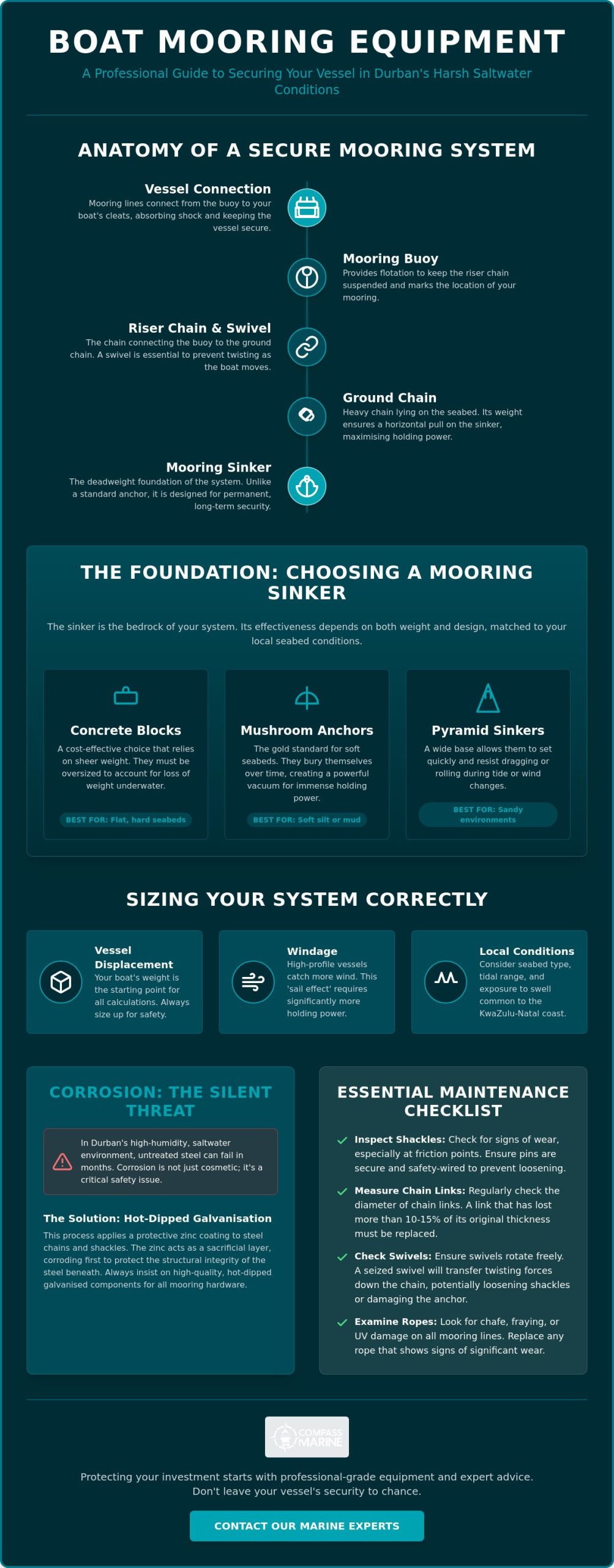
The foundation of any reliable berthing system starts at the bottom. Whilst a standard anchor is designed for short term stops, a permanent mooring sinker is a different beast entirely. It serves as the primary weight that holds your vessel in place for weeks or months at a time, often through the heavy swells and seasonal storms common along the KwaZulu-Natal coastline. A common mistake amongst new owners is assuming that a larger version of a standard fluke anchor will suffice for a permanent berth. In reality, a true mooring system relies on a combination of dead weight and seabed embedment to provide the necessary resistance against windage and current.
Choosing the right boat mooring equipment requires an understanding of your local seabed. Durban harbour, for instance, features varied compositions from soft silt to compacted sand. Weight alone is a deceptive metric; a concrete block loses nearly half its effective weight once submerged due to displacement. To compensate, a professional setup must account for “holding power,” which is the mechanical advantage a sinker gains by digging into or creating suction with the floor. For boaters in our region, where the swell can be unforgiving, understanding these mooring components is vital for long term safety.
Types of Permanent Mooring Sinkers
- Concrete blocks: These are a cost effective choice for many local berths. Because concrete has a lower density than metal, these blocks must be significantly larger to achieve the same effective weight underwater. They work best on flat, hard seabeds where embedment is difficult.
- Mushroom anchors: Shaped like an inverted umbrella, these are the gold standard for soft silt or mud. Over time, they bury themselves completely, creating a powerful vacuum that is incredibly difficult to dislodge.
- Pyramid sinkers: These feature a wide base and a high surface area, allowing them to set rapidly in sandy environments. Their shape prevents them from rolling or “walking” across the seabed during a change in tide or wind direction.
Selecting the Right Anchor for Your Vessel
Matching your anchor weight to your vessel displacement is only the first step. You must also calculate windage, which is the surface area of your boat that acts like a sail when the wind picks up. A high profile catamaran will require a much more robust foundation than a low slung fishing craft of the same weight. Technical mastery in this area often involves custom solutions; for example, high quality stainless steel fabrication and fittings are often required for the heavy duty eyes and shackles that connect these weights to your riser chain. Always prioritise holding power over simple mass, and ensure your hardware is rated for the specific stresses of your vessel type.
Connecting the System: Chains, Ropes, and Hardware
A mooring system is only as reliable as the components that bridge the gap between the seabed and your hull. Whilst the sinker provides the foundation, the chain and rope assembly manages the constant energy of the ocean. In a professional setup, we divide this into two parts: the heavy ground chain and the lighter riser chain. The ground chain lies on the seabed, providing the weight necessary to keep the pull on your sinker horizontal. This horizontal force is what keeps anchors engaged and prevents them from lifting under tension. Without sufficient ground chain weight, even the heaviest sinker can be dragged across the harbour floor during a spring tide.
Longevity in the Durban environment depends entirely on the quality of your galvanisation. Saltwater is a relentless catalyst for corrosion; hence, untreated steel will degrade within months. High-quality boat mooring equipment uses hot-dipped galvanised steel to create a sacrificial layer that protects the structural integrity of the metal. Between these lengths of chain, you must use swivels and shackles that are safety-wired to prevent them from vibrating loose. These swivels allow your vessel to rotate 360 degrees without twisting the chain into a knot. This assembly eventually reaches the surface, where it connects to the Mooring Buoys that mark your berth.
Mooring Chain Grades and Sizes
We generally recommend short-link galvanised chain for the riser section because it’s less prone to snagging and easier to handle. Long-link chain is often used for the ground section as it provides excellent weight-to-cost ratios. Calculating the length is a matter of “scope.” In KZN, a scope of 3:1 is a standard starting point, meaning you need three metres of chain for every metre of water depth at high tide. Keep a sharp eye out for pitting, which appears as small, deep craters in the metal. This is a sign of advanced fatigue, and it means the chain’s breaking strain is no longer guaranteed. If you notice these signs, it’s time to browse our marine products for a replacement.
Ropes, Bridles, and Splicing Services
The final connection to your boat should always involve a flexible rope or bridle. Three-strand nylon is the preferred choice amongst local mariners because it has a natural elasticity. This “stretch” acts like a bungee cord, absorbing the shock of sudden swells before they reach your deck hardware. We strongly advise against using simple knots at these critical junctions. Knots can reduce the breaking strength of a rope by up to 50%. Instead, professional eye-splicing with a protective thimble ensures the load is distributed evenly across the fibres. A bridle system, which splits the load between two bow cleats, is the best way to keep your boat centred and reduce wear on a single point.
Surface Essentials: Mooring Buoys and Fenders
While the sinker and chain provide the muscle of your system, the surface components are what you interact with every time you return to your berth. The mooring buoy serves two critical functions: it acts as a visible marker for your position and provides the buoyancy required to support the weight of the riser chain. Without a correctly sized buoy, the weight of the metal below can pull the marker underwater during a spring tide, creating a hazard for other vessels and making it impossible to find your spot. Choosing the right boat mooring equipment for the surface requires a balance between visibility, durability, and enough lift to keep your hardware accessible.
In the busy waters of Durban harbour, visibility is not just a matter of convenience; it is a safety requirement. A buoy must be easily identifiable amongst the chop and glare of the Indian Ocean. Regulatory standards often dictate that vessels maintain adequate Ground tackle and mooring lines, and this includes ensuring your surface markers are clean and brightly coloured. Beyond the buoy itself, your hull requires protection from the rigid structures of jetties or neighbouring vessels. Fenders act as the primary buffer, absorbing the kinetic energy of the boat as it moves with the tide.
Types of Mooring Buoys
- Traditional pick-up buoys: These are smaller, lightweight markers attached to the main buoy by a short line. They are easy to grab with a boat hook, allowing you to pull the heavier riser chain on board without straining.
- Support buoys: These are the heavy lifters. They must be large enough to offset the weight of your specific chain grade. If you use a heavy-duty 12mm or 16mm chain, your buoy needs a higher volume to stay afloat.
- Inflatable versus foam-filled: Inflatable buoys are versatile and easy to store, but they can puncture. We generally recommend foam-filled hard-shell buoys for permanent moorings. Even if the outer shell is damaged by a collision, the closed-cell foam ensures the buoy stays afloat.
Fenders and Hull Protection
The South African sun is notoriously harsh on marine plastics. When selecting fenders, prioritise UV-resistant materials that won’t become brittle or “sticky” over time. A fender that fails during a summer storm can lead to thousands of Rands in gelcoat repairs. As a general rule, you should have at least one fender for every 3 metres of boat length, with a minimum of three on each side when berthed alongside. Strategic placement is key; always hang fenders so the widest part of the boat is protected. Adjust their height to account for the tidal range in KZN, which can vary significantly throughout the month. This proactive approach to boat mooring equipment maintenance is what separates a seasoned mariner from a novice.
Selection Criteria: How to Choose the Right Mooring Equipment
Selecting the right boat mooring equipment is a calculated decision that balances the physical laws of buoyancy with the harsh reality of the Indian Ocean. It’s not enough to simply buy the heaviest chain available. You need a system that responds to the specific forces acting on your hull. For boaters in KwaZulu-Natal, this means accounting for a high-energy coastline where tidal surges and seasonal winds can double the load on your hardware in a matter of hours. Investing in higher-grade, galvanised components might seem like a significant upfront cost, but it’s far cheaper than the alternative of a vessel breaking loose during a storm.
A professional approach to selection involves more than just reading a chart. You must assess the specific variables of your berth, including current speed and wind exposure. If you are berthed in a location with a high tidal range, your riser chain must be long enough to prevent the buoy from being pulled under, yet short enough to keep your vessel from swinging into others. This is where the expertise of a local professional becomes invaluable. Sourcing your gear through a specialist marine store ensures you receive technical guidance tailored to the Durban harbour environment rather than generic, one-size-fits-all advice.
Environmental Impact on Gear Choice
In high-energy environments like the open sections of our coastline, the constant motion of the water causes rapid wear. In these areas, you should prioritise heavier ground chains and larger buoys with high reserve buoyancy. Conversely, sheltered moorings in the inner harbour allow for slightly lighter, more manageable gear that is easier to service. Regardless of location, you must manage saltwater corrosion aggressively. This includes using high-quality marine paint on buoys and ensuring all underwater connections are protected by sacrificial anodes where appropriate to prevent the metal from thinning prematurely.
Matching Gear to Vessel Type
Your boat’s design dictates the stress placed on your mooring. A catamaran, for instance, has a much higher windage profile than a monohull of the same length, requiring a more robust sinker and bridle system to remain stable. High-profile cabin boats also act like sails, catching the wind and putting immense strain on the riser chain. For some owners, particularly those with high-value recreational craft that aren’t used daily, secure indoor boat storage can be a safer and more cost-effective alternative to a permanent water berth. If you decide to stay on the water, ensure your hardware is rated for your vessel’s specific displacement and windage. For help selecting the right components for your specific boat, visit us for expert chandlery advice to ensure your setup is fit for purpose.
Maintaining Your Mooring and Ensuring Compliance
A mooring system is a dynamic assembly that lives in one of the most corrosive environments on earth. Because the majority of your boat mooring equipment remains submerged, it is often a case of “out of sight, out of mind” for many owners. This neglect is a leading cause of vessel breakaway. The Indian Ocean doesn’t forgive a lack of maintenance; the constant motion of the swell causes metal-on-metal friction that gradually thins your chains and wears down shackle pins. Establishing a professional inspection routine is the only way to ensure your boat remains where you left it.
Shackle wear is particularly deceptive. Whilst the body of a shackle may look robust, the pin is a frequent failure point. We often see pins that have worn down to half their original diameter due to the constant oscillating movement of the riser chain. Similarly, inter-link wear occurs where chain links rub against one another. As a general rule, if any part of your chain has lost 10% or more of its original thickness, the entire length should be condemned and replaced. This proactive refurbishment prevents the catastrophic failure of the system during the heavy South African summer storms.
Inspection and Refurbishment
Annual lifting of the entire mooring is non-negotiable for long-term security. This allows for a full visual check for electrolytic corrosion, which can be accelerated in busy harbours by stray electrical currents. During this time, you should also clean and antifoul your buoys. Marine growth, such as barnacles and mussels, can add significant weight to a buoy, reducing its reserve buoyancy and dragging your riser chain lower into the water column. Many savvy owners choose to integrate these mooring checks into their regular marine engine servicing routine. Bundling these tasks ensures that your entire vessel, from the propulsion system to the ground tackle, is handled by a single, steady hand. If your vessel will be out of the water for an extended period, following a structured approach to how to prepare a boat for storage will protect your engine components and upholstery from the damaging effects of KwaZulu-Natal’s coastal humidity. Personal watercraft owners should also be aware that saltwater exposure can trigger jet ski electrical problems, making a thorough post-season diagnostic check just as important as inspecting your mooring hardware.
Safety Standards and Compliance
In South Africa, your mooring gear is more than just a convenience; it is a regulatory requirement. To obtain a valid COF certificate for boats, an inspector must verify that your anchoring and mooring equipment is fit for purpose and matches your vessel’s category. For those operating under Cat C regulations, having the correct ground tackle is a mandatory safety standard. If your hardware is rusted, undersized, or poorly maintained, you risk failing your inspection and losing your right to launch. Utilising professional marine technical services can help you verify that your setup meets these local standards. A certified technician can identify technical flaws that the untrained eye might miss, providing you with the documentation and peace of mind required for a safe season on the water.
Secure Your Vessel with Professional Ground Tackle
A reliable mooring setup is more than just a heavy weight on the seabed; it is a carefully balanced system where every shackle and link plays a critical role. By choosing the right boat mooring equipment and adhering to a strict annual inspection schedule, you protect your vessel from unpredictable Durban swells and ensure your safety compliance remains current. High quality galvanisation and expert stainless steel fittings are your best defences against the relentless saltwater corrosion common along the KwaZulu-Natal coast.
At Compass Marine, we act as a dedicated partner for local boaters. Our facility offers the expertise of certified Yamaha and Suzuki mechanics alongside specialist stainless steel fabrication for custom mooring fittings. Our comprehensive marine store stocks top tier safety gear and hardware specifically selected for our local environment. Whether you require a full system refurbishment or a simple hardware upgrade, our team provides the technical mastery needed to keep your investment secure.
Browse our full range of professional boat mooring equipment at the Compass Marine Chandlery and enjoy the peace of mind that comes with a truly secure berth. We look forward to helping you stay safe on the water.
Frequently Asked Questions
How often should I inspect my boat mooring equipment?
You should perform a full sub-surface inspection at least once a year, whilst checking surface components every six months. In high-energy areas like Durban, the constant movement of the sea accelerates wear on shackle pins and chain links. An annual lift allows you to identify thinning metal or electrolytic corrosion before it leads to a failure. Regular checks ensure your boat mooring equipment remains reliable through the summer storm season.
What is the best type of rope for a permanent mooring?
Three-strand nylon is widely considered the best choice for permanent mooring lines due to its excellent elasticity. This natural “stretch” is vital for absorbing the kinetic energy of a vessel as it moves with the tide and swell, preventing shock loads from damaging your deck cleats. Whilst polyester is stronger, it lacks the necessary give, making nylon the safer option for distributing tension in a dynamic marine environment.
How do I calculate the correct weight for a mooring sinker?
You must calculate the sinker weight based on your vessel’s displacement and its total windage profile. As a general rule, a concrete sinker should weigh at least twice as much as a cast iron equivalent because concrete loses significant mass due to displacement once submerged. In a tidal harbour, you should also account for the maximum current speed, as this adds horizontal force that the sinker must resist to stay set.
Is galvanised chain better than stainless steel for mooring?
Hot-dipped galvanised chain is the standard choice for boat mooring equipment because it offers superior resistance to crevice corrosion in submerged environments. Whilst stainless steel looks attractive, it is prone to sudden failure if oxygen cannot reach its surface, which often happens in silty harbour beds. Galvanised steel provides a sacrificial layer that is both cost-effective and highly reliable for heavy-duty ground tackle and riser chains.
Can I use a standard anchor for a permanent mooring?
You shouldn’t use a standard fluke or plough anchor as a permanent mooring because they aren’t designed to handle 360-degree rotations. A standard anchor is meant to be set in one direction; if the wind or tide shifts, it can trip and fail to reset properly. Permanent sinkers, such as mushroom or pyramid designs, are specifically engineered to remain secure regardless of which way the vessel is pulling.
What is the difference between a mooring buoy and a marker buoy?
The primary difference lies in load-bearing capacity; a mooring buoy is designed to support the heavy weight of a riser chain, whereas a marker buoy simply indicates a location. Mooring buoys are typically larger and feature a reinforced central tube or heavy-duty eye for hardware attachment. Marker buoys are lightweight and lack the internal structure required to handle the constant tension and weight of a permanent berthing system.
Do I need a permit to install my own mooring system?
You generally require a permit from the relevant port authority or local municipality before installing any permanent mooring. In Durban, for example, Transnet National Ports Authority (TNPA) manages the harbour space and ensures that all moorings are placed correctly to avoid obstructing navigation. It’s vital to verify local bylaws and safety regulations to ensure your berth is legal and doesn’t interfere with existing sub-surface infrastructure.
What maintenance does a mooring buoy require?
You should clean your buoy every six months to remove marine growth like barnacles and mussels. This accumulation adds weight that can eventually pull the buoy underwater. Additionally, you must inspect the central rod or attachment point for wear and ensure the colour remains bright for visibility. Applying a fresh coat of marine paint and checking that all shackles are safety-wired will significantly extend the life of your surface gear.