
What if the most dangerous time for your boat isn’t a storm at sea, but the months it spends sitting idle in the humid air of KwaZulu-Natal? Learning how to prepare a boat for storage is the difference between a smooth launch next season and a costly mechanical nightmare. Most owners recognise the familiar anxiety of wondering if their engine will seize or if the fuel will degrade while the vessel is out of use. It’s a valid concern, as salt air and coastal moisture are relentless when it comes to attacking upholstery and delicate engine components.
This professional guide will show you how to master the technical maintenance steps that prevent saltwater corrosion and mechanical failure. By following this methodical approach, you’ll gain the confidence that your vessel will start immediately next season and maintain its maximum resale value. We’ll preview the essential checks you can perform yourself and clarify exactly when it’s time to call in a certified expert for a professional service, ensuring your investment remains in safe hands for your next adventure.
Key Takeaways
- Learn the precise mechanical steps involved in how to prepare a boat for storage, focusing on fuel stabilisation and engine flushing to prevent off-season seizures.
- Understand why deep cleaning and functional waxing are non-negotiable for neutralising Durban’s aggressive salt spray and preventing galvanic corrosion.
- Identify the technical differences between breathable and waterproof covers to protect your upholstery from the destructive effects of coastal humidity.
- Evaluate the long-term cost benefits of indoor versus outdoor storage environments for maintaining your vessel’s resale value.
- Ensure a safe return to the water by verifying your COF certificates and performing critical system checks before your first launch of the new season.
Why Professional Preparation is Essential for Boat Storage
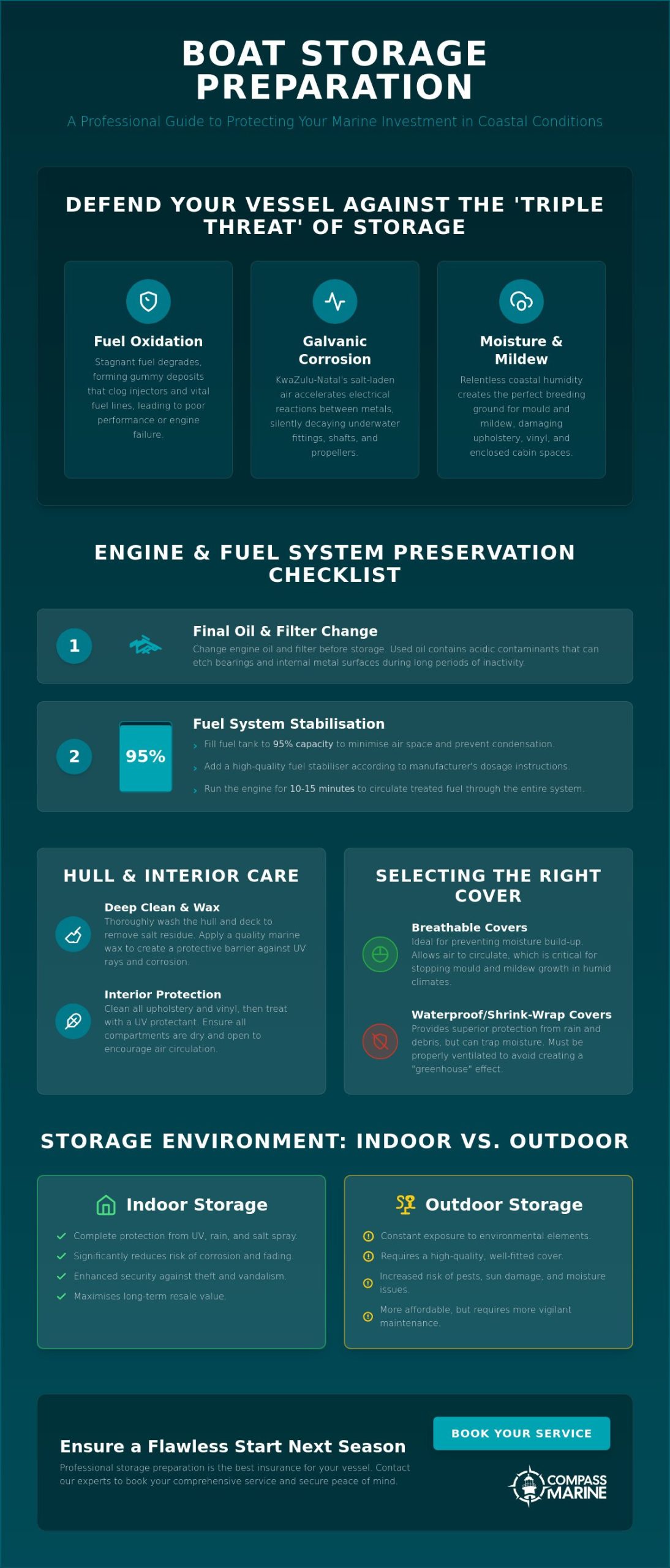
Effective boat storage prep is a proactive preservation strategy rather than a simple cleaning task. It is a calculated effort to protect a high-value asset from the aggressive coastal environment of KwaZulu-Natal. When you understand how to prepare a boat for storage, you are essentially defending your vessel against a “Triple Threat”: fuel oxidation, galvanic corrosion, and moisture. Each of these elements works silently to degrade your boat’s systems the moment it leaves the water.
Fuel oxidation occurs when petrol or diesel sits for extended periods, leading to gummy deposits that clog injectors and fuel lines. Galvanic corrosion is a constant risk in Durban’s salt-laden air, where electrical reactions accelerate the decay of vital metal components. Finally, the relentless humidity of our coastline provides the perfect breeding ground for mould and mildew. Investing in professional marine technical services during the off-season prevents these issues from escalating into catastrophic failures. Neglecting these steps doesn’t just lead to expensive repair bills; it can also void manufacturer warranties that specifically require documented maintenance intervals for seasonal storage.
The Risk of Mechanical Stagnation
Internal engine components are designed for movement. When they sit idle, the protective oil film on parts like cylinder walls eventually drains away, leaving bare metal exposed to moist air. This often results in surface rust that can cause permanent scoring the next time you turn the key. Seals and gaskets also suffer; without regular lubrication from circulating fluids, they become brittle and prone to leaking. Stagnant fuel is particularly destructive to modern injection systems, as the chemical breakdown can corrode delicate sensors. Proper boating safety and preparation includes ensuring these mechanical systems are chemically stabilised and physically protected before they are put to rest.
Preserving Your Vessel’s Market Value
A boat is a significant financial commitment, and its resale value depends entirely on its condition and service history. A vessel that has been professionally prepared for storage will always command a higher price than one with faded gelcoat and a seized outboard. Keeping a detailed, documented routine of your storage procedures builds immense buyer confidence during a sale. Regular marine engine servicing acts as a powerful value-add, proving to potential owners that the boat has been managed by experts who understand the unique challenges of the South African coast, including high UV levels and intense humidity.
Mechanical Preservation: Protecting the Engine and Fuel System
Mechanical integrity is the foundation of how to prepare a boat for storage. Unlike land-based vehicles, marine engines operate in a high-moisture environment that accelerates chemical degradation the moment the ignition is turned off for the season. A final oil and filter change is a non-negotiable step before storage. Used engine oil contains acidic contaminants and combustion by-products that can etch into bearings and polished metal surfaces over several months of inactivity. By replacing the oil now, you ensure the internal components are bathed in clean, alkaline-rich lubricant. Always consult your Yamaha or Suzuki owner’s manual for specific oil viscosities and filter requirements to maintain your warranty status and ensure peak performance.
Step 1: Fuel System Stabilisation
Petrol begins to degrade in as little as three weeks in coastal humidity, leading to the formation of varnish that clogs delicate fuel components. To prevent this, fill your fuel tank to approximately 95% capacity. This specific level leaves enough room for thermal expansion whilst significantly reducing the air space where condensation can form. Add a high-quality fuel stabiliser, measuring the dosage in millilitres per litre as per the manufacturer’s instructions. Once added, run the engine for 10 to 15 minutes. This ensures the treated fuel circulates through the entire system, including the fuel pumps, lines, and injectors, providing total internal protection.
Step 2: Engine Internal Lubrication
Internal protection requires a process known as fogging. This involves applying a specialised aerosol lubricant into the engine’s intake whilst it is running, creating a protective coating on the cylinder walls and pistons to prevent surface rust. Simultaneously, you must thoroughly flush the cooling system with fresh water to remove all traces of Durban’s salt residue. In our local climate, salt crystals can harden inside the water jackets, leading to overheating issues when you return to the water. Before finalising the layup, check the gear oil in the lower unit by draining a small amount into a glass. If the oil appears milky or creamy, it indicates water ingress through a compromised seal, which requires professional attention before the boat is stored.
If you are concerned about the technical requirements of this process, a professional outboard engine service can provide the peace of mind that your power plant is fully protected. Finally, apply a liberal coating of marine-grade corrosion inhibitor to all external mechanical linkages and steering rams. Mastering how to prepare a boat for storage ensures that your mechanical systems remain as reliable as the day you last docked, preventing seized components and frustrating delays when the next season arrives.
Hull and Interior Care: Combating Corrosion and Mildew
Whilst mechanical health is paramount, the physical condition of your vessel requires equal attention during the off-season. In the context of how to prepare a boat for storage, the primary objective is to neutralise the corrosive effects of the Indian Ocean and manage the extreme humidity of the KwaZulu-Natal coastline. Neglecting the hull and interior leads to gelcoat oxidation and the rapid spread of mildew, both of which significantly devalue your investment. Taking a proactive approach now ensures that your upholstery remains supple and your hull stays structurally sound.
Utilising secure indoor boat storage provides a controlled environment that significantly reduces these environmental risks. By removing the boat from direct sunlight and the constant cycle of rain and evaporation, you mitigate the primary drivers of degradation. However, even in a secure facility, the initial preparation must be thorough to prevent internal issues from developing whilst the boat is out of sight.
Removing Salt and Applying Protection
Standard detergents are often insufficient for marine applications because they fail to break down the microscopic salt crystals that cling to the gelcoat. Use dedicated marine-grade cleaners that specifically neutralise salt. Once the hull is clean and dry, perform a meticulous inspection for “osmosis” or small blisters in the gelcoat. These are early warning signs of water ingress that should be addressed before long-term storage. Applying a high-quality marine wax is a functional requirement, not an aesthetic one; it creates a sacrificial UV barrier and prevents salt from etching into the finish. Pay close attention to stainless steel fittings. Even “rust-proof” hardware can develop pitting in Durban’s air if not cleaned and coated with a light protective film.
Managing Moisture and Mildew
The interior of a boat can quickly become an incubator for fungal growth if moisture is trapped inside. Remove all cushions, life jackets, and organic materials like ropes or canvas bags, as these hold dampness. If the vessel has a cabin, the use of moisture absorbers or a small dehumidifier is essential for maintaining a dry atmosphere. Ensure the bilge and livewell systems are completely drained and scrubbed clean to remove any biological residue that might cause odours. Leave lockers, fish boxes, and battery compartments slightly ajar. This small step encourages airflow and prevents the stagnant, humid conditions that allow mildew to thrive on your upholstery and electrical wiring.
Selecting the Right Storage Environment and Covering
The final decision in how to prepare a boat for storage involves choosing the physical environment where your vessel will rest. If your boat must remain in the water, ensure you have inspected all boat mooring equipment for signs of wear or fatigue. However, for most owners in KwaZulu-Natal, land-based storage is the preferred method to escape the constant action of the tides and marine growth. The choice between indoor and outdoor facilities depends on your budget and the level of protection your vessel requires.
Indoor vs. Outdoor Storage Considerations
Indoor storage is the gold standard for preserving a boat’s finish. The South African sun is exceptionally harsh; constant UV exposure will eventually cause gelcoats to chalk and rubber seals to perish. Professional indoor facilities also provide a significant security advantage, protecting your electronics and hardware from theft. If you choose outdoor storage, you must be vigilant about “puddling.” Heavy rain can accumulate in low spots on a cover, creating weight loads that can snap supports or tear the fabric.
A proper boat cover must balance breathability with waterproofness. Whilst you want to keep rain out, a completely sealed plastic cover traps moisture inside, leading to the mildew issues discussed in the previous section. Shrink-wrapping is an excellent long-term solution as it provides a drum-tight fit that sheds water perfectly, provided it is installed with adequate ventilation ports to allow airflow. This method is particularly effective for vessels stored in high-wind areas near the coast.
Trailer Preparation for Stationary Loads
If your boat will spend the off-season on its trailer, the trailer itself requires specific maintenance. It’s a common mistake to ignore the running gear until the day of the first launch. You should grease the wheel bearings thoroughly before storage to displace any moisture that could cause pitting whilst stationary. This prevents the bearings from seizing, a common issue for trailers that have been submerged in saltwater.
Tyre health is equally critical. Check the tyre pressure and consider using blocks to lift the frame slightly, which prevents “flat spots” from developing on the rubber over several months. Finally, inspect the winch strap and safety chains for any fraying or corrosion. A trailer failure on the way to the harbour is a frustrating way to start a new season. If you want the highest level of protection, our indoor boat storage in Durban offers a secure, weather-protected environment that eliminates many of these environmental concerns.
The Transition Back to Water: Professional Support and Compliance
The success of your off-season efforts is measured the moment you turn the key for the first launch of the new season. Re-entry into the water should be a seamless experience, but it requires a final round of methodical checks to ensure safety and performance. Before you head to the ramp, you must address legal compliance. Verifying your COF certificates for boats is a non-negotiable step for any South African mariner. SAMSA regulations require valid certification for any vessel operating in local waters, and checking this early prevents the frustration of being turned away at the harbour gates or facing significant fines during a routine inspection.
Understanding how to prepare a boat for storage includes knowing how to wake it up correctly. If you followed a professional preservation routine, your engine and fuel systems will be in peak condition. However, time and temperature fluctuations can still affect certain components. A systematic approach to recommissioning ensures that minor issues don’t turn into mid-water emergencies.
The Recommissioning Checklist
Begin with the electrical system. Batteries lose charge naturally over time, so ensure you verify the voltage and clean any oxidation from the terminals with a wire brush. Inspect every hose in the engine bay for “checking,” which are small cracks caused by the rubber drying out in the KZN heat. These can lead to catastrophic leaks under pressure. Verify all fluid levels, including the engine oil and coolant, even if they were changed before storage. Finally, test your bilge pump and navigation lights whilst the boat is still on the trailer. It is far easier to replace a blown bulb or a stuck float switch in your driveway than at the water’s edge.
When to Seek Professional Expertise
Whilst many owners enjoy the hands-on nature of boat ownership, certain tasks require specialised equipment. Modern outboards from brands like Yamaha and Suzuki rely on complex electronic control units that store fault codes and performance data. A certified mechanic can run a diagnostic report to identify hidden sensor issues that a visual inspection will miss. The same principle applies to personal watercraft; if you store a jet ski alongside your boat, it is worth reviewing a professional jet ski electrical problems diagnostic checklist before recommissioning to catch any wiring faults or sensor issues that may have developed during the off-season. This is also the ideal time for a professional trailer inspection. A technician can check the brake shoes and hydraulic lines, ensuring your tow vehicle and vessel remain safe on the road.
Mastering how to prepare a boat for storage is an investment in your future leisure time. By combining your own diligent preparation with professional technical support, you protect your marine investment from the silent threats of corrosion and mechanical stagnation. This methodical approach provides the ultimate peace of mind, knowing that when the weather is perfect and the fish are biting, your boat will be ready to perform without hesitation.
Secure Your Maritime Investment for Next Season
Proper storage is more than just a pause in your boating calendar; it’s a vital preservation process that ensures the longevity of your vessel. By prioritising mechanical stabilisation, salt neutralisation, and moisture control, you defend your boat against the relentless coastal conditions of KwaZulu-Natal. Taking these steps now prevents the frustration of engine seizures and upholstery degradation when you’re ready to return to the water.
Mastering how to prepare a boat for storage requires meticulous attention to detail, but you don’t have to handle the technical complexities alone. Our team of certified Yamaha and Suzuki mechanics is here to provide expert servicing, whilst our comprehensive marine chandlery and secure indoor storage facilities offer the total care your investment deserves.
We look forward to seeing you back on the Durban coastline with a vessel that’s as reliable as the day you stored it.
Frequently Asked Questions
Do I really need to fog my engine for just three months of storage?
Yes, fogging is essential even for short periods in KwaZulu-Natal. The internal components of your engine are vulnerable to surface rust the moment the protective oil film drains away. In our coastal humidity, bare metal oxidises rapidly. Fogging creates a resilient barrier that protects pistons and cylinder walls until you recommission the vessel, preventing a “dry start” that could cause permanent scoring.
Should I store my boat with a full or empty fuel tank?
You should store your boat with a nearly full tank, ideally around 95% capacity. This is a critical step in how to prepare a boat for storage because it minimises the air space inside the tank. Less air means less condensation from temperature shifts, which prevents water from contaminating your fuel. Always add a high-quality stabiliser to prevent the petrol from oxidising and forming varnish during the off-season.
Is it better to remove the batteries or leave them on a trickle charger?
Leaving your batteries on a smart trickle charger is the preferred method for maintaining their lifespan. These chargers monitor voltage and provide a small current only when needed, preventing the deep discharge that ruins lead-acid batteries. If your storage facility doesn’t have power, remove the batteries and store them in a cool, dry place on a wooden surface, charging them once a month to ensure they remain healthy.
How do I prevent rats or other pests from nesting in my boat during storage?
Pests are attracted to food residue and sheltered spaces, so start by removing all organic materials and crumbs. Block large openings like exhaust ports with wire mesh or breathable plugs that don’t trap moisture. Many boaters find success using scented deterrents like peppermint oil or dryer sheets in lockers. Avoid using poison inside the boat, as a deceased rodent in a hidden bulkhead creates a significant odour problem.
Can I use a standard hardware store tarp to cover my boat?
Standard tarps are generally unsuitable because they lack breathability. Whilst they keep rain out, they trap evaporating moisture against the hull and upholstery, creating a greenhouse effect that accelerates mildew growth. A dedicated marine cover or professional shrink-wrapping is a better investment. These solutions feature ventilation ports that allow airflow whilst protecting your gelcoat from UV damage and Durban’s aggressive salt spray.
What happens if I don’t flush my engine with fresh water before storage?
Skipping the freshwater flush allows salt crystals to crystallise and harden inside the engine’s cooling passages. Over several months, these deposits become nearly impossible to remove without a mechanical teardown. This leads to restricted water flow and overheating issues next season. A thorough flush is the most effective way to ensure the longevity of your cooling system and maintain your engine’s optimal performance in South African waters.