
What if the “stainless” hardware you just installed is actually a ticking time bomb for your boat’s structural integrity? In the high-salinity environment of the Indian Ocean, choosing the wrong grade of metal leads to more than just unsightly brown streaks; it results in snapped bolt heads and seized components that can turn a simple repair into a costly nightmare. Sourcing the correct 316 stainless steel fasteners in Durban is the first step toward ensuring your vessel survives the relentless KZN humidity and saltwater spray.
We recognise the frustration of watching expensive fittings succumb to corrosion or finding a critical bolt has fused solid due to galling. This guide explains why 316 marine-grade stainless steel is non-negotiable for vessel longevity and provides practical advice on how to correctly implement these fasteners in South African saltwater environments. You’ll learn the vital chemical differences between grades, identify exactly where to use specific hardware on your boat, and discover the professional techniques used to prevent seized bolts from ruining your maintenance schedule.
- Prioritise the molybdenum content in 316-grade hardware to ensure your vessel survives the high-salinity conditions of the South African coastline.
- Prevent the permanent seizure of components by always using marine-grade anti-seize lubricants and tightening fasteners by hand rather than with power tools.
- Protect aluminium hulls from galvanic corrosion by implementing isolating washers and jointing compounds to break the electrical circuit between dissimilar metals.
- Sourcing 316 stainless steel fasteners in Durban through a dedicated marine store ensures you receive the correct A4-grade hardware required for high-load structural points.
- Combine high-quality hardware with professional technical audits and secure indoor storage to significantly extend the lifecycle of your boat’s structural fittings.
What are 316 Stainless Steel Fasteners and Why Do They Matter?
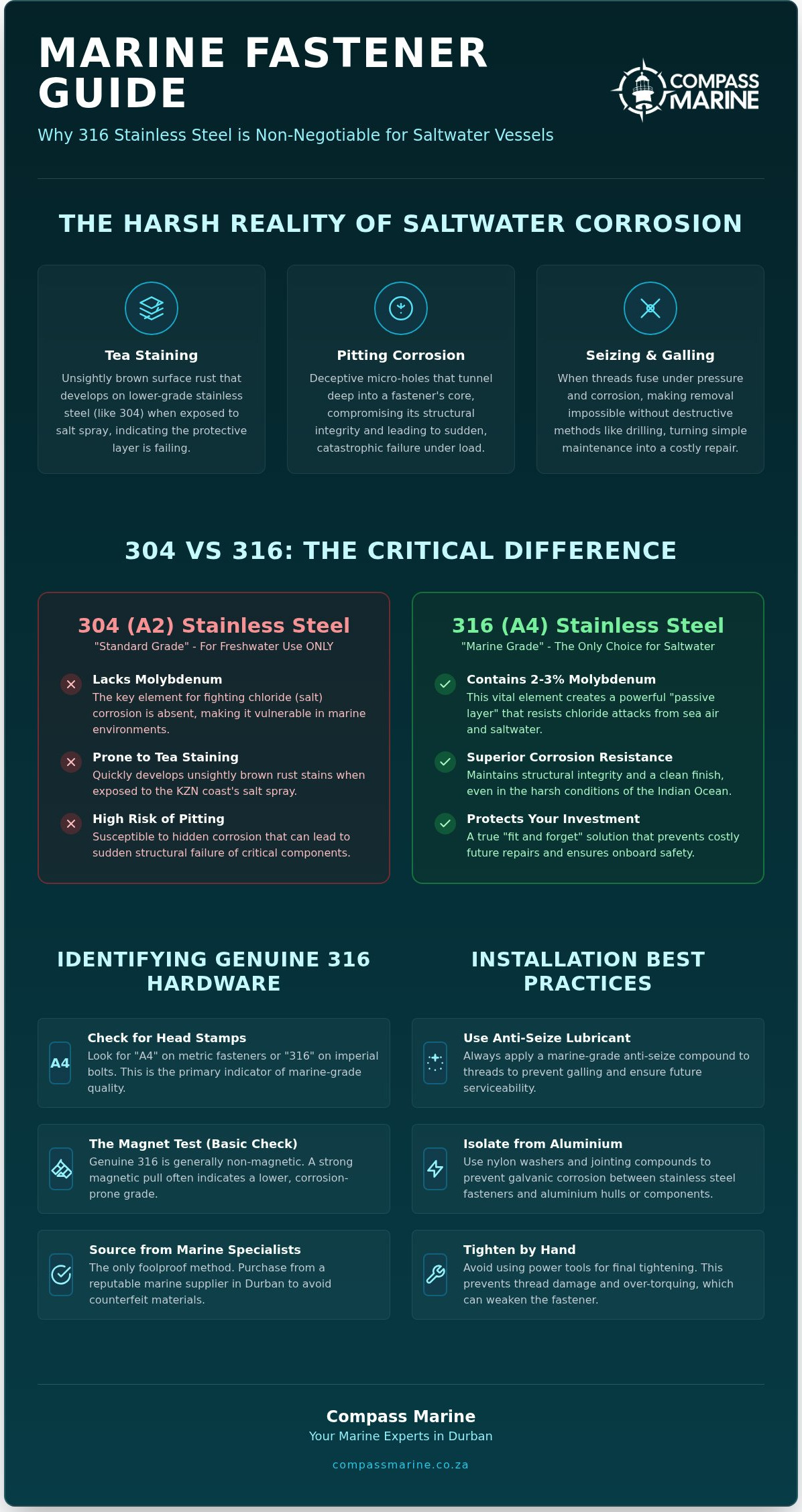
Choosing the right hardware for your vessel in KwaZulu Natal isn’t just about aesthetics; it’s a critical safety decision. 316 stainless steel is an austenitic chromium-nickel alloy that contains a specific addition of molybdenum, which distinguishes it from standard grades. This specific chemical makeup defines it as the true “marine grade” standard because of its superior ability to resist pitting and crevice corrosion in high-salinity environments. Whilst standard steel or lower-grade stainless alloys might survive inland, they fail rapidly in the aggressive South African coastal atmosphere, often showing signs of tea-staining or structural degradation within weeks of exposure.
The primary reason for this failure is the presence of chlorides in our sea air. Standard stainless steel lacks the necessary elements to fight off these microscopic salt particles. When you source 316 stainless steel fasteners in Durban, you’re investing in hardware designed to maintain its structural integrity despite constant contact with the Indian Ocean. Without the protection of molybdenum, the protective layer on the metal’s surface breaks down, leading to “pitting”, which are small holes that can penetrate deep into the bolt and cause it to snap under load.
The Chemical Composition of Marine Grade Steel
The resilience of 316 stainless steel comes from a precise balance of elements. It typically contains 16 to 18 percent chromium, which provides the base level of corrosion resistance, and 10 to 14 percent nickel to ensure the metal remains tough and ductile. The defining ingredient, however, is the 2 to 3 percent molybdenum. These elements work together to form a “passive layer” of chromium oxide on the surface. This microscopic film is self-healing; if the bolt is scratched, the layer reforms instantly in the presence of oxygen to block further oxidation. For fabricated fittings, we often look for low-carbon variants, known as 316L, which help prevent weld decay and ensure the joints remain as strong as the surrounding metal.
Identifying Genuine 316 Hardware
316 Vs 304 Stainless Steel: The Critical Difference for Boaters
Many boaters in Durban mistakenly believe that any “stainless” bolt is sufficient for their vessel. This assumption often leads to the frustrating sight of “tea staining”, which is the unsightly brown surface rust that develops on 304-grade steel when exposed to salt spray. Whilst 304 is an excellent material for many applications, there’s a fundamental rule for maritime hardware: 304 is for freshwater whilst 316 is for saltwater. The primary difference lies in the corrosion resistance; 304 lacks the molybdenum needed to withstand the aggressive chloride ions found in the Indian Ocean.
Choosing 304 over 316 might seem like a cost-saving measure initially, but it’s a false economy. Replacing rusted hardware requires time, labour, and often the drilling out of seized components. Investing in 316 stainless steel fasteners in Durban ensures your fittings remain clean and structurally sound for years, ultimately saving you money on maintenance and replacement parts. The clean, bright finish of 316 hardware doesn’t just look better; it indicates that the metal’s protective passive layer is intact and functioning as intended. For a broader understanding of how different hardware grades perform in local conditions, our guide to marine fasteners Durban boaters rely on covers the full spectrum of corrosion resistance considerations.
Pitting and Crevice Corrosion Explained
Pitting corrosion is one of the most deceptive threats to a boat’s safety. It manifests as tiny, dark holes on the surface of the metal that appear cosmetic but can tunnel deep into the core of a bolt, causing it to snap without warning. Crevice corrosion is equally dangerous; it occurs in oxygen-deprived areas such as the threads of a nut or the space behind a washer. Because 316-grade steel contains molybdenum, it’s significantly more resistant to these “maritime killers” than its 304 counterpart. If you’re unsure about the current state of your fittings, our engine servicing and mechanical repairs team can inspect your hardware for these hidden warning signs during your next service.
When Can You Use 304?
There are limited scenarios where 304-grade stainless is acceptable. It’s perfectly suitable for vessels used exclusively on inland dams like Midmar or Albert Falls, where the lack of salinity reduces the risk of rapid oxidation. Within a coastal vessel, you might use 304 for interior cabin fittings that are completely shielded from salt spray and humidity. However, using 304 on boat trailers that are regularly submerged in Durban’s harbour or launched through the surf is a recipe for disaster. Saltwater trapped in the threads of a 304 bolt will lead to rapid failure. For this reason, we recommend 316 for all external South African maritime applications to ensure total peace of mind.
Critical Marine Applications: Where to Use 316 Fasteners
On any vessel navigating the KZN coastline, the primary areas of concern are those facing direct salt exposure and high mechanical stress. Deck hardware like cleats, handrails, and hinges are the first line of defence against the elements. These components face constant cycles of wetting and drying, a process that concentrates salt crystals and accelerates corrosion in lower-grade metals. Without the molybdenum-enhanced protection mentioned in previous sections, these fittings will quickly develop the unsightly tea-staining that eventually leads to structural failure.
Underwater fittings represent the highest risk category for any boat owner. Thru-hulls, transducers, and trim tab assemblies rely on the absolute integrity of their bolts to keep the hull watertight. A snapped fastener in these areas is not merely a cosmetic issue; it can lead to catastrophic flooding. Similarly, trailer components such as winch posts and light brackets require high-grade hardware because they are frequently submerged in the harbour during launching, where trapped saltwater in the threads can cause rapid oxidation of standard steel. Ensuring your vessel’s hardware is up to standard is just one part of a broader safety picture; reviewing your marine safety equipment Durban boat owners rely on is equally important before every departure.
Using 316 Stainless Steel Fasteners in Durban for Engine and Mechanical Fittings
Engine components operate in a unique environment where extreme heat meets salt-laden air. This combination makes external mounting brackets and cowling bolts particularly vulnerable to seizing. When salt enters the threads and is baked by engine heat, it creates a bond that is nearly impossible to break without snapping the bolt. During our marine engine servicing, we prioritise the replacement of factory bolts with high-quality 316 alternatives. This ensures that mechanical components remain accessible for future repairs without the need for invasive and expensive drilling or tapping projects.
Rigging and Structural Deck Hardware
Structural integrity is paramount for rigging, where eye bolts, shackles, and chain plates are under constant tension. Whilst 316-grade steel is prized for its corrosion resistance, it also offers the necessary tensile strength for anchoring and towing applications in South African waters. Pairing quality fasteners with the right lines is equally important; our Southern Ropes Durban buying guide explains how to match rope material and construction to mooring, anchoring, and sailing applications so that every component in your rigging system performs as intended. For custom deck layouts where standard hardware doesn’t meet the specific load requirements or spacing of your vessel, our marine stainless steel fabrication Durban service can produce specialised structural fittings. Using 316 for these critical points ensures that your safety gear won’t fail when the weather turns and the load on your hardware increases during a heavy swell.
Installation Mastery: Avoiding Galling and Corrosion
Galling is the silent killer of stainless hardware. It occurs when the protective oxide layer is rubbed off during friction, causing the metal surfaces to bond at a molecular level. This “cold welding” can happen in seconds. If you’re using high-speed power tools to drive 316 stainless steel fasteners in Durban, the heat generated makes this bond almost certain. Once a bolt galls, it’s usually impossible to remove without snapping the head off, turning a simple upgrade into a tedious extraction project.
Hand-tightening is the gold standard for marine hardware. Power drivers generate excessive heat that expands the threads and strips the protective film. By slowing down and using manual tools, you maintain control over the torque and significantly reduce the risk of a permanent seize. It’s a small investment in time that prevents a massive headache during your next maintenance cycle.
How to Prevent Seized Bolts
Following a disciplined assembly process is the best way to ensure your hardware remains serviceable for years. We recommend these three essential steps:
- Step 1: Clean threads thoroughly. Even microscopic salt crystals or grit can act as an abrasive, stripping the metal’s passive layer and triggering galling before the bolt is even tight.
- Step 2: Apply a marine-grade anti-seize. Products like Tef-Gel or nickel-based lubricants are non-negotiable. They provide a physical barrier that prevents metal-to-metal contact and blocks saltwater from entering the thread gaps.
- Step 3: Tighten slowly by hand. Avoid the temptation to use an impact driver. Feel the thread engagement; if it starts to feel “gritty” or tightens suddenly, back it out immediately before it welds shut.
Managing Dissimilar Metals
Marine corrosion isn’t always about the metal failing; sometimes it’s about how two different metals interact. The Galvanic Series dictates that when stainless steel is in contact with a less “noble” metal, like an aluminium boat hull, an electrical current is created. This process, known as electrolysis, causes the aluminium to act as a sacrificial anode. You’ll often see this as white, crusty powder or deep pitting in the hull directly around the bolt hole.
To stop this, you must break the electrical circuit. Using nylon or plastic isolating washers creates a physical barrier between the 316 stainless steel fasteners in Durban and the hull. This simple step prevents the “battery” from forming and protects your high-value assets from structural decay. If you’re planning a major refit or need advice on hardware isolation, visit our marine store to source the correct lubricants and specialised barriers for your vessel.
Expert Stainless Steel Fabrication and Support in South Africa
While DIY installation is possible for minor deck fittings, high-load or underwater fasteners require a professional touch. A certified mechanic understands the specific torque requirements and isolation techniques that prevent structural failure under pressure. If you are refurbishing an older vessel, off-the-shelf components often fail to align with existing holes or unique deck layouts. In these scenarios, custom fabrication ensures you have the exact fit required, maintaining the structural integrity of your hull without unnecessary drilling.
A professional technical audit of your boat’s hardware is a proactive way to avoid mid-ocean failures. We check for subtle signs of stress, fatigue, and hidden crevice corrosion that an untrained eye might miss. This is especially relevant for maintaining maritime compliance and meeting COF requirements. Ensuring your vessel is equipped with the correct 316 stainless steel fasteners in Durban is a fundamental part of passing safety inspections and protecting your long-term investment.
Sourcing Quality Hardware from the Chandlery
Buying from a general hardware shop is a risk that often leads to premature rust. General retailers typically stock lower-grade alloys that lack the necessary molybdenum content for saltwater use, even if they are labelled as stainless. Sourcing from a specialised marine store for quality marine hardware in Durban gives you access to verified materials and expert technical advice. Whether you are preparing for a long-distance cruise or updating your boat to meet Cat C requirements, having the right hardware ensures your safety equipment remains securely mounted when the sea gets rough.
Comprehensive Marine Care and Storage
Preventative maintenance extends beyond the hardware itself. The rate of fastener corrosion is directly linked to environmental exposure. By utilising secure indoor boat storage, you remove the constant cycle of salt air and coastal humidity that degrades even the best marine-grade steel. This controlled environment keeps your 316 stainless steel fasteners in Durban in pristine condition, significantly reducing the frequency of replacements and the risk of seized bolts during your next service.
Contact Compass Marine for all your marine technical services and 316 hardware needs to ensure your vessel is handled by a safe pair of hands. Our team is ready to assist with everything from routine engine servicing to custom stainless steel fabrication.
Securing Your Vessel for the Long Haul
Protecting your boat from the relentless South African coastline requires more than just regular washing. It demands a commitment to using the correct materials in every fitting. Prioritising 316-grade hardware ensures that critical components remain structural and serviceable despite constant exposure to the Indian Ocean. The chemistry of your metal matters just as much as the skill used to install it; using anti-seize lubricants and hand-tightening techniques will save you from the frustration of snapped bolts and seized threads.
Having a reliable partner makes the maintenance process smoother and safer. Our team of certified Yamaha and Suzuki technicians understands the unique challenges of local waters. With our specialised stainless steel fabrication facility and a comprehensive marine chandlery on-site, we provide the technical mastery needed to keep your boat in peak condition. For professional advice and a wide selection of 316 stainless steel fasteners in Durban, visit Compass Marine for expert 316 stainless steel fittings and fabrication. We’re here to help you maintain your vessel with confidence so you can focus on enjoying the water.
Frequently Asked Questions
How can I quickly identify 316-grade hardware in a chandlery?
Look for the A4 or 316 stamp on the bolt head. Whilst a magnet is a common field test, it’s not foolproof as some 316-grade hardware develops slight magnetism after cold-working. The most reliable method is sourcing the 316 stainless steel fasteners Durban boaters require from a specialised marine chandlery. This ensures you receive verified materials that won’t succumb to the aggressive KZN saltwater environment or lead to premature structural failure.
What is the most effective way to prevent galling during installation?
Applying a high-quality marine anti-seize lubricant, such as Tef-Gel, is the most effective prevention. Galling occurs when friction strips the protective oxide layer, causing the threads to “cold weld” instantly. You must always tighten these bolts slowly by hand rather than using power drivers. This controlled approach prevents the heat build-up that triggers the seizure, ensuring that your hardware remains removable for future mechanical repairs or engine servicing.
How do I stop stainless fasteners from corroding my aluminium hull?
Isolating the fastener from the aluminium hull is essential to prevent galvanic corrosion. You should use nylon or plastic washers to create a physical break in the electrical circuit between the different metals. Additionally, applying Duralac or a similar jointing compound to the threads and the hole provides an extra layer of protection. This stops the aluminium from acting as a sacrificial anode, which would otherwise lead to structural decay around the fitting.
Can I reuse 316 fasteners after removing them for a repair?
You can often reuse 316 hardware if the threads are clean and show no signs of stretching or physical damage. Before reinstallation, it’s vital to remove all old lubricant and salt deposits using a wire brush and a suitable cleaner. Always re-apply a fresh layer of anti-seize before assembly. If a bolt feels gritty or shows any signs of pitting, it’s safer to replace it entirely to maintain the structural integrity and safety of your vessel.
Why is tea-staining appearing on my 316 fittings?
Tea-staining is usually a cosmetic issue caused by salt crystals drying on the surface and breaking down the passive film. Whilst it looks like rust, it rarely affects the structural strength of 316-grade steel. You can easily remove these brown streaks using a specialised stainless steel cleaner or a fine polishing compound. To prevent it from returning, rinse your fittings with fresh water after every launch to keep the protective chromium oxide layer intact. For a comprehensive overview of how to select and maintain the right marine fasteners Durban vessels depend on, our dedicated guide covers everything from grade selection to long-term corrosion prevention strategies.